
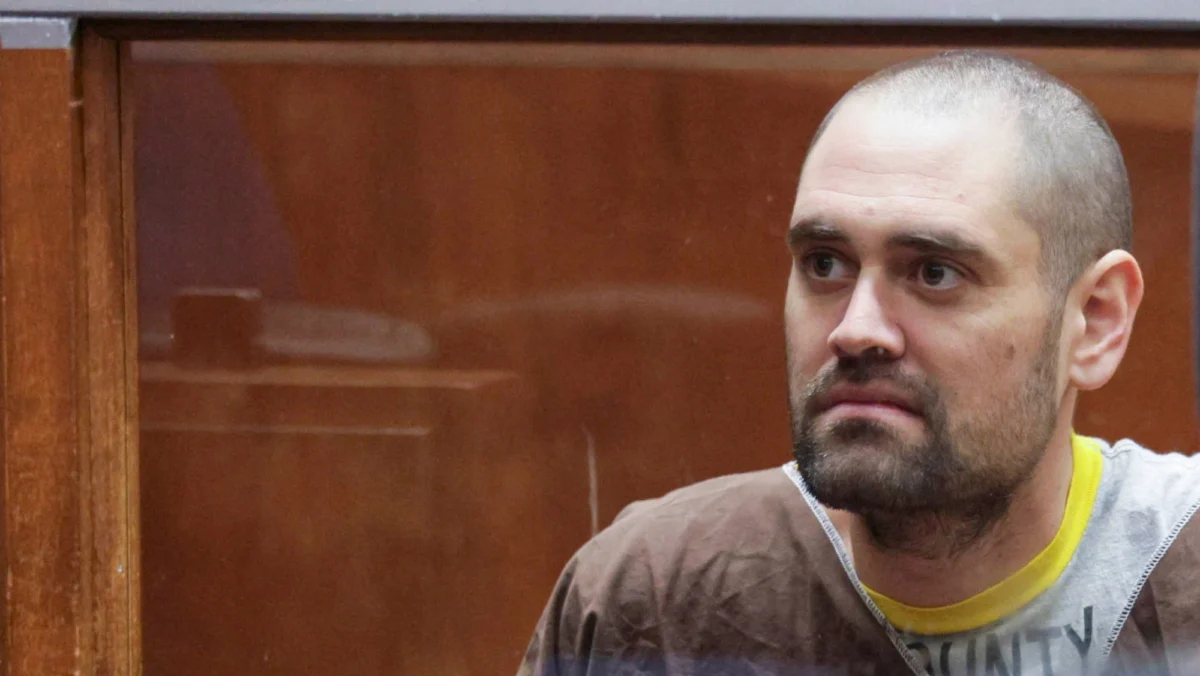
The high-profile legal battle surrounding 32-year-old incarcerated defendant Nick Reiner has entered a new phase as his defense attorneys aggressively pursue access to millions of dollars in trust funds to finance his ongoing criminal defense. Accused of the shocking double homicide of his parents, entertainment industry icons Rob and Michele Reiner, Nick Reiner finds himself legally cornered. His legal team has intensified efforts in civil court to secure vital financial resources, arguing that the withholding of these assets infringes upon his constitutional rights to adequate legal representation and basic humane conditions while incarcerated.
The core of the civil dispute hinges on a complex web of estate planning, statutory limitations, and heavy-hitting legal representation. Reiner aims to reinstate prominent celebrity defense attorney Alan Jackson—renowned for previously representing high-profile figures such as Harvey Weinstein and high-profile defendant Karen Read—back onto his criminal defense team. Jackson had previously been forced to withdraw from the Los Angeles-based murder case due to a critical lack of available funding. With prosecutors recently confirming they will not pursue the death penalty following consultations with Reiner’s surviving siblings, the focus of the defense has shifted squarely toward securing a robust, high-caliber legal defense against the double-homicide charges. However, the fiduciaries managing the family trust have firmly blocked access to the capital, setting the stage for a contentious legal showdown.
The Statutory Conflict: The Slayer Statute and Inherited Assets
At the heart of the trustees’ refusal to disburse funds is a foundational legal doctrine known widely across American jurisprudence as the Slayer Statute. Under California law, this statute is designed to prevent individuals from profiting off their crimes. Specifically, it dictates that an individual who feloniously and intentionally kills someone cannot inherit or receive any financial benefits, assets, or trust distributions from or through the deceased victim. Citing this statute, the trust’s fiduciaries have frozen financial disbursements, maintaining that releasing funds to a suspect accused of murdering the trust grantors would violate the spirit and letter of the law.
Reiner’s civil attorneys, however, are mounting a sophisticated counterargument designed to dismantle the fiduciaries’ blanket application of the Slayer Statute. The defense strategy relies heavily on the origin of the contested funds. According to recent court filings, a substantial portion of the disputed money—totaling at least $325,000—originated not from Rob or Michele Reiner, but directly from Nick Reiner’s late grandfather, legendary entertainer and creator Carl Reiner, who passed away in 2020.
Legal filings emphasize a crucial distinction in asset lineage: Nick Reiner is not accused of causing the death of his grandfather Carl Reiner. Consequently, the defense asserts that money left directly by Carl Reiner does not constitute assets received from or through his parents. The legal documents explicitly state that to the extent these funds remain Nick Reiner’s personal assets derived independently of his parents, they must be legally segregated and immediately released from the trust. Furthermore, the defense contends that even if these specific funds were technically held within the broader trust structure, the Slayer Statute provides zero legal basis for withholding them.
Chronology of the Dispute and Financial Breakdown
The friction between Nick Reiner and the trust administration spans a timeline of missed distributions and mounting legal expenditures. According to civil court documents, the conflict began brewing prior to the tragic deaths of Rob and Michele Reiner. The defense has repeatedly argued that the trustees failed to release a mandatory financial distribution when Reiner reached the age of 30—a milestone that should have triggered a payout of approximately $558,000 from the estimated $1.6 million trust.
Despite being legally entitled to this age-30 distribution before the homicide charges were ever filed, Reiner has reportedly received nothing. His lawyers noted in recent court arguments that their client has not received a single dollar of his own trust money to secure basic hygiene items, necessary commissary goods, or adequate support while being held in jail awaiting trial.
The financial friction has also given rise to a troubling paradox regarding administrative spending. Reiner’s legal team pointed out that the civil litigation over non-payment has already forced the fiduciaries to siphon more than $250,000 out of the trust solely to pay for their own defense attorneys. This expenditure represents nearly half the value of the overdue $558,000 age-30 distribution that Reiner is actively fighting to claim. With the overall trust valued at approximately $1.6 million, the ongoing legal warfare threatens to systematically deplete the corpus of the estate through adversarial legal fees before the underlying criminal trial even commences.
Scrutiny Over Trust Fiduciaries and High-Profile Oversight
Adding another layer of complexity to the civil litigation is the identity of the individuals managing the estate. Reiner has initiated legal action against both the former fiduciary who originally oversaw the trust and the current fiduciary, Jodi Montgomery. Montgomery is a familiar figure in high-profile legal circles, having previously served as the court-appointed conservator for pop superstar Britney Spears from 2019 until that conservatorship was dissolved in late 2021 following the historic removal of Spears’ father from the role.
The involvement of a fiduciary with such high-profile administrative background underscores the immense stakes and complex liabilities involved in managing the Reiner estate. Fiduciaries operate under strict legal and fiduciary duties to protect the interests of beneficiaries while simultaneously adhering to state laws and trust instruments. However, Reiner’s legal team argues that the current administration of the trust has crossed the line from prudent risk management into punitive withholding, depriving an incarcerated individual of constitutional rights to retain chosen counsel.
Implications for the Upcoming Criminal Trial
The outcome of this civil trust litigation carries profound implications for the trajectory of Nick Reiner’s criminal prosecution. In the American judicial system, securing expert legal representation, private investigators, forensic specialists, and specialized defense attorneys requires substantial capital—resources that public defenders, while deeply dedicated, often struggle to deploy at the same scale as private legal teams.
By blocking access to funds that legally belong to Reiner—particularly those originating from his grandfather Carl Reiner—the trustees are inadvertently shaping the quality and vigor of the defense against capital-level accusations. While prosecutors have taken the death penalty off the table following consultations with Reiner’s siblings, the charges remain severe, carrying the potential for lengthy or life-long incarceration.
As the civil court prepares to evaluate the nuance between parental inheritance and independent generational wealth under the Slayer Statute, all eyes remain fixed on the bench. The court’s eventual ruling will not only determine the immediate fate of Alan Jackson’s return to the defense team and the distribution of Carl Reiner’s bequest, but it will also establish a notable precedent regarding how trusts must navigate assets when a beneficiary is accused of murdering the trust creators. Until a judge rules on the segregation of the grandfather’s funds, Nick Reiner remains in legal limbo—awaiting trial behind bars, stripped of his family support system, and fighting for the financial autonomy needed to mount his defense.

