
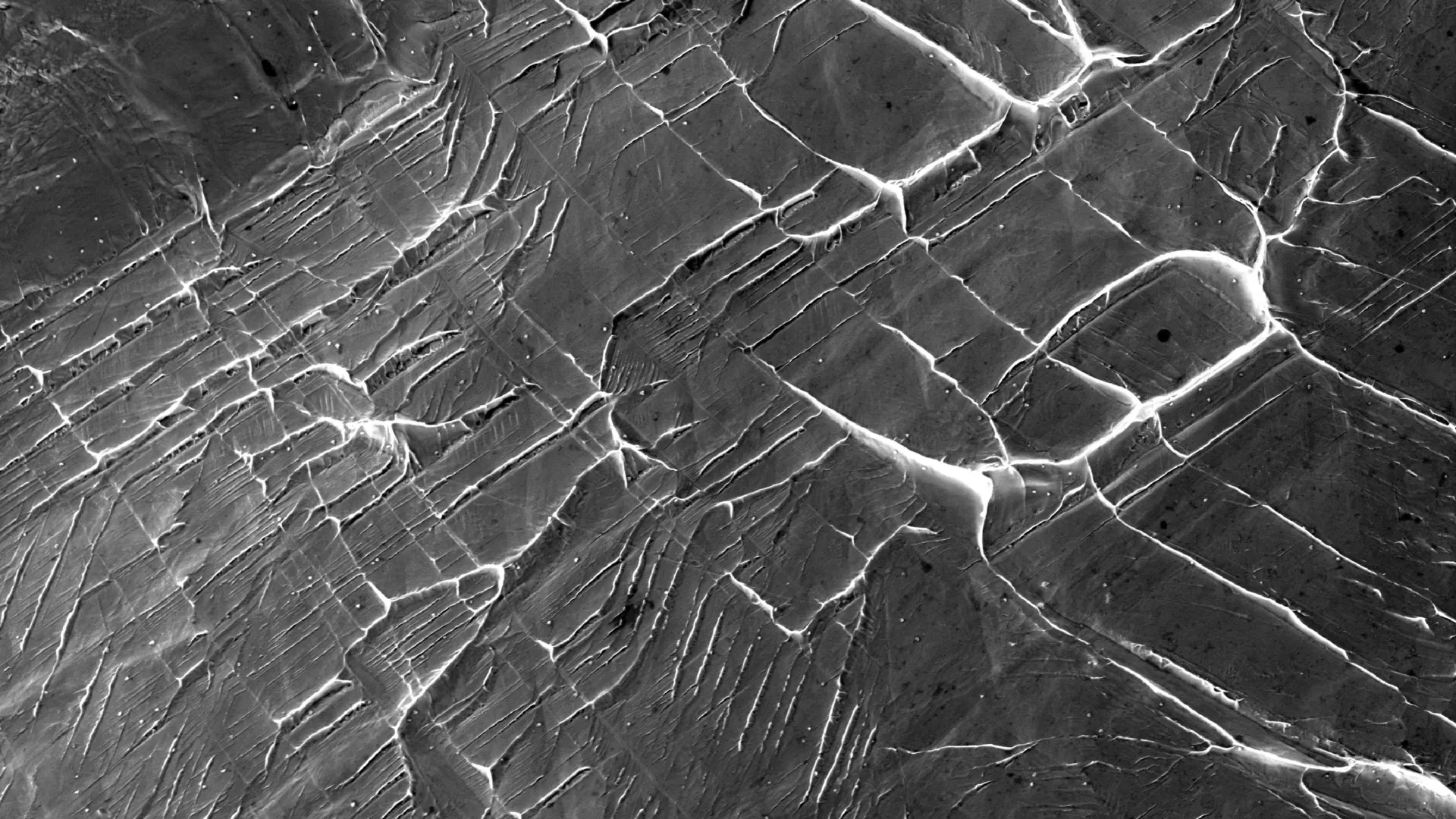
For decades, the field of materials science has been constrained by a fundamental and frustrating reality: as temperatures plummet, the structural integrity of most metals becomes compromised. Known as the ductile-to-brittle transition, this phenomenon has long forced engineers to limit the use of certain high-strength, body-centered cubic (BCC) metals in cryogenic environments. However, a groundbreaking study published on October 14 in the journal Nature has challenged this scientific dogma, revealing that two experimental niobium-titanium alloys can retain remarkable damage tolerance at 20 kelvin—a staggering -253°C (-424°F).
This international research effort, spearheaded by the University of California, Berkeley, Lawrence Berkeley National Laboratory, and the University of Oxford, provides a roadmap for the next generation of materials engineering. By identifying a previously unknown microscopic mechanism that allows these metals to resist fracturing under extreme thermal stress, the team has effectively unlocked a new strategy for designing materials capable of surviving the most punishing environments on Earth and beyond.
The Paradox of Brittleness in BCC Metals
To understand the magnitude of this discovery, one must first recognize the structural challenge posed by BCC metals. Materials such as iron, tungsten, and chromium possess a crystalline arrangement of atoms that is notoriously susceptible to failure at low temperatures. Under ambient conditions, these metals derive their toughness from the movement of dislocations—tiny, linear defects within the crystal lattice. When stress is applied, these dislocations migrate, allowing layers of atoms to slide past one another and enabling the material to deform rather than shatter.
As temperatures fall, however, the kinetic energy available to these dislocations diminishes. They become "frozen" in place, unable to move through the crystal lattice with the ease required to absorb kinetic force. When a crack begins to form, the metal lacks the internal flexibility to accommodate the stress, causing the crack to propagate rapidly through the material. This leads to catastrophic brittle failure, a failure mode that has sidelined many high-performance metals in deep-space exploration, liquefied gas storage, and arctic infrastructure.
A New Mechanism: Nanoscale Twinning and Phase Transformation
The research team, utilizing advanced experimental techniques, discovered that their niobium-titanium alloys bypass the traditional dislocation bottleneck. When subjected to extreme cold, these alloys do not rely solely on the movement of existing dislocations. Instead, they activate a dual-layered response: nanoscale "twinning" and a localized phase transformation.
In this process, small regions of the crystal lattice rearrange themselves into mirror-image patterns. Simultaneously, the crystal structure itself undergoes a localized shift. As these newly formed regions encounter grain boundaries—the junctions where different crystals meet—they concentrate stress in specific areas. Rather than causing a fracture, this concentrated stress triggers the creation of entirely new dislocations. In essence, the material manufactures its own internal "escape valves" for stress, providing new pathways for deformation that remain viable even when the ambient temperature is near absolute zero.
The researchers liken this process to a sophisticated traffic management system. If the primary highways of a city are blocked by snow and ice, the material creates a network of side streets, ensuring that energy can still be diverted and absorbed safely, preventing the system from collapsing under pressure.
Chronology of the Research Breakthrough
The path to this discovery was a multi-year effort involving high-precision instrumentation and a vast interdisciplinary team.
- Initial Conceptualization (2018–2019): Researchers began investigating the unique properties of niobium-titanium alloys, hypothesizing that their chemical composition might allow for unconventional deformation mechanisms at cryogenic temperatures.
- Experimental Phase (2020–2022): The team secured time at the ISIS Neutron and Muon Source in Oxfordshire, England. Utilizing the Engin-X instrument, they subjected alloy samples to extreme cooling using liquid and gaseous helium.
- Data Analysis (2023): The researchers processed the neutron diffraction data, which provided a real-time view of how the crystal structure shifted under mechanical load. This was followed by high-resolution electron microscopy to visualize the twinning and structural shifts at the atomic scale.
- Peer Review and Validation (Early 2024): After rigorous verification and the integration of atom-probe analysis to map the distribution of elements, the findings were submitted for peer review.
- Publication (October 2024): The study was officially published in Nature, marking a turning point in the understanding of cryogenic material science.
Supporting Data and Experimental Rigor
The experiments conducted at the ISIS Neutron and Muon Source were essential for verifying the internal behavior of the alloys. By firing a beam of neutrons through the samples while simultaneously stretching them with a specialized mechanical testing rig, the researchers were able to observe the evolution of the internal crystal structure in real-time.
Data collected at 20 kelvin showed no measurable shift toward brittle behavior, a result that contradicts standard mechanical models for BCC metals. Furthermore, post-mortem analysis using electron backscatter diffraction (EBSD) confirmed the presence of significant twinning patterns near the sites of induced cracks. The atom-probe analysis provided the final piece of the puzzle, confirming that the uniform distribution of titanium and niobium facilitated the creation of these new, stress-relieving regions without creating internal voids or weaknesses.
Perspectives from the Research Leadership
The implications of this discovery are being felt throughout the materials engineering community. Professor Dong Liu of the University of Oxford emphasized that the discovery shifts the focus from managing existing structural defects to actively creating new ones.
"For decades, the ductile-to-brittle transition has been viewed as a fundamental limitation of body-centered cubic metals," Liu stated. "What surprised us is that these alloys remain remarkably damage tolerant even at 20 kelvin. By uncovering how twinning and phase transformation work together to generate plasticity before conventional dislocation motion, we identified a new pathway for designing structural body-centered cubic metals."
Dr. David Cook, the study’s lead author, highlighted the conceptual shift required for future design. "Traditionally, the focus was on how readily existing dislocations can move through a metal, but now it appears that the ability to create new dislocations at interfaces may also be critical," Cook noted. "Using these insights, we may be able to design underlying microstructural conditions that allow a material to create its own routes to remain ductile at extreme temperatures."
Broader Implications: From Aerospace to Energy
The potential applications for this class of metals are vast. In the aerospace sector, engines and structural components must operate in environments that cycle rapidly from the extreme heat of combustion to the sub-zero temperatures of high-altitude flight or space vacuum. A metal that does not transition to a brittle state at cryogenic temperatures could significantly extend the lifespan and safety margins of these components.
Similarly, in the energy sector, the storage and transport of liquid hydrogen—a key component of the transition to clean energy—require materials that can handle the extremely low temperatures of liquefied gases without the risk of brittle fracture. The development of cryogenic-tolerant structural metals could reduce the weight and cost of infrastructure currently required to handle these volatile, low-temperature substances.
Furthermore, this discovery provides a new framework for metallurgical research. By shifting the design focus toward "interface engineering"—or the design of internal boundaries that act as sources for new dislocations—scientists have opened a door to creating alloys that are not only stronger but also more resilient to environmental extremes.
The international collaboration, which included researchers from the University of Bristol, the Science and Technology Facilities Council, the University of California, Irvine, Pacific Northwest National Laboratory, Texas A&M University, and Nanyang Technological University, serves as a testament to the complex, multidisciplinary nature of modern materials science. As the global push for more robust, sustainable, and high-performance technology continues, the ability to control the microscopic behavior of metals at the edge of absolute zero will undoubtedly remain a cornerstone of engineering innovation. The work of Cook, Liu, and their colleagues has fundamentally rewritten the rules for one of the most essential classes of materials in human history.

