
Washington — The highly contentious surveillance authority, known as Section 702 of the Foreign Intelligence Surveillance Act (FISA), is confronting significant legislative hurdles in the U.S. House of Representatives as its mandated expiration date of April 20 rapidly approaches. This critical national security tool, which allows the government to collect communications of non-U.S. persons located abroad for foreign intelligence purposes, has become a flashpoint in a broader debate over national security imperatives versus individual civil liberties, particularly concerning the incidental collection of American citizens’ data.
The legislative calendar is tight, with House GOP leaders deferring a crucial floor vote until mere days before the deadline, underscoring the deep divisions within the lower chamber. Proponents, including senior national security officials and the Trump administration, vehemently argue that Section 702 is an indispensable instrument for safeguarding the nation, especially amidst ongoing geopolitical tensions, explicitly citing the "war with Iran" as a pressing concern. They warn that allowing the authority to lapse, even temporarily, would create dangerous intelligence gaps, potentially jeopardizing counter-terrorism, counter-proliferation, and cybersecurity operations.
Conversely, a formidable bipartisan coalition of opponents expresses grave concerns over the provision’s perceived encroachment on Fourth Amendment rights. Their primary objection centers on the practice of allowing federal authorities to search databases containing incidentally collected American communications without first obtaining a judicial warrant. These "backdoor searches" have fueled accusations of overreach and privacy violations, leading to calls for substantial reforms before any reauthorization. The debate has been further complicated by past revelations of FBI compliance failures and improper queries of the Section 702 database, which have eroded trust among a segment of lawmakers and the public.
A History of Surveillance and Controversy: The Genesis of Section 702
The Foreign Intelligence Surveillance Act of 1978 (FISA) was originally enacted in the wake of post-Watergate revelations concerning domestic surveillance abuses by U.S. intelligence agencies. It established a legal framework for the government to conduct electronic surveillance and physical searches to collect foreign intelligence information, requiring a warrant from a specialized Foreign Intelligence Surveillance Court (FISC) when targeting U.S. persons.
Section 702 was added to FISA through the FISA Amendments Act of 2008, a direct response to perceived gaps in intelligence collection capabilities following the September 11, 2001, terrorist attacks. Its core purpose is to authorize the government to target non-U.S. persons reasonably believed to be located outside the United States to acquire foreign intelligence information. Critically, it does not require an individualized warrant for each target, instead relying on annual certifications from the Attorney General and the Director of National Intelligence to the FISC, outlining targeting procedures and minimization procedures designed to protect U.S. persons’ data.
However, the nature of modern communications means that when a foreign target communicates with an American, the U.S. person’s communications can be collected incidentally. While "minimization procedures" are supposed to filter out and protect U.S. person information, intelligence analysts can, under certain circumstances, query the raw intelligence databases for information related to U.S. persons. This querying mechanism, often referred to as the "backdoor search loophole," is at the heart of the current controversy. Critics argue that these searches effectively allow the government to bypass the Fourth Amendment’s warrant requirement for U.S. citizens, thereby circumventing constitutional protections.
The authority was last renewed in 2024 for a two-year period, following a period of intense scrutiny and near-expiration. That renewal was contingent upon the implementation of "dozens of reforms" aimed at curbing the abuses identified in prior years, particularly by the Federal Bureau of Investigation (FBI). These reforms, as championed by lawmakers like Rep. Jim Jordan of Ohio, chairman of the House Judiciary Committee, included stricter approval requirements for U.S. person queries, enhanced oversight, and improved training for FBI personnel accessing the database. Jordan, who was once a vocal advocate for more extensive FISA reforms, now defends the program, asserting that these previous changes have significantly mitigated the potential for abuse.
The Current Legislative Quagmire: A Race Against the Clock
As the April 20, 2026, deadline looms, the political maneuvering in the House has reached a fever pitch. The Trump administration, through President Donald Trump himself, has been actively lobbying for an 18-month "clean" reauthorization of Section 702, meaning without any additional reforms. On Tuesday, President Trump utilized his Truth Social platform to urge Republican unity, hoping to propel the clean extension through a procedural vote slated for Wednesday.
The President’s engagement included a Tuesday night meeting with skeptical GOP lawmakers, which a White House official described to CBS News as a "productive discussion." Further intensifying the administration’s push, CIA Director John Ratcliffe attended a House Republican Conference meeting on Wednesday morning, reiterating the dire national security implications of a lapse and advocating for an unamended renewal.
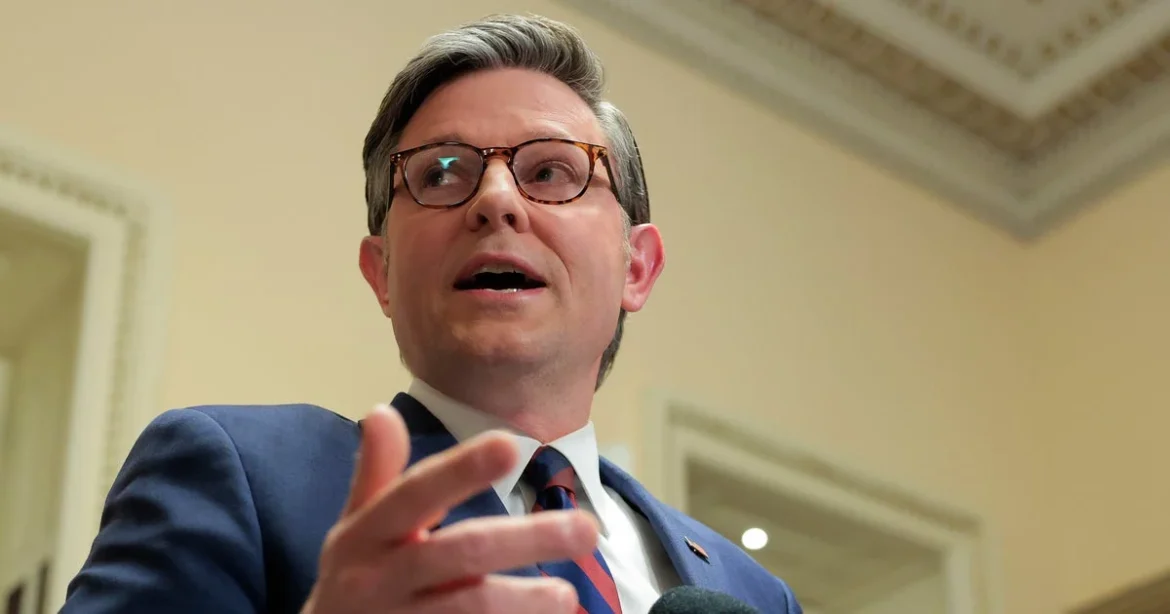
Despite the administration’s robust efforts, the path forward remains deeply uncertain. House Speaker Mike Johnson, a Louisiana Republican, has acknowledged the fragility of the situation. He stated on Tuesday that amendment votes would not be permitted on the House floor because "it jeopardizes its passage," emphasizing the program’s critical importance. However, Johnson did appear open to a shorter extension than the 18 months requested by the White House, suggesting "the timing is not as important to me" compared to ensuring its passage. This indicates a potential avenue for compromise to secure enough votes.
The Rules Committee, which typically sets the terms for floor debate, ultimately allowed the measure to advance late Tuesday, setting the stage for a dramatic floor consideration. This move, however, does not guarantee passage, as opposition transcends party lines.
Bipartisan Opposition and Calls for Reform
The opposition to a clean reauthorization is diverse and robust. Republican Rep. Andy Harris of Maryland, chairman of the conservative House Freedom Caucus, expressed strong doubts about the bill’s prospects, stating, "If it’s clean… it doesn’t have the votes." This sentiment reflects a broader conservative concern for civil liberties and government overreach.
A central demand from opponents is the implementation of judicial warrants for any search of American citizens’ communications within the Section 702 database. Republican Rep. Lauren Boebert’s unequivocal stance of "warrants or bust" encapsulates this position. She and other lawmakers advocate for a legislative solution, similar to the bipartisan bill introduced by Senators Dick Durbin (D-IL) and Mike Lee (R-UT) in previous Congresses, which sought to reauthorize and reform Section 702 by requiring judicial warrants for U.S. person queries.
CIA Director Ratcliffe, however, has pushed back forcefully against the warrant requirement. During a March hearing before the House Intelligence Committee, Ratcliffe acknowledged that "some reforms" might be considered but insisted that "a warrant isn’t one of them." He argued, "A warrant won’t work. You have to make decisions very quickly, and sometimes in a matter of hours," highlighting the operational constraints and time-sensitive nature of intelligence operations that Section 702 supports.
On the Democratic side, skepticism also runs deep, particularly concerning the reliability of the current administration. Rep. Jamie Raskin of Maryland, the top Democrat on the House Judiciary Committee, articulated his reluctance to trust the Trump administration with such broad surveillance powers without additional safeguards, calling it "moronic" to assume the law would be upheld as intended. He, too, has vowed not to support a renewal without meaningful reforms.
Another significant area of concern across the political spectrum involves intelligence agencies’ ability to purchase commercially available data from third-party brokers without a warrant. While Rep. Jim Himes of Connecticut, the ranking Democrat on the House Intelligence Committee, acknowledged this as an "important" issue for congressional debate, he maintained it "has absolutely nothing to do with FISA 702," which he asserted does not authorize such data purchases. Himes, a staunch defender of Section 702, emphasized its critical importance as the "most important intelligence authority," declaring, "There is simply no alternative to Section 702 and allowing it to expire would be devastating."
Furthermore, Republican Rep. Anna Paulina Luna of Florida has introduced another legislative wrinkle, conditioning her support on the attachment of an elections-related bill known as the SAVE America Act to the reauthorization. This illustrates the complex web of legislative priorities and political leverage points influencing the debate.
Broader Implications: National Security, Civil Liberties, and Congressional Power
The outcome of this legislative battle carries profound implications. A failure to reauthorize Section 702 would undoubtedly be heralded by intelligence agencies as a significant blow to national security. Officials regularly credit the program with disrupting terrorist plots, identifying foreign spies, and preventing cyberattacks against critical U.S. infrastructure. For instance, intelligence reports, though often classified, have alluded to Section 702’s role in detecting communications from foreign terrorist organizations plotting attacks against the homeland and identifying state-sponsored cyber actors targeting American networks. Allowing it to lapse could create immediate intelligence blind spots, particularly in the context of the stated "war with Iran" and other evolving global threats.
Conversely, a clean reauthorization without further reforms would represent a victory for the intelligence community but a significant defeat for civil liberties advocates. It would perpetuate the "backdoor search" controversy and reinforce concerns about government surveillance power unchecked by judicial review. This could further erode public trust in intelligence agencies and fuel calls for more drastic reforms in the future.
The current debate also highlights the persistent tension between the executive branch’s perceived need for agility in intelligence gathering and the legislative branch’s constitutional role in oversight and protection of individual rights. The Trump administration’s firm stance on an unamended renewal places considerable pressure on Speaker Johnson, who must navigate a deeply fractured caucus and a narrow House majority. His ability to shepherd a bill through that satisfies both national security hawks and civil liberties advocates will be a significant test of his leadership.
Should the House fail to act before April 20, the authority for Section 702 collection would expire, although existing collection activities might continue for a limited "wind-down" period. However, no new targets could be added, and the effectiveness of the program would rapidly diminish. The uncertainty alone can disrupt intelligence operations and create vulnerabilities.
The looming deadline forces Congress into a difficult choice: prioritize the perceived operational necessity of an unamended Section 702, or leverage the expiration to impose stricter privacy safeguards. The outcome will not only shape the future of U.S. surveillance policy but also serve as a barometer of the current political climate regarding government power and individual freedoms. As the clock ticks down, the nation watches to see whether a compromise can be forged or if this critical spy tool will be allowed to lapse, with potentially far-reaching consequences.