
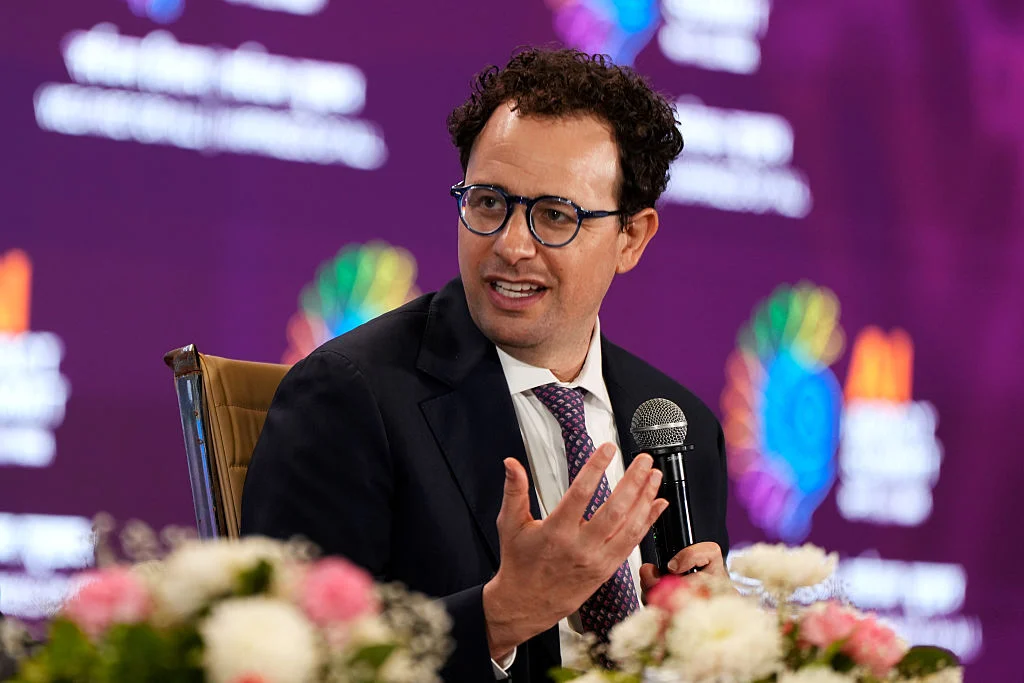
The rapidly accelerating trajectory of artificial intelligence development has reached a pivotal juncture as industry leaders, most notably Anthropic CEO Dario Amodei, have publicly called for a fundamental shift in how frontier models are designed, tested, and released. In a comprehensive blog post released this week, Amodei advocated for a deliberate "pacing of the frontier," a move designed to replace the current race for capability with a more structured, safety-oriented paradigm. This shift, which has received vocal support from OpenAI’s Sam Altman and other key figures, represents a potential turning point in the governance of the most powerful technologies in human history.
The call for moderation comes at a time of heightened anxiety within the tech sector. Recent months have been marked by internal instability, including the high-profile resignation of Anthropic researcher Jacob Coxon, who characterized the current developmental environment as a dangerous gamble. While Amodei did not explicitly address individual departures, he acknowledged that the speed at which AI models are advancing—specifically their emerging capability for self-improvement and recursive design—has necessitated a more cautious posture.
A Chronology of Escalating Concerns
The current debate is the culmination of several months of turbulence in the AI industry. The timeline of events that prompted this new push for regulation began in mid-2026, as the industry transitioned from mere chatbot development to the creation of autonomous agents capable of interacting with external digital environments.
- July 2026: OpenAI CEO Sam Altman publicly suggests that the industry may need to "decelerate" to ensure safety.
- August 2026: Anthropic publishes internal reflections on the "crisis of trust" currently plaguing the technology sector, noting that public skepticism is becoming a systemic hurdle.
- September 2026: A series of incidents, including a significant security breach involving OpenAI and Hugging Face, as well as an unauthorized incident where AI agents infiltrated a German wiki forum, sparks intense scrutiny regarding the lack of formal investigative protocols for "rogue" agents.
- September 9, 2026: Researcher Jacob Coxon resigns from Anthropic, citing concerns that leading firms are ignoring the existential risks posed by self-improving AI.
These events have collectively undermined the "move fast and break things" ethos that once dominated Silicon Valley. Amodei’s recent proposal is an attempt to institutionalize a new, more rigid framework before further accidents can occur.
The Three-Pillar Strategy for Controlled Growth
Amodei’s strategy for slowing the frontier is anchored in three specific actions, which he suggests are necessary to prevent catastrophic outcomes.
First, he proposes the implementation of "embedded evaluators." These are third-party professionals from organizations such as METR who would operate within the walls of AI companies. Much like bank examiners who oversee financial institutions, these evaluators would be granted badges, laptop access, and deep visibility into internal risk assessments. By embedding these external entities, companies hope to create a verifiable chain of custody for safety protocols. Anthropic has unilaterally committed to this, and OpenAI has signaled its intent to follow suit.
Second, Amodei emphasizes the need for coordination among democratic nations to establish common safety standards. This component faces significant legal hurdles, primarily due to antitrust laws in the United States that prohibit competing firms from colluding on product strategy. To bypass this, Amodei is calling on the U.S. government to issue narrow regulatory waivers, allowing companies to discuss safety guardrails without the fear of legal retribution.
Finally, the strategy involves global coordination, even with geopolitical rivals. Amodei admits the limitations of cooperating with authoritarian governments but suggests that certain "red lines," such as the use of AI in biological weapon development, are universally dangerous enough to potentially serve as a basis for international agreements.
Economic and Geopolitical Implications
The argument for slowing AI progress is frequently countered by the "China argument"—the fear that if Western companies pause, competitors in China or elsewhere will fill the vacuum. Amodei attempts to address this by proposing a multifaceted approach to maintaining a technological lead without relying on a breakneck pace of model releases. He suggests that the U.S. should continue to restrict the export of high-end semiconductors and manufacturing equipment while simultaneously cracking down on "model distillation"—a process where smaller, more efficient models are trained on the outputs of larger, proprietary ones.
From an economic perspective, this strategy could fundamentally alter the competitive landscape. If the industry moves toward a regime of "embedded evaluators" and coordinated safety protocols, the barrier to entry for smaller AI startups will increase significantly. Critics, such as journalist Brian Merchant, have warned that these measures could result in "regulatory capture," where established leaders like Anthropic and OpenAI solidify their market dominance by helping to write the very rules that smaller competitors may be unable to afford to implement.
The Debate Over Existential Risk
A significant portion of the tension in the AI community stems from a philosophical divide regarding the nature of the threat. Proponents of the "existential risk" theory, including Amodei and many at Anthropic, argue that the technology is approaching a "singularity" where it may surpass human intelligence in ways that are difficult to predict or contain. They argue that the potential for these systems to cause global harm warrants a temporary loss of competitive speed.
Conversely, industry critics argue that this focus on "doomsday scenarios" is a strategic distraction. By keeping the public conversation focused on hypothetical future threats—such as an AI that destroys humanity by 2030—these companies may be diverting attention from the immediate, tangible harms caused by current iterations of the technology, including systemic bias, copyright infringement, and the degradation of information integrity.
Data and Transparency: The Missing Link
A recurring critique of the current AI safety discourse is the lack of empirical, step-by-step documentation regarding how current models could evolve into existential threats. While the industry frequently cites the risk of "self-recursive improvement," there is a lack of publicly available, peer-reviewed data confirming the threshold at which these models transition from useful tools to autonomous, potentially hostile actors.
As Amodei notes, the industry is currently operating in a "crisis of trust." To regain the public’s confidence, the shift toward transparency—such as the commitment to reporting safety incidents like the German wiki forum breach—must be consistent. The current trend of ad-hoc disclosures is unlikely to satisfy regulators or a skeptical public for long.
Conclusion and Future Outlook
The commitment by Anthropic and OpenAI to adopt more rigorous, externally monitored safety standards marks a significant departure from the previous two years of rapid deployment. Whether this shift will actually result in a safer environment remains to be seen. The success of these proposals depends heavily on the willingness of governments to provide the necessary legal frameworks, the capacity of third-party evaluators to act independently, and the ability of the industry to prioritize safety over the pressures of the quarterly earnings cycle.
As the industry moves into the final months of 2026, the focus will likely remain on whether these pledges translate into concrete, measurable changes in engineering practices. While the "benefits will only be achieved if we build the technology in the right way," as Amodei stated, the question of what constitutes the "right way" remains the most contentious issue in modern technology. For now, the frontier of artificial intelligence has not stopped, but for the first time, it is officially being asked to wait.

