
A comprehensive new mapping initiative by the investigative project Amazon Underworld has revealed a staggering expansion of criminal influence across the South American rainforest. The data, which surveyed 1,310 municipalities across Bolivia, Brazil, Colombia, Ecuador, Peru, and Venezuela, indicates that armed groups and criminal syndicates now maintain a presence in 768 municipalities—roughly 59% of the region. This expansive footprint represents a fundamental shift in the geopolitical and environmental landscape of the Amazon basin, as criminal networks increasingly transcend international borders to monopolize both illicit and critical mineral resources.
The Geography of Illicit Control
The report highlights a deeply uneven distribution of criminal presence across the six nations, underscoring that the reach of these groups is often a reflection of local governance failures and state abandonment. Colombia faces the most severe crisis, with an alarming 98% of its Amazonian municipalities under the influence of various non-state armed actors. Venezuela follows with 82%, while Brazil and Ecuador report 59% each. Peru and Bolivia, while showing lower percentages at 34% and 31% respectively, demonstrate that no part of the Amazon remains immune to the encroachment of organized crime.
The data suggests that these organizations are no longer operating as isolated local gangs. Instead, they are evolving into sophisticated, transnational corporations. Brazil’s notorious Comando Vermelho, for example, has extended its reach into nearly 500 municipalities, including cross-border operations in Bolivia and Peru. This fluidity allows groups to bypass national law enforcement by shifting personnel, assets, and contraband across porous jungle borders, effectively creating a "shadow state" that operates in the vacuum left by federal authorities.
Chronology of a Growing Crisis
The emergence of this crisis did not occur in a vacuum; it is the culmination of decades of shifting economic incentives and political instability.
- Pre-2010s: Criminal activities were largely fragmented, focused primarily on small-scale logging and sporadic drug trafficking.
- 2015–2020: The signing of the 2016 peace agreement in Colombia led to a power vacuum in former FARC-controlled territories, which were rapidly filled by a mix of dissident groups, ELN fighters, and transnational cartels.
- 2021–2023: Global demand for gold surged, and the COVID-19 pandemic caused state presence in remote areas to dwindle, allowing illegal mining operations to scale up significantly.
- 2024–2026: Criminal networks diversified their portfolios, moving beyond cocaine into gold and, more recently, critical minerals like coltan, tungsten, and tin, which are essential for the global electronics supply chain.
The Economic Pivot: Gold Overtakes Cocaine
Perhaps the most significant finding in the Amazon Underworld report is the transition of gold from a secondary revenue stream to the primary driver of illicit wealth. Gold mining offers criminal groups distinct advantages over cocaine: it is easier to launder, carries less risk of seizure compared to narcotics, and provides a permanent, albeit environmentally destructive, revenue source.
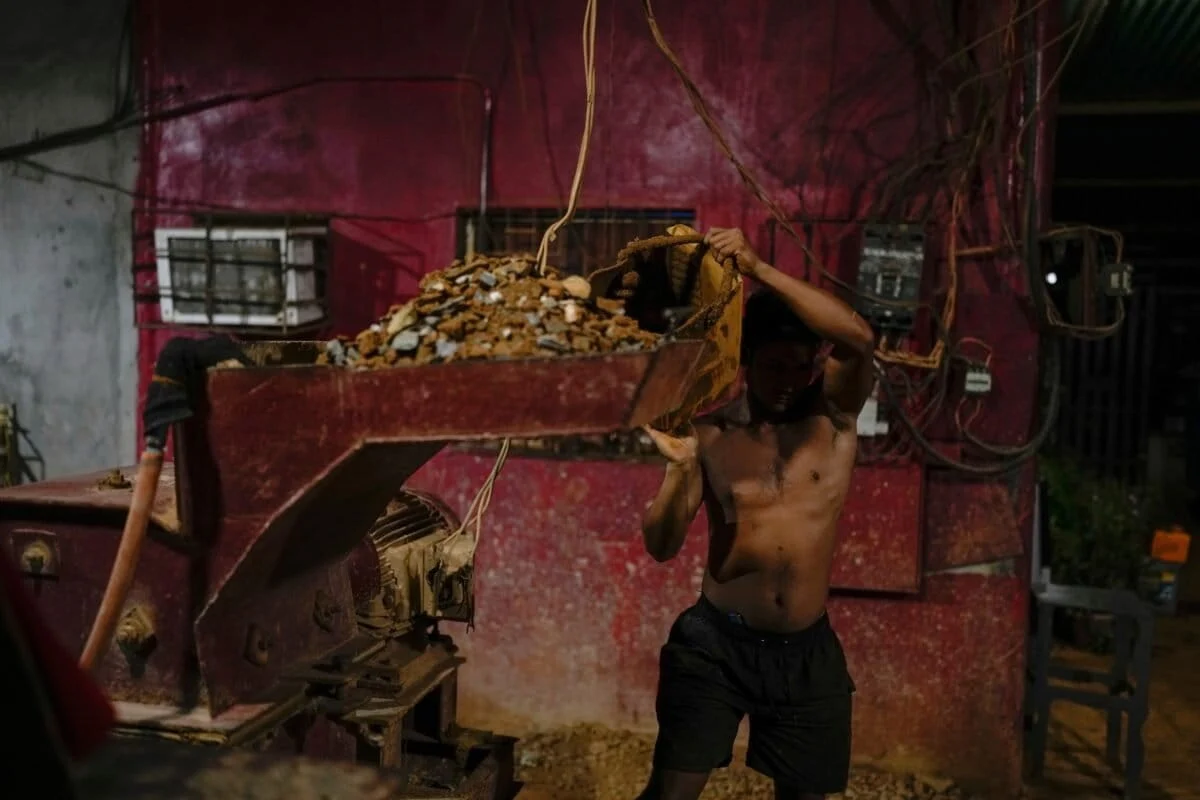
This shift has profound consequences for the Amazonian ecosystem. Illegal gold mining is a major catalyst for deforestation and the systemic contamination of river systems with mercury. As these groups compete for control over lucrative mining deposits, the violence has escalated, directly impacting Indigenous communities who serve as the primary guardians of these territories. Bram Ebus, the report’s author and an International Crisis Group consultant, noted that these territorial conflicts have led to a marked increase in the targeted killing of community defenders who attempt to prevent the encroachment of miners onto ancestral lands.
Instrumentalization of Communities
The relationship between criminal groups and local populations is defined by a cycle of exploitation and coercion. In the Colombian Amazon, nearly 10 million people—representing approximately 78% of the rural population—now live under the influence of at least one non-state armed group.

"One of our main concerns is how organized crime instrumentalizes local communities," Ebus explained. "Groups extort them. They also use them, often under coercion, as human shields to protect illicit economies and obstruct state interventions."
This dynamic creates a dangerous environment where local residents are caught between the violence of criminal groups and the heavy-handed, often indiscriminate, responses of state security forces. Because the illicit economy frequently provides the only viable financial lifeline for impoverished residents—who earn far more through coca harvesting or illegal mining than they could through legal, state-sanctioned livelihoods—many feel compelled to cooperate with criminal actors, deepening their reliance on these shadow networks.
Policy Failures and the Militarization Debate
The report offers a critical assessment of the current regional trend toward right-wing governments favoring militarized "iron fist" policies to combat cartels. While these crackdowns often capture headlines, researchers argue they are fundamentally flawed. By focusing exclusively on tactical military engagements, states are failing to address the systemic socio-economic drivers that make illicit industries so attractive to local populations.
"Unless the social drivers of crime are addressed, that approach offers no guarantee of success," Ebus stated. "People already feel abandoned by the state, and bombing the criminal groups that provide their livelihoods will only deepen that sense."
The analysis suggests that such interventions often result in a "balloon effect"—pushing criminal groups into new, previously untouched territories rather than eliminating them. Furthermore, these strategies often leave the underlying financial networks and corrupt institutional actors untouched, while simultaneously undermining the trust between the state and the very communities they are intended to protect.
Recommendations for a Sustainable Future
The report advocates for a pivot in regional strategy, moving away from short-term military solutions toward long-term institutional stability. The researchers highlight three pillars for a "smarter" response:
- Financial Interdiction: Instead of focusing solely on the "foot soldiers" in the jungle, authorities should prioritize the dismantling of the high-level financial flows and laundering networks that allow illegal gold and drugs to enter the global market.
- Permanent State Presence: Rather than sporadic, high-visibility military raids, there is a need for a sustained, integrated state presence that provides essential public services, including healthcare, education, and legal justice, thereby reducing the dependency of local communities on criminal actors.
- Economic Diversification: Investing in sustainable, legal development models is critical. If rural communities are provided with competitive economic alternatives to coca picking or illegal mining, the recruitment base for armed groups will naturally diminish.
Implications for Global Markets
The involvement of criminal groups in the supply chains of critical minerals like coltan and tin carries significant implications for international buyers. As these minerals become integrated into the global green energy and technology transition, the risk of "dirty" minerals entering the supply chain increases. Without robust traceability mechanisms, corporations and governments in the Global North risk inadvertently financing the very criminal networks that are destroying the Amazon.
As of 2026, the situation remains fluid and volatile. The Amazon Underworld report serves as a stark warning that without a fundamental realignment of regional policy—one that prioritizes human rights, environmental protection, and economic inclusion—the grip of criminal networks on the world’s largest rainforest will only tighten. The challenge for the governments involved will be to move past the allure of militarized optics and engage in the more difficult, long-term work of building a state that is present, accountable, and capable of providing for its citizens in a way that criminal syndicates never can.

