
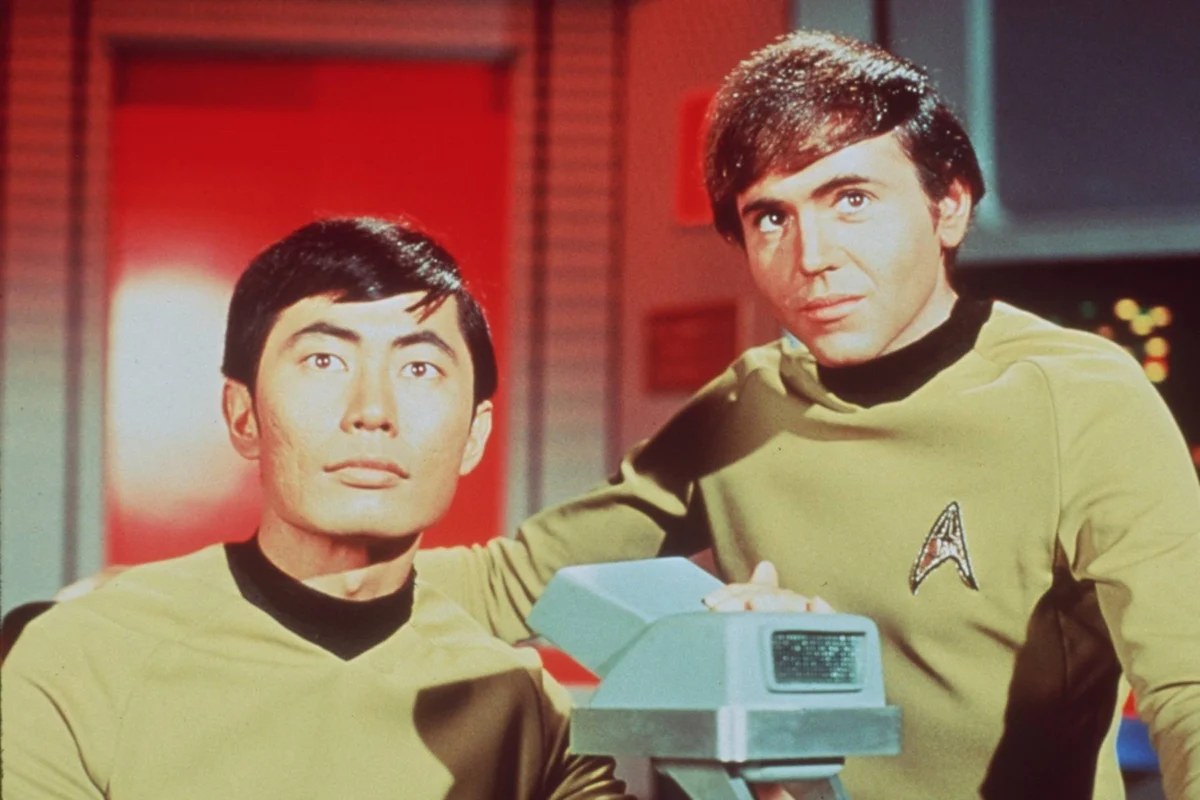
The science fiction community is mourning the loss of a television icon following the death of Walter Koenig, the celebrated actor best known for portraying Ensign Pavel Chekov in the legendary Star Trek franchise. Koenig passed away on Sunday at the age of 90, dying of natural causes at his home in North Hollywood, California. Surrounded in his final moments by his daughter and his niece, the actor leaves behind an indelible legacy that spans more than six decades in the entertainment industry. News of his passing has prompted an outpouring of grief and remembrance from colleagues, friends, and legions of devoted fans worldwide, led by his longtime friend and fellow Star Trek bridge crewmate, George Takei.
Takei, who immortalized the character of Lieutenant Hikaru Sulu alongside Koenig on the bridge of the USS Enterprise, took to social media on Monday to share a poignant and deeply personal tribute. Reflecting on a friendship that spanned nearly sixty years, Takei expressed the profound weight of his loss while celebrating the multifaceted life of a man who was much more than just a television star. Their bond, forged on the soundstages of Hollywood in the turbulent 1960s, endured the tests of time, career shifts, and personal milestones, culminating in Koenig standing proudly as the best man at Takei’s wedding.
A Friendship Forged on the Bridge of the Enterprise
The professional and personal relationship between George Takei and Walter Koenig began in the latter half of the 1960s, a formative era for American television and science fiction. While Takei had been a part of the Star Trek ensemble since its inception and the 1966 pilot, Koenig joined the cast ahead of the show’s second season in 1967. Producer Gene Roddenberry and the creative team sought to introduce a youthful, energetic character who could appeal to younger audiences and reflect the demographic shifts of the era. Koenig stepped into the role of Ensign Pavel Chekov, the eager, Russian-accented navigator whose earnest enthusiasm quickly won over viewers.
In his emotional tribute, Takei recalled the exact environment of their first meeting. "Walter and I met on the bridge of the Enterprise in the 1960s, and we stayed friends for nearly six decades," Takei wrote. Beyond the confines of the television set, where their characters shared countless adventures navigating the cosmos, Takei and Koenig built a steadfast bond away from the cameras.
This lifelong camaraderie was punctuated by significant personal events. When Takei married his partner, Brad Altman, in 2008, Koenig played a central role in the ceremony by serving as the best man. The interconnectedness of their lives extended even to calendar milestones. In a remarkable alignment of dates, Koenig celebrated his 90th milestone birthday on September 14, precisely the same day that Takei and Altman observed their 18th wedding anniversary. Acknowledging this poetic symmetry, Takei noted that he would forever cherish the fact that he and his dear friend shared such a meaningful date.
Beyond Star Trek: A Multifaceted Career and Legacy
While the role of Pavel Chekov defined a significant portion of Koenig’s public identity, his artistic contributions extended far beyond the iconic gold command-and-control uniform. In his tribute, Takei pointedly celebrated Koenig’s diverse intellect and professional versatility, describing him not merely as an actor, but as "a writer, a teacher, a thoughtful man, and a loyal friend."
Before securing his defining role in science fiction history, Koenig cultivated a steady working career in television during the early 1960s. He appeared in various guest roles across multiple popular programs, including an appearance in the pilot episode of the enduring daytime medical drama General Hospital. His training as an actor laid the groundwork for a career that would eventually pivot into writing and education. Koenig authored several books, including science fiction novels and non-fiction works, and penned scripts for television series such as Land of the Lost and The Twilight Zone comic book adaptations. Furthermore, he dedicated years to nurturing the next generation of talent as a teacher and acting instructor at various institutions.
Despite his endeavors outside of the franchise, Koenig’s cinematic journey remained deeply intertwined with the universe created by Gene Roddenberry. Following the cancellation of the original television series in 1969, Koenig reprised his role as Chekov in Star Trek: The Animated Series during the mid-1970s. When the franchise successfully transitioned to the silver screen in 1979 with Star Trek: The Motion Picture, Koenig returned to the fold. He went on to appear in the subsequent seven feature films in the franchise, charting Chekov’s progression from a youthful ensign to a seasoned commander, concluding his run in the film medium with 1994’s Star Trek Generations.
In addition to his work in the cinematic universe, Koenig also expanded his science fiction footprint by portraying Alfred Bester, a prominent and chilling antagonist, in the critically acclaimed 1990s television series Babylon 5. This role allowed him to showcase his dramatic range, earning him immense respect within the broader sci-fi community and introducing him to a new generation of enthusiasts.
Official Statements and Family Remembrances
Koenig’s representatives officially confirmed his passing through a comprehensive statement released on Sunday evening. Highlighting the peaceful nature of his final moments at his North Hollywood residence, the statement emphasized the profound reach of his life and career beyond the boundaries of traditional media.
"Walter’s legacy extends far beyond the screen," the statement read. "Through countless convention appearances and interactions with fans, he shared his kindness, wit, and appreciation with everyone fortunate enough to meet him. He understood what Star Trek meant to people and embraced the community that grew around it."
For decades, Koenig was a ubiquitous and beloved figure on the science fiction convention circuit. Long before the era of modern digital fandom and social media accessibility, actors from classic television franchises maintained direct contact with their audiences through weekend conventions held across the globe. Koenig was renowned among convention organizers and attendees alike for his patience, intelligence, and sharp, self-deprecating wit during panel discussions and autograph sessions. He frequently addressed the socio-political subtexts of Star Trek, recognizing the profound impact the show’s optimistic vision of the future held for its viewership.
The Broader Impact and Cultural Resonance of the Original Star Trek Generation
The passing of Walter Koenig marks another poignant milestone in the gradual fading of the primary cast of the original Star Trek series, a group of performers who became unexpected cultural ambassadors for space exploration, diversity, and progressive humanism. Alongside contemporaries such as William Shatner, Leonard Nimoy, DeForest Kelley, Nichelle Nichols, James Doohan, and George Takei, Koenig helped shape a television landscape that dared to imagine a united humanity navigating the stars cooperatively.
The cultural footprint of this ensemble cannot be overstated. When Star Trek premiered in September 1966, the United States was deeply divided by social unrest, the Civil Rights Movement, and the escalating Cold War. The bridge of the USS Enterprise presented a deliberate mosaic of humanity—featuring an African American communications officer, an Asian helmsman, a Russian navigator, and a Scottish chief engineer—working in seamless harmony. While Koenig’s Chekov was introduced partly in response to contemporary geopolitical tensions involving the Soviet Union and the Space Race, the character quickly evolved into a symbol of youthful optimism and camaraderie.
Scholars and cultural historians often note that the longevity of Star Trek rests not merely on its futuristic gadgetry or speculative science fiction concepts, but on the palpable chemistry and mutual respect among the core cast members. The off-screen friendships that endured for decades—exemplified so clearly by the bond between Takei and Koenig—lent an authentic warmth to their on-screen interactions, cementing the franchise’s status as a enduring touchstone of modern mythology.
Conclusion and Final Farewell
As tributes continue to pour in from former co-stars, creative collaborators, and fans around the world, the entertainment community reflects on a life well-lived and a career that helped redefine the boundaries of television storytelling.
In closing his public remembrance, George Takei offered a final, fittingly nautical farewell to his lifelong companion, invoking the language of the cosmos that had bound their lives together for nearly sixty years:
"To the fans who loved him for so many years, thank you. He loved you too," Takei wrote. "Rest well, my dear friend. Keep navigating a steady course."

