

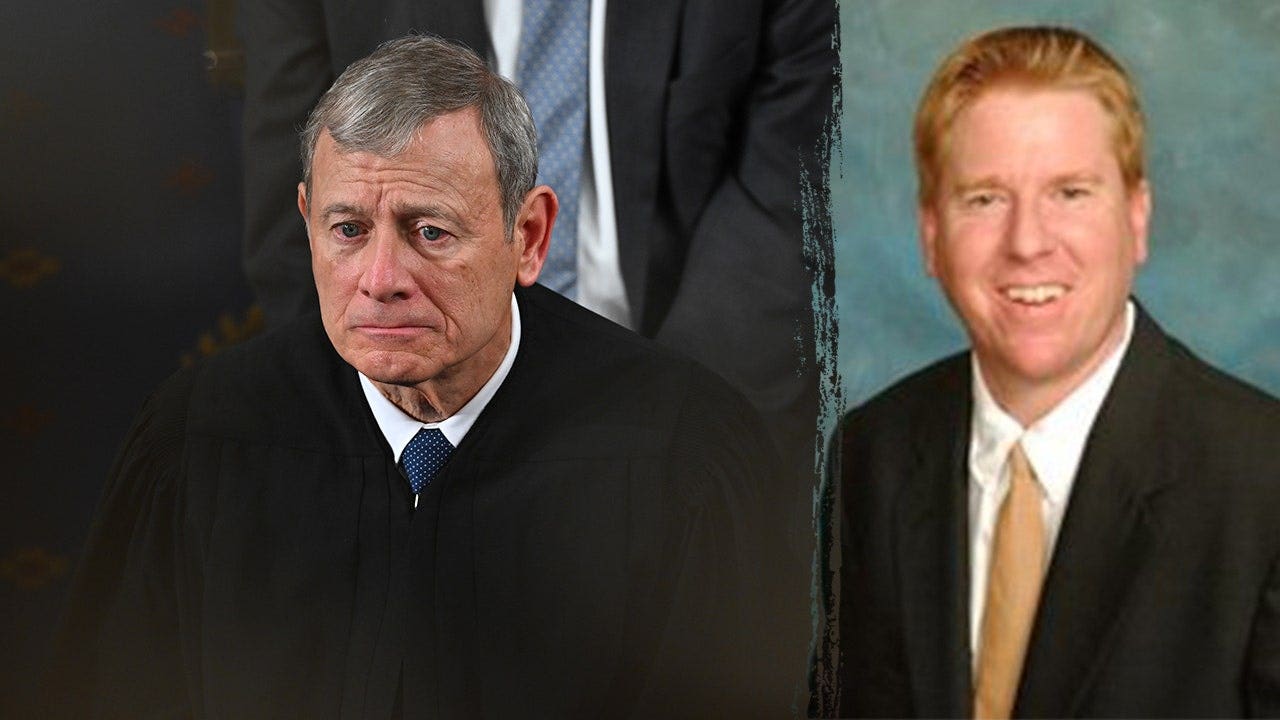
In a highly unusual and sharply worded judicial opinion, Hawaii Supreme Court Justice Todd Eddins has launched a blistering critique of the United States Supreme Court under Chief Justice John Roberts, accusing the nation’s highest judicial body of systematically weakening constitutional rights, undermining democratic institutions, and advancing a political agenda. The extraordinary rebuke was delivered as part of a majority opinion on Wednesday in State v. Granillo, a case that ultimately overturned a decades-old criminal conviction based on discredited forensic science. While the primary function of the 91-page opinion was to address the merits of the Granillo case, Justice Eddins dedicated approximately eight pages to an expansive and deeply critical assessment of the Roberts Court, asserting that Hawaii’s courts should not look to federal precedent when interpreting the state constitution, especially where the federal court has, in his view, abandoned fundamental civil rights principles.
The Granillo Case: A Catalyst for Broader Constitutional Critique
The case of State v. Granillo concerned a man convicted in 1990 of kidnapping and sexually assaulting a woman on Maui. The conviction, secured more than three decades ago, relied significantly on expert testimony regarding hair and fiber evidence. This forensic methodology, once widely accepted, has since been largely discredited within the scientific community due to its lack of scientific foundation and high potential for error. The Hawaii Supreme Court’s decision to order a new trial in Granillo underscores a broader national trend where advancements in forensic science and increased scrutiny of past methodologies have led to the re-evaluation of numerous convictions. The National Academies of Sciences, for instance, issued a seminal report in 2009 highlighting significant deficiencies in various forensic disciplines, including microscopic hair analysis, which was central to the Granillo conviction. This re-evaluation often centers on due process concerns, ensuring that convictions are based on reliable and scientifically sound evidence. The Granillo ruling itself reflects the judiciary’s evolving understanding of scientific reliability and its commitment to rectifying past injustices, even decades later. However, for Justice Eddins, this specific case served as a potent vehicle to articulate his profound concerns about the direction of constitutional law at the federal level.
Justice Eddins’ Core Accusations Against the Roberts Court
Justice Eddins’ critique centered on what he perceives as a fundamental shift by the Roberts Court away from established constitutional protections and toward a more politically driven agenda. He explicitly referred to the Court’s six conservative justices, stating, "When six justices walk away from those they are supposed to protect, state constitutions hold the line. That is not defiance. That is the design." This statement directly invokes the concept of "new judicial federalism," a legal doctrine asserting that state courts can interpret their state constitutions to provide greater protections for individual rights than those guaranteed by the U.S. Constitution, especially when federal constitutional interpretations are seen as narrowing those rights.
Eddins argued that Hawaii’s Constitution offers more robust protections than the federal Constitution as currently interpreted by the U.S. Supreme Court. He accused the Roberts Court of having "abandoned landmark civil rights principles," lamenting that the current Court "does not honor the work of 1954," referring to Brown v. Board of Education, the seminal 1954 decision that declared state-sponsored segregation in public schools unconstitutional. Instead, he controversially claimed, the Roberts Court "revives the work of 1857. The work of 1896." These dates refer to two of the most infamous and widely condemned decisions in U.S. Supreme Court history: Dred Scott v. Sandford (1857), which denied citizenship to Black Americans and upheld slavery, and Plessy v. Ferguson (1896), which established the "separate but equal" doctrine, sanctioning racial segregation.
The "Originalism" Debate and Historical Parallels
A central tenet of Justice Eddins’ critique was his direct assault on the judicial philosophy of "originalism," which is favored by many conservative justices on the U.S. Supreme Court. Originalism posits that the Constitution should be interpreted based on its original public meaning at the time it was adopted. Eddins contended that "Today’s hubristic originalists use the same method to control modern life." He suggested that this approach, particularly as applied by the current conservative majority, leads to outcomes reminiscent of Dred Scott and Plessy, decisions that used historical interpretation to deny fundamental rights.
Proponents of originalism argue that it promotes judicial restraint, prevents judges from imposing their own policy preferences, and ensures legal predictability by grounding constitutional interpretation in fixed principles rather than evolving societal norms. Justice Antonin Scalia, a prominent originalist, often argued that interpreting the Constitution as a "living document" allows judges too much latitude to act as unelected legislators. However, critics, like Justice Eddins, argue that a rigid adherence to original intent can lead to interpretations that are insensitive to contemporary societal values and perpetuate historical injustices, particularly when the "original intent" of foundational documents was shaped by prevailing discriminatory views of the time. Eddins’ historical parallels were a direct challenge to the moral legitimacy of the originalist methodology as currently applied.
Key U.S. Supreme Court Decisions Under Scrutiny
Justice Eddins pointed to a series of landmark decisions by the Roberts Court as evidence of its alleged trajectory:
- Dobbs v. Jackson Women’s Health Organization (2022): This decision overturned Roe v. Wade and Planned Parenthood v. Casey, eliminating the federal constitutional right to abortion and returning regulatory authority to individual states. Eddins views this as a significant rollback of individual liberty and bodily autonomy. The Dobbs decision sparked widespread protests and galvanized political debate, becoming a defining moment for the Roberts Court and fueling concerns about judicial activism from the left.
- Citizens United v. Federal Election Commission (2010): This ruling held that corporations and unions have the same First Amendment rights as individuals, striking down restrictions on independent political spending in candidate elections. Critics argue this decision unleashed a flood of "dark money" into politics, eroding democratic accountability and giving disproportionate influence to wealthy donors and corporations. Eddins implicitly connected this to the weakening of "democratic institutions" and expanding "power of government officials and wealthy interests."
- Rucho v. Common Cause (2019): In this case, the Court ruled that federal courts have no authority to hear challenges to partisan gerrymandering, effectively leaving the regulation of highly partisan electoral maps to state legislatures and state courts. This decision was seen by many as a abdication of judicial responsibility in protecting the fairness of democratic elections, further supporting Eddins’ claim of damage to "democratic safeguards."
- Trump v. United States (2024): While the original article implies this case was decided, it was actually Trump v. Vance (2020) regarding presidential tax records and Trump v. Mazars (2020) regarding financial records, and more recently Trump v. Anderson (2024) regarding ballot eligibility. The case on presidential immunity (Trump v. United States) was heard in 2024 and a decision was pending at the time of the Fox News article’s publication. Eddins’ inclusion of "Trump v. United States on presidential immunity" suggests his broader concern about the expansion of executive power and reduced accountability for high-ranking officials. The outcome of the presidential immunity case, when decided, is expected to have profound implications for the balance of power and the future of presidential accountability.
- New York State Rifle & Pistol Association v. Bruen (2022): This decision expanded Second Amendment protections, ruling that individuals have a constitutional right to carry a handgun in public for self-defense, and requiring states to justify any restrictions by historical tradition. This ruling further solidified a trend of expanding gun rights at the federal level, challenging state and local gun control measures. For Eddins, this likely represents a "systematic dismantling of democratic safeguards" and "steamrolling constitutional liberties" as states’ abilities to regulate firearms are curtailed.
The Equal Protection Clause and the "Colorblind" Approach
A particularly sharp point of contention for Justice Eddins was the Roberts Court’s interpretation of the Equal Protection Clause of the Fourteenth Amendment. He accused the Court of adopting a "colorblind" approach that "sees only white" and "refuses to acknowledge who the Equal Protection Clause was written to protect." This refers to the debate over whether the Equal Protection Clause prohibits any and all racial classifications (the "colorblind" view) or whether it permits race-conscious measures designed to remedy past and present discrimination, particularly against formerly enslaved Black Americans, for whom the amendment was originally intended.

The Roberts Court has increasingly favored the "colorblind" interpretation, notably in cases like Students for Fair Admissions v. Harvard/UNC (2023), which effectively ended affirmative action in college admissions. Critics of this approach argue that it ignores the historical context of systemic racism and the ongoing impact of racial inequality, thereby undermining the amendment’s original remedial purpose. Eddins’ strong language here—"The Roberts Court sees only white"—underscores his belief that the Court’s current jurisprudence on race actively harms minority groups and distorts the fundamental intent of a Reconstruction-era amendment designed to secure equality for all citizens.
Judicial Federalism: State Constitutions as a Last Resort
Justice Eddins’ opinion is a powerful example of "new judicial federalism" in practice. This doctrine gained prominence in the latter half of the 20th century as state courts increasingly looked to their own constitutions to provide greater individual liberties than those guaranteed by the U.S. Constitution, particularly when the U.S. Supreme Court began to narrow federal constitutional protections. After the Warren Court era (1953-1969) expanded federal rights, subsequent courts, particularly the Rehnquist and Roberts Courts, have often adopted a more restrained approach, leading some state courts to step in and fill what they perceive as gaps in federal protection.
For Hawaii, a state with a distinct cultural heritage and a history of robust protection for individual rights, Eddins’ call for independent constitutional interpretation is not entirely novel but exceptionally emphatic. It signals a potential strategic direction for state supreme courts in an era of a conservative-leaning federal judiciary: to assert their role as independent guarantors of rights, rather than simply following federal precedent. This approach ensures that even if federal minimums for rights are lowered, state residents can still enjoy broader protections under their state charters.
Reactions from Legal Scholars
The extraordinary nature of Justice Eddins’ opinion quickly drew strong reactions from legal observers. Eric Wessan, Iowa’s Solicitor General, characterized it as an "unhinged attack on the legitimacy of the Supreme Court," stating he had "never seen something like this. And it’s not good." Jonathan Turley, a prominent law professor at George Washington University, similarly described the opinion as "devoid of judicial restraint and decorum," adding that it "unleashed a torrent of rage and recrimination against the majority of the United States Supreme Court, including suggesting that they are de facto racists."
These reactions highlight the unusual nature of such a direct and emotionally charged critique from one high court to another. While judicial opinions often contain dissenting or concurring views that criticize majority decisions, it is rare for a state supreme court justice to devote such extensive and pointed language to condemning the entire philosophical direction and perceived political agenda of the U.S. Supreme Court. Such public pronouncements can be seen by some as undermining inter-court comity and decorum, potentially politicizing the judiciary further. However, supporters might view it as a necessary and courageous act of judicial independence, a clarion call to protect rights when the federal judiciary is seen as failing in that duty.
Recent Precedent: The Wolford v. Lopez Case
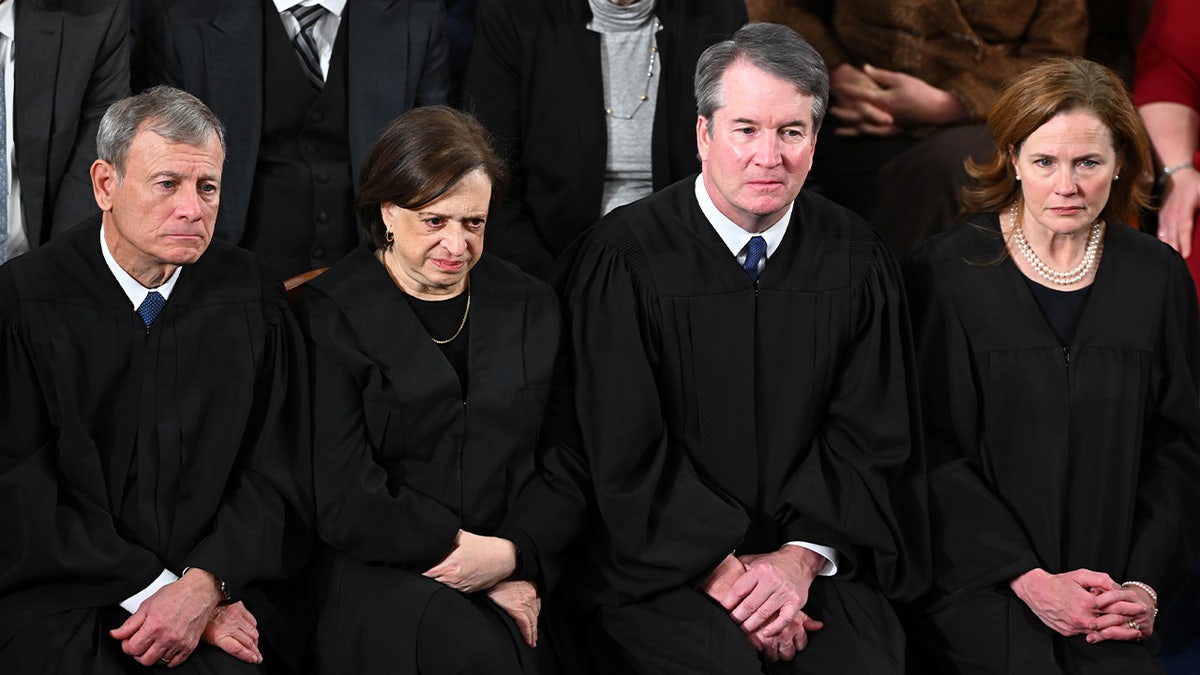
Eddins’ broad critique comes just weeks after the U.S. Supreme Court delivered a significant setback to Hawaii in Wolford v. Lopez. In a 6-3 decision, the Court struck down a Hawaii law, colloquially known as the "vampire rule," which required gun owners to obtain explicit permission from property owners before carrying a firearm into businesses and other private properties open to the public. The ruling, consistent with the Bruen precedent, further expanded Second Amendment protections by limiting states’ ability to regulate firearms in public spaces. This specific outcome likely fueled Eddins’ frustration, reinforcing his perception that the Roberts Court is actively dismantling state regulatory powers and individual rights as interpreted by states. The Wolford decision exemplifies the tension between federal constitutional mandates and state-level policy preferences, particularly in contentious areas like gun control.
Broader Implications and Future Outlook
The Hawaii Supreme Court’s State v. Granillo opinion, particularly Justice Eddins’ extended commentary, signifies more than just a legal ruling; it represents a significant moment in the ongoing national debate about judicial power, constitutional interpretation, and the role of the U.S. Supreme Court in American democracy.
- Heightened Judicial Federalism: This opinion could embolden other state supreme courts in states with strong progressive or liberal judicial traditions to more aggressively interpret their state constitutions as providing broader rights than the federal Constitution. This could lead to a patchwork of rights across the country, where fundamental liberties vary significantly depending on state lines.
- Legitimacy Crisis: The direct attack on the U.S. Supreme Court’s legitimacy and political motivations by a sitting state supreme court justice could further erode public trust in the federal judiciary, which has already faced increased scrutiny and declining approval ratings amidst highly politicized decisions.
- Ideological Divide: The opinion starkly illustrates the deep ideological chasm within the American legal system between those who advocate for a more expansive view of individual rights and democratic safeguards, and those who champion judicial restraint, originalism, and limited federal intervention.
- Impact on Specific Rights: Depending on how other state courts respond, this approach could have profound implications for rights related to abortion, gun control, campaign finance, and racial equality, creating a more complex and fractured legal landscape.
Justice Todd Eddins, who was appointed to the Hawaii Supreme Court in 2020 by then-Democratic Governor David Ige, has now firmly placed himself at the forefront of this national legal discourse. His opinion in State v. Granillo is not merely a legal document but a powerful political statement, challenging the very foundation and direction of federal constitutional law, and asserting the sovereign role of state courts in safeguarding liberties for their citizens. The long-term impact of such a bold judicial statement remains to be seen, but it undoubtedly adds a potent voice to the chorus of critics questioning the trajectory of the Roberts Court and the future of constitutional rights in America.

