

The history of human interaction with mind-altering substances is far deeper and more complex than previously understood. While conventional academic wisdom has long held that the use of intoxicants, particularly stimulants and depressants, emerged alongside the dawn of agriculture and the fermentation of grains during the Neolithic era—roughly 13,000 years ago—a groundbreaking study published in the journal Science Advances challenges this established timeline. Archaeological findings from the Indonesian island of Sulawesi indicate that human communities were utilizing the psychoactive properties of the betel nut (Areca catechu) as far back as 25,000 years ago, effectively pushing the origins of this widespread cultural practice back by more than two millennia.
This discovery, led by a team of researchers including archaeologist Adam Brumm of Griffith University, shifts the narrative regarding the evolution of human drug habits. Rather than a modern or even early-agricultural invention, the use of stimulants appears to be an enduring element of the forager experience, deeply embedded in the lives of hunter-gatherers during the late Pleistocene.
A Global Intoxicant with Ancient Roots
The areca nut, colloquially known as the betel nut, remains one of the world’s most widely used substances. It is estimated that approximately 10 percent of the global population—roughly 800 million people—regularly consumes the nut. Its usage is particularly prevalent across Southeast Asia, the Indian subcontinent, and parts of the Pacific, where it often serves as a central component of social rituals, hospitality, and daily stimulation.
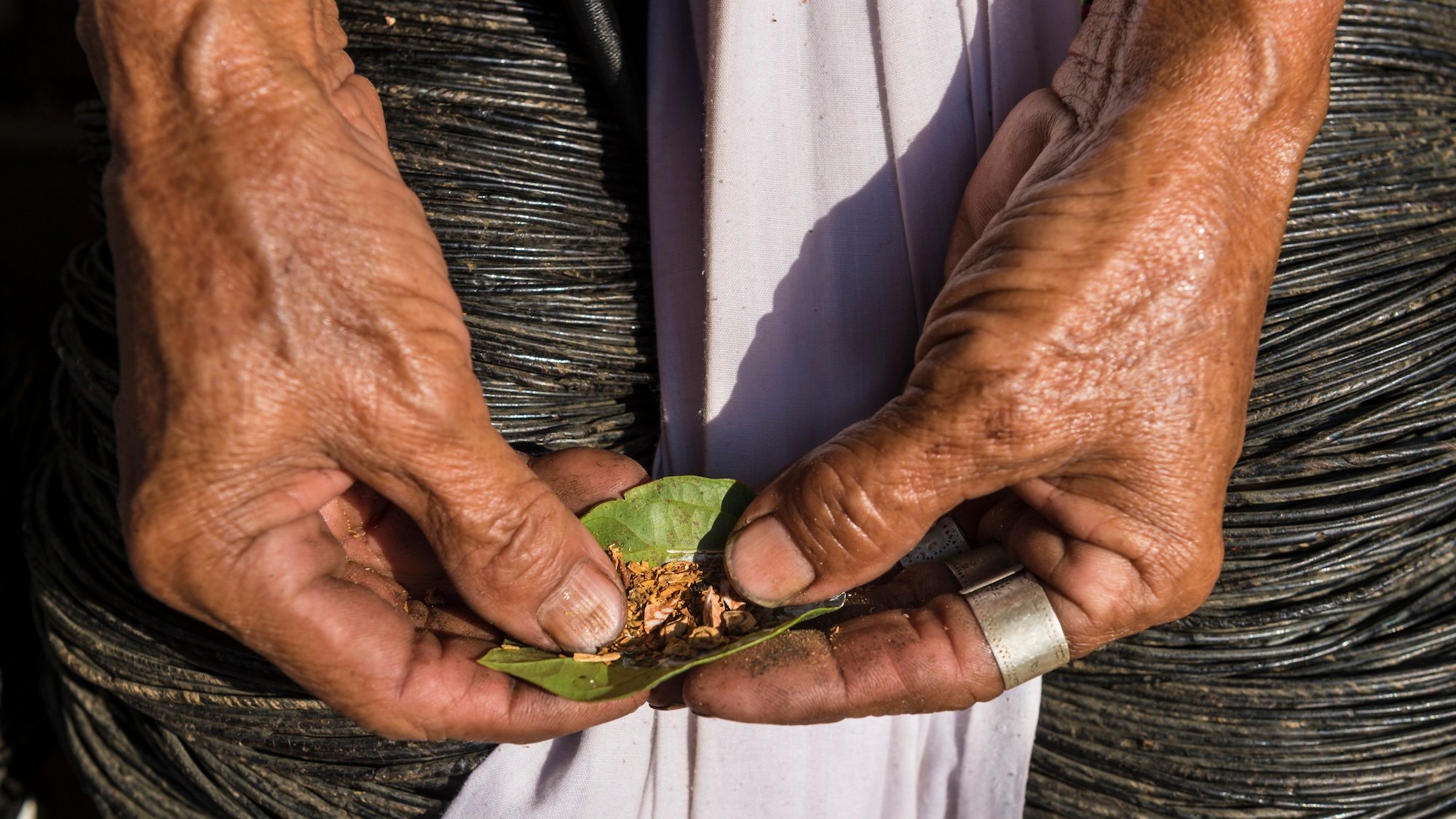
In contemporary practice, the nut is typically processed with slaked lime (calcium hydroxide) and sometimes wrapped in betel leaves with spices or tobacco to form a "quid." When chewed, this mixture releases alkaloids that produce a mild stimulant effect, characterized by increased alertness, euphoria, and a sensation of physical warmth. While Western audiences may be less familiar with the substance, its prevalence in global consumption statistics trails only behind alcohol, caffeine, and nicotine.
The Archaeological Evidence from Sulawesi
The researchers based their findings on the analysis of two sets of skeletal remains discovered on the island of Sulawesi, Indonesia. The older specimen dates back to between 25,000 and 16,000 years ago, while the younger individual lived approximately 7,600 to 6,300 years ago.
Upon examination, the team noted a highly unusual pattern of dental wear. Both sets of remains displayed deep, crescent-shaped grooves in the teeth, a form of degradation that does not align with the standard patterns of attrition caused by traditional diets or natural wear. The researchers theorized that these lesions were the result of a repetitive, mechanical action: the long-term, habitual sucking of hard, fibrous plant matter. Given the geographic location and the cultural continuity of the region, the team identified the betel nut as the most probable cause of this specific dental trauma.
Laboratory Validation and Chemical Analysis
A significant hurdle in this research was the prevailing scientific belief that the areca nut’s primary psychoactive alkaloid, arecoline, is only biologically available when the nut is processed with slaked lime. This would imply that the ancient hunter-gatherers required chemical additives to derive any neurological benefit.
To test this hypothesis, the research team conducted a series of laboratory experiments using cloned human receptors grown from frog egg cells. By creating a mixture of artificial saliva and raw, unprocessed betel nuts, they were able to demonstrate that the simple act of sucking on the nut was sufficient to release enough arecoline to trigger activity in the neural receptors.
To corroborate these experimental results, the team performed biochemical testing on the dental tissue of the skeletal remains. They successfully identified traces of arecoline trapped within the fossilized plaque and dental enamel of the two ancient individuals. This provided the "smoking gun" evidence needed to confirm that these populations were not just interacting with the plant, but were actively ingesting it for its psychoactive effects.
The Cycle of Utility and Physical Toll
One of the most compelling aspects of the study is the suggestion that the use of betel nuts in the Pleistocene may not have been purely recreational. Arecoline is a known natural analgesic, and the archaeological team posits that the habit may have served a medicinal purpose.
"Sucking these hard, abrasive seeds wore down the foragers’ teeth so badly that in some cases the inner pulp chamber became completely exposed," explained Adam Brumm. This exposure would have inevitably led to severe dental pain, creating a cycle of necessity. The researchers suggest that the foragers likely used the nut to dull the pain caused by the very habit they were practicing. Over time, the soothing properties of the nut would have encouraged continued use, exacerbating the dental damage and cementing a behavioral cycle that spanned generations.

Chronology of Human Intoxication
The findings necessitate a significant revision of the timeline concerning human interaction with stimulants:
- 25,000–16,000 BCE: Early foragers in Southeast Asia begin the habitual use of betel nuts, as evidenced by dental wear and biochemical traces in skeletal remains.
- 13,000 BCE: Traditionally accepted origin of widespread psychoactive use, linked to the rise of agriculture, sedentary lifestyles, and the emergence of fermented alcoholic beverages.
- 1,500 BCE: Documented archaeological evidence of widespread betel nut usage in the Neolithic and Bronze Ages, previously thought to be the period of origin.
- Present Day: Betel nut usage remains a global phenomenon, utilized by approximately 1-in-10 people, predominantly in the Asia-Pacific region.
Implications for Human Evolution and Culture
The study by Brumm and his colleagues forces a re-evaluation of the "Neolithic revolution" as the sole catalyst for the human drive toward intoxication. If hunter-gatherers were capable of identifying, processing, and utilizing complex plant-based stimulants as early as 25,000 years ago, it suggests that the desire to alter one’s consciousness is a much older and more fundamental aspect of human behavior than previously credited.
Furthermore, the research underscores the ingenuity of early human populations. The ability to extract chemical compounds from raw botanical sources and apply them to manage physical pain indicates a sophisticated understanding of their environment. This discovery suggests that the relationship between humans and psychoactive flora is a deeply rooted tradition that pre-dates the domestication of crops, potentially influencing the social structures, religious rituals, and survival strategies of early human societies.
Broader Academic and Scientific Reception
The scientific community has noted the robustness of the methodology used in this study, particularly the combination of dental anthropology, biochemistry, and molecular biology. By utilizing cloned human receptors to confirm the physiological impact of the nuts, the researchers moved beyond mere speculation, providing a functional mechanism for how these ancient people experienced the drug.
As historians and archaeologists continue to analyze these findings, the broader implication is clear: the history of human drug use is not merely a byproduct of civilization, but a parallel track of human development that has evolved alongside us for tens of thousands of years. The Sulawesi study serves as a poignant reminder that even in the most remote and ancient societies, humans have consistently sought to interact with the pharmacological potential of the natural world, often at a significant cost to their own long-term health.
Future research is expected to focus on whether similar patterns of dental wear and alkaloid traces can be found in other geographic regions, which could potentially reveal an even more widespread and ancient global tradition of plant-based stimulant use. For now, the evidence from Indonesia stands as a definitive marker, forcing scholars to look beyond the Neolithic and deeper into the Pleistocene to understand the origins of the human impulse to experiment with the mind.

