
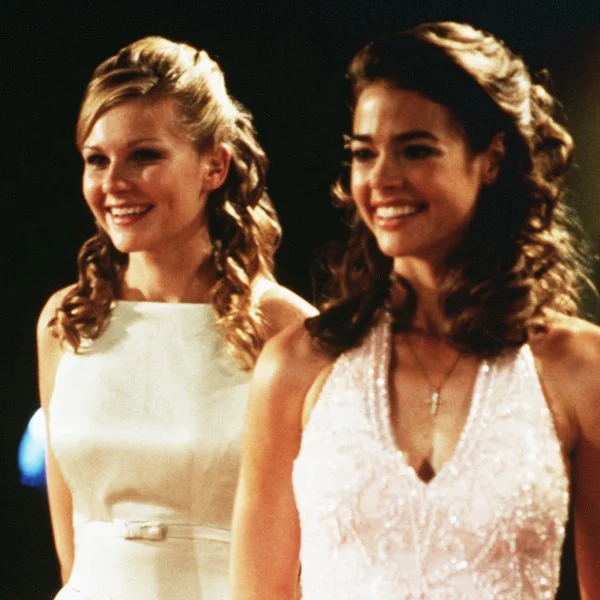
Twenty-seven years after its release, the dark teen comedy Drop Dead Gorgeous continues to hold a special, albeit cult, place in the hearts of many. The 1999 satirical film, set against the backdrop of the fictional Mount Rose American Teen Princess Pageant, starred a young Kirsten Dunst as ambitious contestant Amber Atkins. Despite a lukewarm box office reception and mixed critical reviews upon its initial debut, Drop Dead Gorgeous has since blossomed into a beloved cult classic, celebrated for its sharp wit, unforgettable characters, and prescient commentary on media culture and societal beauty standards. The film’s enduring appeal, however, has recently brought a different kind of question to the forefront: what do the children of its stars make of their parents’ early work?
Kirsten Dunst, now a mother of two, recently offered a glimpse into her family life, revealing which of her films her children have had the chance to watch. While the specifics of her children’s viewing habits remain a private matter, the conversation inevitably circles back to Drop Dead Gorgeous, a film that, by its very nature, might seem an unlikely candidate for a family viewing. The film, which satirizes the cutthroat world of beauty pageants with a darkly comedic lens, features themes and humor that could be considered mature. However, Dunst’s own journey from a child actress to a mother navigating Hollywood’s landscape offers a unique perspective on how cinematic legacies are passed down through generations.
The Unlikely Rise of a Cult Classic
Released on July 23, 1999, Drop Dead Gorgeous was written by Lona Williams, a former beauty pageant contestant herself, and directed by Michael Patrick Jann. The film’s premise was simple yet effective: a group of teenage girls in a small Minnesota town compete for the coveted title of Miss Mount Rose American Teen Princess. What set it apart, however, was its unflinching, often absurd, portrayal of the lengths to which contestants and their mothers would go to achieve victory. The film’s mockumentary style, reminiscent of Christopher Guest’s comedies, allowed for intimate, often uncomfortable, glimpses into the lives of its characters.
Despite its eventual cult status, Drop Dead Gorgeous was a box office disappointment. Made on a budget of just under $15 million, it grossed a mere $10.5 million domestically. Critics were largely divided, with many finding its dark humor too extreme or its satire too biting. Entertainment Weekly famously gave it a D, calling it "graceless," and the late Roger Ebert questioned the screenplay’s comedic intent. In the context of 1999, a year rich with successful teen comedies like She’s All That, 10 Things I Hate About You, and American Pie, Drop Dead Gorgeous stood out as an outlier, its edgy and cynical tone not resonating with mainstream audiences at the time.
However, as is often the case with films that push boundaries, Drop Dead Gorgeous found its audience over time. Streaming platforms and the proliferation of home video allowed a new generation to discover its unique brand of humor. Its quotable lines, over-the-top characters, and surprisingly insightful social commentary began to earn it a devoted following. The film’s ensemble cast, featuring then-rising stars like Kirsten Dunst, Denise Richards, Kirstie Alley, and Ellen Barkin, along with early appearances from future luminaries such as Amy Adams and Brittany Murphy, added to its retrospective appeal.
Behind the Scenes: A Challenging Production
The journey of Drop Dead Gorgeous from script to screen was not without its own dramatic flair. Lona Williams, drawing heavily on her personal experiences in the pageant circuit, poured a significant part of herself into the screenplay. The initial critical and commercial failure of the film was a deeply personal blow to Williams, who had won a college scholarship as Minnesota’s Junior Miss. She admitted to feeling "so hurtful on a deep level" because "there was so much of myself in this."
The on-set environment was also reportedly fraught with creative tension. Williams and first-time feature director Michael Patrick Jann reportedly clashed on several occasions. Williams described Jann as "a bit of an a–hole," recalling moments of intense emotional distress on set. Jann, who was only 26 at the time, later acknowledged his youthful inflexibility, admitting, "I think I probably could have been nicer. As a 26-year-old, I was probably a little more like, ‘No, we’re f–king doing it this way. What are you talking about?’ I was maybe a tiny bit insensitive at that time in my life." This dynamic highlights the challenges of translating a personal vision to the screen, especially when navigating the pressures of a studio production with a young, inexperienced director.
Casting Twists and Studio Hurdles
The casting process for Drop Dead Gorgeous also had its share of near misses and intriguing alternatives. Before Kirsten Dunst was cast as the determined Amber Atkins, teen idol Melissa Joan Hart, fresh off Sabrina the Teenage Witch, auditioned for the role. Hart ultimately starred in Drive Me Crazy, another teen film released that same year. Director Michael Patrick Jann found his inspiration for casting Dunst not from her previous major roles in Interview with the Vampire or Jumanji, but from her surprisingly guileless performance on Celebrity Teen Jeopardy. He saw in her the ability to portray a character who could maintain a sense of innocence and drive even amidst the pageant’s often cutthroat machinations.
The roles of Amber’s mother, Annette Atkins, and the villainous Gladys Leeman also saw potential shifts. Goldie Hawn was initially considered for the role of Annette, a choice that director Jann believed might have resulted in a "less dirty" portrayal. For Gladys, the studio’s top choice was Sigourney Weaver, a stark contrast to the eventual casting of Kirstie Alley. Alley’s portrayal of the fiercely competitive and increasingly unhinged Gladys became one of the film’s most memorable aspects, though Jann recounted her first day of filming as an intense experience, with Alley reportedly vocal about her recent smoking cessation, diet, and menstrual cycle, and allegedly resistant to wardrobe choices, opting to try on costumes at a Scientology center.
The film’s title itself underwent a significant alteration. It was originally intended to be Dairy Queens. However, the corporation owning the Dairy Queen brand reportedly took issue with the title and the association with the dark comedy, leading to a lawsuit that ultimately forced the filmmakers to adopt Drop Dead Gorgeous. This legal hurdle is a common occurrence in Hollywood, underscoring the importance of intellectual property rights in the film industry.
An Unlikely Debut and Future Stars
Drop Dead Gorgeous also served as a pivotal launching pad for several actors who would go on to achieve significant success. Amy Adams, who played the promiscuous cheerleader Leslie Miller, made her feature film debut in the movie. Adams, who would later garner six Oscar nominations, recalled the experience as surreal, marking her first realization that a career in Hollywood was attainable, even if it started with commercials. Allison Janney, already an accomplished theater actress, secured her role as Loretta, Annette’s best friend, partly due to Brittany Murphy, who had initially been cast as another contestant, Lisa Swenson. Murphy reportedly recommended Janney to casting director John Papsidera.
Janney, who would later win an Oscar for I, Tonya and multiple Emmys for her role in The West Wing, has spoken extensively about the enduring popularity of Drop Dead Gorgeous. She has stated that more people approach her about this film than any other project in her career, including her acclaimed work on The West Wing. She fondly remembers a fan encounter at an airport where teenagers were quoting her character Loretta’s lines, only realizing later that the actress herself was sitting beside them. Janney’s description of Loretta’s distinctive look, including the “confused sense of glamour” and over-the-top tan, further solidifies the character’s cult status.
Enduring Themes and Legacy
Beyond its comedic elements and behind-the-scenes drama, Drop Dead Gorgeous tapped into and foreshadowed several enduring themes. Its satirical take on the relentless pursuit of fame and the often-distorted lens through which female ambition is viewed remains relevant. The film’s critique of media manipulation and the manufactured narratives surrounding beauty pageants can be seen as prescient in an era dominated by reality television and social media. The film’s exploration of the complex, often competitive, relationships between mothers and daughters, particularly Annette and Amber, who are close in age, was even pitched as inspiration for the hit television series Gilmore Girls by one of the film’s producers, Gavin Polone.
The film’s ending, though dark, was reportedly toned down from an even more grim original concept. The initial version involved Kirstie Alley’s character, Gladys, committing suicide in prison, a twist that test audiences found to be "too much." This revision highlights the delicate balance filmmakers must strike between delivering a compelling narrative and ensuring audience receptiveness, especially for a film aiming for dark comedy rather than outright tragedy.
Looking Ahead: The Next Generation
Kirsten Dunst’s revelation about her children’s movie preferences adds a contemporary layer to the film’s ongoing legacy. As a mother, Dunst, like many parents, likely navigates the complexities of introducing her children to her work, especially films made before they were born. The question of which movies are "appropriate" for children is a deeply personal one, influenced by parental values, the children’s ages and maturity levels, and the specific content of the film.
Whether Dunst’s children have seen Drop Dead Gorgeous or not, the film’s journey from a box office flop to a cult phenomenon is a testament to its unique artistic merit and its ability to resonate with audiences on a deeper level. It stands as a sharp, satirical commentary on American culture, showcasing early talent from a generation of actors who would go on to define a significant era in film and television. The fact that a film initially met with criticism can still spark conversation, inspire new projects, and be a point of pride for its cast and crew, even decades later, speaks volumes about its lasting impact. The enduring appeal of Drop Dead Gorgeous suggests that its blend of dark humor and incisive social critique will continue to entertain and provoke thought for years to come, perhaps even inspiring future generations to pick up the microphone and finish the pageant, no matter the cost.

