
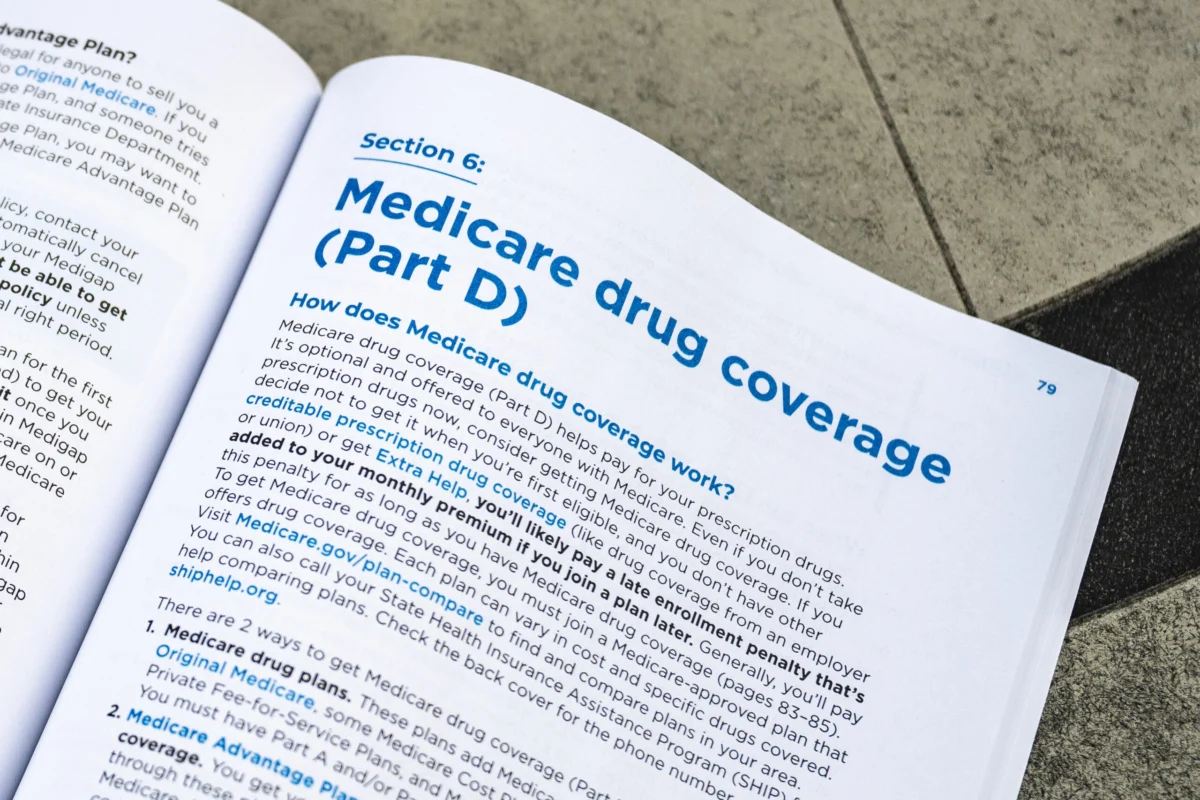
Millions of Medicare enrollees who rely on stand-alone prescription drug plans are facing a daunting financial hurdle as average monthly premiums are projected to surge by 50% in 2027. According to a comprehensive new analysis released by KFF, a prominent health information nonprofit, the average cost for these plans will jump from $34 a month to $51. However, health policy experts emphasize that this financial blow is not entirely unavoidable. Enrollees can actively mitigate these steep increases—or bypass them altogether—by reviewing their options and transitioning to more cost-effective plans during the federal program’s open enrollment window, which remains active through December 7.
The dramatic spike in healthcare costs arrives at a politically sensitive time, intersecting with broader national anxieties over affordability and pharmaceutical pricing ahead of the midterm elections. With health policy becoming a central battleground for voters and lawmakers alike, the implications of these rising premiums extend far beyond individual household budgets, prompting intense debates over federal oversight, industry subsidies, and the true cost of prescription medications in the United States.
Real-World Impact: One Retiree’s Race to Beat the Hike
For millions of older Americans living on fixed incomes, the impending 2027 rate adjustments represent an urgent wake-up call. Robert Travis Scott, a resident of Abingdon, Virginia, experienced firsthand the sticker shock that many enrollees are encountering. In late October, Scott received an official notification regarding his AARP-UnitedHealthcare Medicare drug plan: his monthly premium was slated to skyrocket from $39.60 in 2026 to an astonishing $121.90 for the 2027 benefit year.
Unwilling to absorb the nearly tripling cost, Scott turned to the internet to evaluate competing coverage options. With minimal effort spent comparing pricing structures online, he successfully located an alternative plan offered by Humana that featured nearly identical benefits for just $19.30 a month.
Reflecting on his proactive search, Scott expressed both relief and apprehension for his peers. "Yes, I am quite happy about that," he said regarding his new coverage. At the same time, he voiced deep astonishment that his previous insurer would implement such a drastic increase, worrying that many seniors might neglect to shop around for alternatives. By taking matters into his own hands, Scott estimates he has spared himself roughly $1,000 in out-of-pocket expenses for the upcoming year.
KFF experts underline that Scott’s proactive approach is precisely what is required to navigate the current insurance landscape. Juliette Cubanski, vice president and director of the Program on Medicare Policy at KFF, warned that complacency could carry severe financial penalties. "With some plans increasing premiums substantially, the stakes are higher this year for people with Medicare stand-alone drug coverage if they sit on the sidelines during open enrollment," Cubanski stated.
A Closer Look at the Data: Stand-Alone Versus Medicare Advantage Plans
The KFF analysis paints a complex picture of the Medicare Part D landscape, highlighting a stark divide between traditional stand-alone prescription drug plans and private Medicare Advantage alternatives.
Nearly 25 million Americans are currently enrolled in stand-alone Medicare prescription drug plans, while approximately 31 million receive their drug coverage bundled inside private Medicare Advantage health plans, which serve as an alternative to traditional Medicare.
While stand-alone plan enrollees face an average 50% jump in monthly premiums, individuals insured through Medicare Advantage plans are insulated from the worst of these hikes. According to the KFF research, Medicare Advantage enrollees will pay an average of $9 for drugs as part of their overall monthly premium in 2027, representing a modest increase of less than $2 per month.
Beyond monthly premiums, however, policyholders across both categories are confronting a broader array of escalating expenses. Deductibles for prescription coverage are marching upward across the board. For stand-alone plans, the average annual deductible will climb to $643 in 2027, up notably from $540 in 2026. Concurrently, drug deductibles for Medicare Advantage beneficiaries will average $489, compared to $360 the previous year.
Compounding these cost pressures is a structural shift in how out-of-pocket expenses are calculated. The KFF analysis revealed that a majority of Medicare enrollees with drug coverage next year will be subjected to coinsurance rather than traditional copayments. Unlike fixed copayments, coinsurance requires patients to pay a predetermined percentage of a drug’s total cost, introducing a layer of unpredictability and financial vulnerability for individuals managing expensive chronic medications.
The Policy Decisions Behind the 2027 Surge
The sharp trajectory of these premium hikes has raised fundamental questions regarding the administrative and regulatory decisions shaping the Medicare market. A primary driver behind the projected cost increases appears to be a major policy shift executed by the Centers for Medicare & Medicaid Services (CMS).
In July, CMS made the controversial decision to prematurely terminate a three-year pilot program explicitly designed to suppress stand-alone prescription drug plan premiums. The initiative had injected federal subsidies into stand-alone plans throughout 2025 and 2026 to maintain affordability. By cutting the subsidy program short after only two years, CMS set the stage for accelerated premium growth heading into 2027.
The termination of the program drew starkly different evaluations from federal officials and health policy analysts. CMS Administrator Mehmet Oz publicly defended the decision to scrap the initiative, characterizing the pilot program as an unjustified bailout for the insurance industry.
Conversely, KFF researchers argued that withdrawing these temporary financial buffers would inevitably force insurers to pass the burden onto consumers. KFF’s findings indicate that roughly 10.4 million Medicare enrollees—representing 76% of stand-alone drug plan participants who do not receive low-income subsidies—will face higher monthly bills next year if they maintain their current coverage. This vulnerable total includes approximately 4.1 million enrollees currently enrolled in zero-premium plans who will automatically see cost increases because zero-premium options will essentially vanish from the market for 2027.
Discrepancies in Federal Projections
A notable tension exists between the sobering data presented in the KFF analysis and the more optimistic outlook published by federal regulators. In official communications, CMS projected relative stability in the market, forecasting a minimal $1 increase in the national average monthly premium—moving from $35 to $36—based on September 2026 enrollment metrics.
KFF researchers quickly pointed out the divergence, noting that their methodology yielded starkly different conclusions. Furthermore, KFF observed that CMS failed to provide a transparent explanation of the mathematical models and calculation methods used to arrive at its stable national average. Health analysts suggest that federal projections may have heavily relied on the assumption that a massive wave of enrollees would successfully navigate open enrollment and switch to lower-cost plans, thereby dragging the mathematical average downward. When asked to clarify these discrepancies, CMS did not immediately respond to requests for comment from journalists.
The Political Battleground Over Pharmaceutical Costs
Against this financial backdrop, prescription drug affordability has re-emerged as a potent political flashpoint, heavily coloring the national discourse as voters evaluate candidates ahead of the November midterm elections. Healthcare costs consistently rank among the primary domestic concerns animating the electorate.
President Donald Trump, whose political standing has faced scrutiny with approval ratings dipping in various national polls, has aggressively campaigned on his administration’s record regarding the pharmaceutical industry. The White House has repeatedly asserted that aggressive federal negotiation with drug manufacturers has yielded historic savings for American consumers.
Speaking at a high-profile campaign rally in Chillicothe, Ohio, on October 28—just days ahead of the November 3 midterm elections—President Trump emphasized his administration’s claims of sweeping pharmaceutical reform. "What we’re doing great with is pharmaceuticals, hundreds of billions," Trump told the gathered crowd. "You should win just on this, everybody running. We have the lowest drug prices anywhere in the world. We went from the highest drug prices, we now have the lowest drug prices, favored nations, anywhere in the world."
Despite such optimistic assertions from the executive branch, health policy specialists point out that macroeconomic pricing agreements do not automatically translate to seamless relief at the pharmacy counter. Actual out-of-pocket expenses for individual beneficiaries remain highly fragmented, fluctuating wildly depending on clinical needs, specific diagnoses, and the exact nuances of an individual’s chosen insurance tier.
Chronology of Events Leading to the 2027 Open Enrollment Crisis
To fully understand the current pressures facing Medicare beneficiaries, it is helpful to trace the timeline of key policy and market developments leading up to the 2027 enrollment period:
- July: CMS officially announces the early termination of a three-year temporary subsidy program designed to keep stand-alone Part D premiums artificially suppressed, sparking immediate concern among health policy analysts.
- September: CMS releases positive baseline projections suggesting national average drug plan premiums will remain largely stable, rising by only a dollar to $36, though methodology details remain opaque.
- Late October: KFF publishes its comprehensive independent analysis projecting a dramatic 50% surge in average stand-alone premiums for 2027, warning that over 10 million enrollees will see rate hikes if they fail to switch plans.
- October 28: President Trump addresses supporters at a campaign rally in Ohio, highlighting pharmaceutical cost negotiations as a central achievement of his administration ahead of the midterms.
- Late October / Early November: Enrollees across the nation begin receiving formal annual notice of change letters, revealing steep premium jumps—such as Robert Travis Scott’s encounter with a rate tripling in Virginia—prompting a rush toward digital comparison tools.
- December 7: The official Medicare open enrollment period concludes, marking the hard deadline for millions of seniors to evaluate their options, compare deductibles, and switch to alternative plans to avoid the projected cost spikes.
Broader Implications and Future Outlook
The convergence of rising premiums, expanding deductibles, shifting cost-sharing structures, and the expiration of federal stabilization pilots presents a critical test for the Medicare program and the millions of Americans who depend on it. While the open enrollment window provides a vital safety valve allowing proactive consumers to escape the worst of the financial fallout, critics and policy analysts argue that relying on individual consumer vigilance is an imperfect substitute for systemic affordability reforms.
As the December 7 open enrollment deadline rapidly approaches, advocacy groups, senior networks, and health policy organizations continue urgent outreach campaigns to educate beneficiaries on the necessity of reviewing their annual coverage notices. For millions of older adults navigating fixed incomes in an inflationary economy, the actions taken—or ignored—during these critical weeks will dictate their financial stability and healthcare access throughout the entirety of 2027.

