
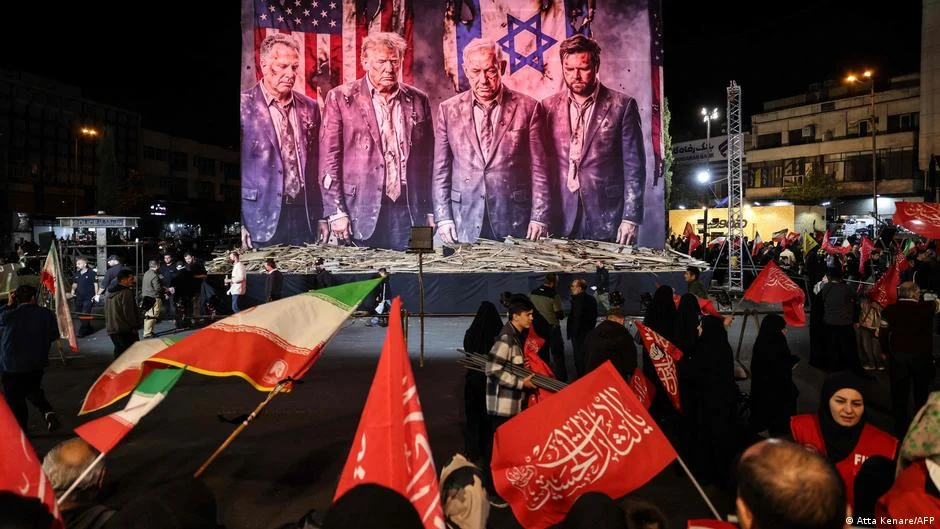
Following a resounding electoral setback in the 2026 US midterm elections, President Donald Trump has publicly acknowledged that the ongoing military campaign against Iran played a critical role in his party’s performance at the ballot box. The electoral fallout, which resulted in a shift of legislative power to the Democratic Party, has cast a long shadow over the administration’s foreign policy, forcing a re-evaluation of the strategic efficacy of the White House’s Middle East approach.
In an interview with Fox News this week, President Trump conceded that the American electorate’s frustration with the economic fallout of the conflict—specifically the inflationary pressure on gasoline prices—served as a primary driver for the Republican losses. While the President maintained that the broader mission regarding Iran remains a matter of vital national security, he recognized the political cost of the war, marking a rare moment of introspection for an administration that has prioritized a robust, often kinetic, approach to regional containment.
A Chronology of Escalation and Electoral Timing
The current hostilities are the result of years of mounting tension between Washington, Tehran, and Tel Aviv. The roots of this specific phase of the conflict can be traced back to the post-pandemic realignment of regional security architectures. Throughout the summer of 2026, the United States and Israel coordinated a series of limited, precision-guided strikes against Iranian military assets, infrastructure, and suspected proxy outposts.
Observers have long noted that both the US and Israel deliberately calibrated the tempo of their military operations to avoid major escalatory events until after their respective national elections. The intent, according to defense analysts, was to prevent an "October Surprise" scenario that might have destabilized domestic political support.
By late October 2026, however, the administration’s posture shifted. Reports from the Wall Street Journal indicated that the White House began signaling to Gulf Cooperation Council (GCC) member states that they should prepare for a period of heightened military intensity immediately following the midterm cycle. This "post-election surge" strategy was designed to weaken Iran’s regional influence decisively before the political landscape in Washington became more constrained by a divided or opposition-controlled Congress.
The Lame-Duck Dilemma and Foreign Policy
The transition period between a midterm election and the seating of a new Congress creates a unique "lame-duck" environment. Scholars of political science have noted that when a sitting president loses the legislative mandate, the temptation to pivot toward foreign policy becomes almost irresistible. As noted in Foreign Affairs magazine, the power of the presidency allows for executive action in international theaters that remains largely insulated from the "pesky" realities of domestic legislative oversight.
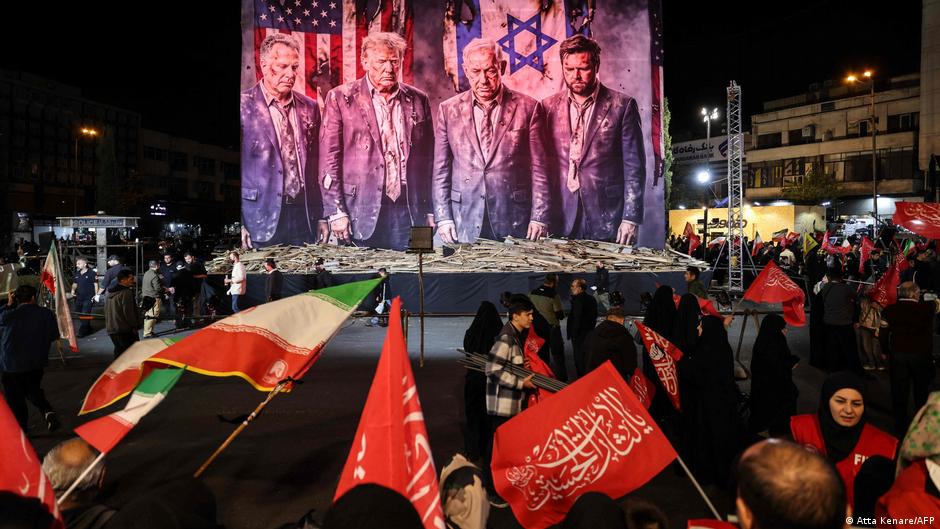
However, this executive freedom is not absolute. With the incoming Democratic majority set to take their seats in early 2027, the administration’s window for unchecked military intervention is rapidly closing. The potential for the new Congress to utilize the power of the purse—specifically by withholding funding for further offensive operations—has created a climate of uncertainty in both the Pentagon and the foreign ministries of Middle Eastern allies.
Despite the tactical room to maneuver, President Trump has signaled to several media outlets that he is currently in "no rush" to authorize further wide-scale bombing campaigns. This hesitation likely stems from a combination of political exhaustion and the realization that the cost of further escalation could prove catastrophic to his remaining domestic agenda.
Iran’s Strategic Calculus: A Wider Theater of Conflict
In Tehran, the rhetoric remains defiant. Senior Iranian officials have publicly stated that the country is prepared for any level of US aggression. More concerning to Western intelligence agencies is the shift in Iranian doctrine; indicators suggest that if forced into a broader conflict, Tehran is willing to expand its target set significantly.
During a virtual briefing hosted by the Middle East Institute (MEI), security expert Ross Harrison emphasized that if the Iranian leadership perceives an existential threat to the regime, traditional rules of engagement will be abandoned. "All bets are off," Harrison noted, suggesting that the focus would likely shift from military-to-military engagement to the targeting of regional energy infrastructure, data centers, and critical undersea telecommunications cabling. Such an expansion would transform a regional military dispute into a global economic crisis, threatening the flow of oil and the stability of the digital economy.
Conversely, some analysts suggest that Iran’s previous restraint was a calculated gamble. By waiting out the US midterms, Tehran may have been testing the administration’s political resolve. With the elections now concluded, some experts posit that the Iranian leadership might be more amenable to a negotiated peace, provided they receive sufficient face-saving concessions.
The Gulf States: Navigating the Fallout
The regional impact of the US-Iran conflict has placed Gulf states in a precarious, if not untenable, position. For years, these nations have relied on the US security umbrella as a deterrent against Iranian expansionism. However, the 2026 campaign has proven that the presence of US military assets—meant to act as a shield—has increasingly functioned as a lightning rod for retaliation.
At the Manama Dialogue in Bahrain, Anwar Gargash, a senior foreign policy adviser to the UAE, expressed the frustration felt throughout the region. "We find ourselves drawn within a crisis that we worked diplomatically very hard to try to avert," Gargash remarked. The sentiment is echoed in Qatar and Saudi Arabia, both of which are actively conducting emergency preparedness drills at critical infrastructure sites, including international airports and energy hubs.

The geopolitical shift is further evidenced by Egypt’s recent efforts to bolster air defenses around the Suez Canal, reflecting a widespread belief that no nation in the region is truly insulated from the conflict’s reach.
The Erosion of the American Security Umbrella
The most significant long-term consequence of this conflict may be the fundamental re-evaluation of the US-Gulf relationship. Hasan Alhasan, a senior fellow at the International Institute for Strategic Studies (IISS), noted that there is deep-seated disappointment regarding the "folly" of the war and the erratic nature of Washington’s diplomatic conduct.
"If the US liberation of Kuwait in 1991 was the moment that established America’s role in the region, the 2026 war may be remembered as the moment that undid it," Alhasan stated. This loss of confidence is driving a trend toward "strategic autonomy." Gulf nations are no longer looking exclusively to Washington for security; instead, they are diversifying their alliances, as seen in the UAE’s normalization with Israel and the Saudi-led push toward the Mecca defense pact, which integrates Pakistan and Turkey into the regional security architecture.
Implications for the Future
As the dust settles on the US midterm elections, the path forward remains shrouded in ambiguity. Andreas Krieg of King’s College London argues that the "lame-duck" phase of the Trump presidency will only accelerate the region’s move toward self-reliance. The ideal scenario for the Gulf, according to some experts, is for regional powers to unite and exert collective pressure on Washington to cease hostilities, while simultaneously pursuing a non-aggression pact with Tehran—a move that would effectively bypass the United States.
However, such unity remains elusive. Former US ambassador Ryan Crocker, during his appearance at the MEI briefing, was skeptical of any near-term "Gulf unity." He pointed to the deep-seated mistrust stemming from the 2017 diplomatic crisis, as well as ongoing, divergent interests in Sudan, Yemen, and the broader approach to relations with Israel.
Ultimately, geography dictates the reality of the Middle East. As Harrison concluded, the Gulf states realize they cannot rely solely on Washington for their survival. They are increasingly forced to contemplate a future where their security is purchased not through American arms, but through a fragile, pragmatic understanding with Tehran. Whether such an accommodation can be reached before the current conflict spirals into an uncontrollable regional conflagration remains the most pressing question for international diplomacy. For now, the region waits, caught between the tail end of an American military campaign and the dawning realization of a post-American Middle East.
