
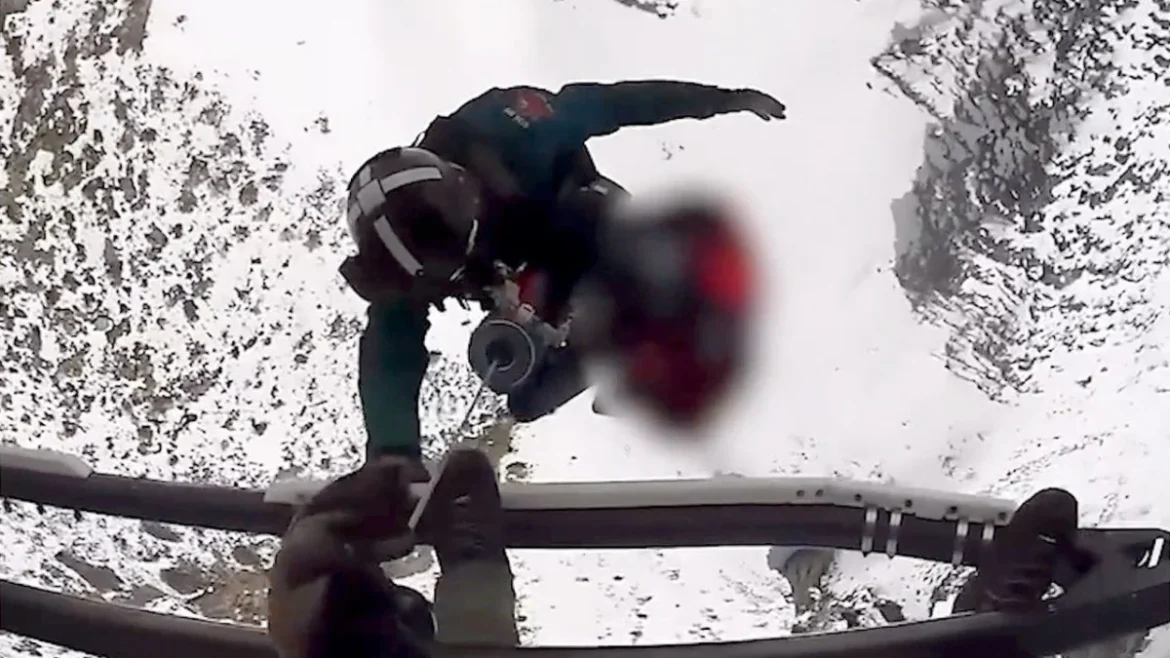
Authorities in Utah have released harrowing video footage documenting a high-altitude rescue operation from late last month, when a female hiker survived a catastrophic fall of several hundred feet near the summit of Mount Timpanogos. The incident, which occurred on October 26, highlights both the unforgiving nature of alpine terrain and the extraordinary precision required by modern search and rescue (SAR) teams operating in extreme environments.
The victim, whose identity has not been publicly released by law enforcement, was navigating a steep trail system on the 11,700-foot peak when she lost her footing. What began as a routine autumn day outdoors quickly transformed into a life-or-death crisis as she tumbled down the precipitous mountain face before miraculously coming to a halt on a narrow, exposed cliff ledge.
Anatomy of a High-Altitude Rescue
The operation to save the stranded hiker demanded seamless coordination between ground teams and aviation units. According to updates provided by the Utah County Sheriff’s Office, the department’s specialized search and rescue pilot spotted the injured woman from a fixed-wing aircraft as ground teams were concurrently being mobilized to ascend the mountain.
The newly released video footage provides a stark, bird’s-eye perspective of the extreme topography where the accident took place. It captures the sheer vertical drop of the slope, the treacherous loose shale and rock formations characteristic of the peak, and the tense moments when a rescue helicopter was forced to hover perilously close to the cliffside. Operating in winds and turbulent air currents typical of high-altitude zones, the aviation crew successfully deployed a hoist operator to secure the hiker and lift her from the precarious ledge.
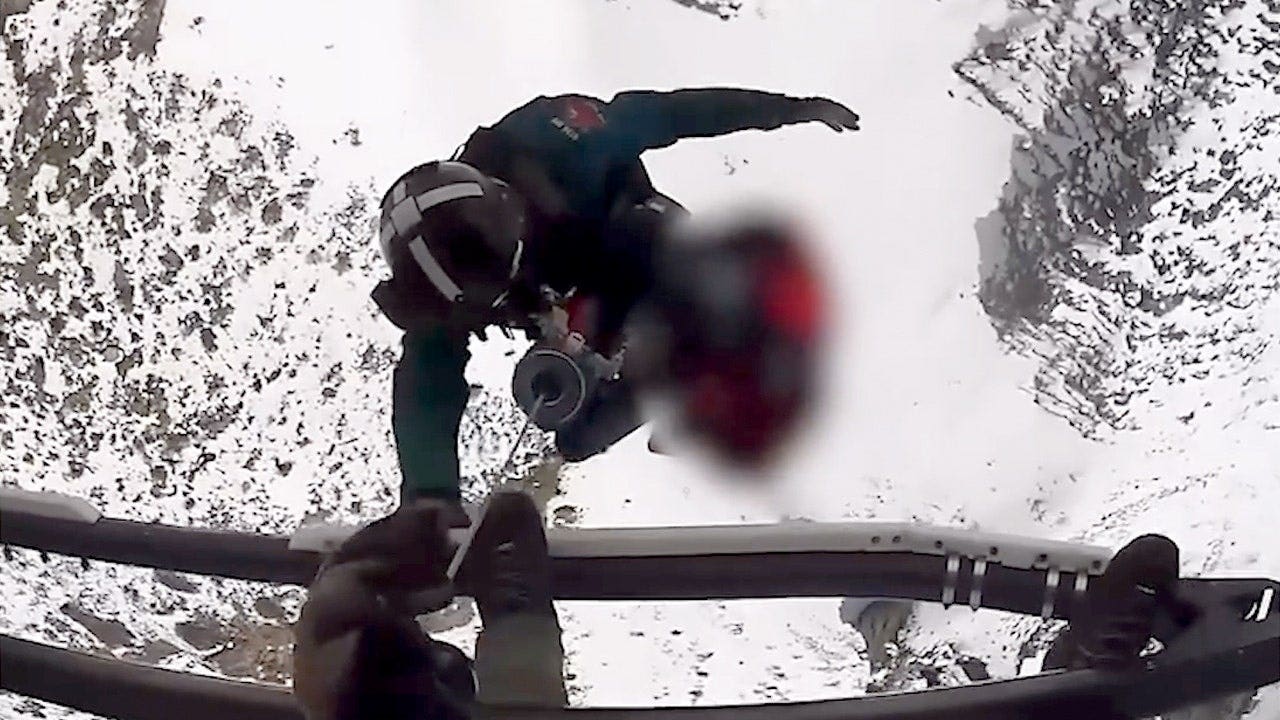
Officials confirmed that the hiker sustained severe injuries from the fall but has been making steady progress in her recovery. "We have heard that the hiker is recovering well from her injuries, and we wish her a full and speedy recovery," the Utah County Sheriff’s Office stated in a social media release. "Thank you to all those agencies that rushed to the rescue. This incident is a stark reminder of how fast a fun outing can turn into a life-or-death situation."
Understanding Mount Timpanogos and Its Hazards
Rising majestically to an elevation of 11,700 feet, Mount Timpanogos is one of the most prominent and frequently visited peaks in Utah’s Wasatch Range. Located approximately 50 miles south of Salt Lake City, the mountain is a crown jewel for regional hikers, outdoor enthusiasts, and mountaineers.
Data from the U.S. Forest Service indicates that the mountain features approximately 17.4 miles of interconnected trails, primarily accessible via two major trailheads: Aspen Grove and Timpooneke. While the peak attracts thousands of visitors annually—particularly during the peak summer and early autumn months—it poses significant environmental challenges.
As autumn progresses into late October, weather conditions on Mount Timpanogos deteriorate rapidly. Sub-freezing temperatures, unexpected snow accumulation, high-velocity winds, and icy trail conditions can catch unprepared hikers off guard. Even experienced outdoor adventurers face heightened risks due to the shifting terrain, where a single misstep on loose rock or ice can result in a prolonged and potentially fatal slide.
The Chronology of the Incident
While official reports outline the broad strokes of the rescue, the timeline underscores the rapid response time of Utah’s emergency infrastructure:

- Late Morning, October 26: The female hiker begins her ascent or descent along the upper elevations of Mount Timpanogos, navigating technical sections near the summit.
- Mid-Day: The hiker loses her footing on the steep incline, sliding hundreds of feet down the mountain before arresting her fall on a narrow cliff ledge.
- Initial Response: Emergency dispatchers receive notification of the incident, prompting the immediate activation of the Utah County Sheriff’s Office Search and Rescue (SAR) division.
- Aerial Spotting: An SAR plane deployed to the area successfully locates the injured hiker on the cliffside, relaying precise coordinates to ground and helicopter units.
- Extraction: A rescue helicopter navigates the challenging high-altitude winds, deploying personnel to hoist the patient safely from the ledge.
- Medical Transport: The hiker is evacuated from the mountain and transported to a regional medical facility for urgent trauma care.
- Late October / Early November: Medical professionals stabilize the patient, and law enforcement releases updates confirming her ongoing recovery alongside dramatic footage of the operation.
Broader Implications for Backcountry Safety
Search and rescue organizations across the American West have noted a steady increase in backcountry incidents in recent years, driven by a surge in outdoor recreation. Incidents like the one on Mount Timpanogos serve as critical educational touchstones for the outdoor community, emphasizing that accidents can happen regardless of an individual’s preparation or experience level.
Utah boasts some of the most rigorous and well-trained volunteer and professional search and rescue teams in the United States. Agencies such as the Utah County Sheriff’s Office frequently utilize a combination of cutting-edge technology—including thermal imaging, advanced aviation assets, and drone reconnaissance—to locate stranded or injured individuals in remote wilderness areas.
However, emergency services continually emphasize that prevention and preparedness remain the first line of defense. Authorities strongly advise hikers tackling high-altitude alpine environments to adhere to several foundational safety guidelines:
- Check Weather and Trail Conditions: Mountain weather can shift from calm to blizzard conditions within hours, particularly in late autumn. Checking localized forecasts before departure is critical.
- Carry Proper Gear: Even for day hikes, carrying traction devices (such as microspikes), emergency shelter, extra layers, reliable communication tools (like satellite messengers), and adequate hydration and nutrition can mean the difference between life and death.
- Travel with Partners: Venturing into remote alpine terrain alone increases the vulnerability of an injured party, as solo hikers cannot self-rescue or immediately summon help if incapacitated.
- Know Your Limits: High-altitude environments deplete physical stamina faster than lower elevations. Turning around before reaching a summit due to fatigue, deteriorating weather, or worsening trail conditions is often the safest decision.
The successful rescue on Mount Timpanogos stands as a testament to the dedication, bravery, and technical skill of Utah’s emergency responders. While the hiker’s journey down the mountain ended in survival, local authorities hope that the release of the dramatic video footage will encourage greater caution among those who seek to conquer the state’s majestic peaks.
