
At East Central University in Ada, Oklahoma, the practical consequences of a sweeping policy shift are playing out in real-time, leaving vacant desks in departments ranging from history to criminal justice. As the university struggles to fill key faculty positions, administrators are reporting a troubling trend: not only are applicant pools shrinking, but top-tier candidates are increasingly withdrawing from the hiring process, citing the state’s aggressive posture toward academic job security. In the computer science department, the fallout was immediate; after the institution’s first-choice candidate declined an offer, the university was forced to settle for a secondary applicant. This hiring bottleneck serves as a microcosmic indicator of a broader, systemic challenge facing Oklahoma’s regional public universities under the administration of Governor Kevin Stitt.
The tension centers on the governor’s recent executive directives, which aim to dismantle traditional tenure at regional and community colleges while imposing rigorous, market-driven performance metrics on public higher education. While the state’s flagship research institutions—the University of Oklahoma and Oklahoma State University—remain exempt from these mandates, the Regional University System of Oklahoma (RUSO) schools find themselves in the crosshairs of a widening ideological divide. For these institutions, which serve as the educational and economic anchors for rural communities, the removal of tenure is being viewed not merely as an administrative change, but as an existential threat to their ability to compete for academic talent.
A Chronology of the Tenure Crackdown
The current legislative and executive environment in Oklahoma is the culmination of a multi-year effort to reshape the state’s higher education landscape. Following a national trend of skepticism toward traditional academic structures, Governor Stitt initiated a series of reforms designed to prioritize "workforce alignment" and "return-on-investment."
In February 2026, the administration formalized this stance with a series of executive orders. The primary order prohibited regional and community colleges from granting tenure to any new faculty hires. This move followed a pattern of similar legislative attempts across the United States, where conservative lawmakers in states such as Texas, Arkansas, and Kentucky have sought to curtail or eliminate tenure, arguing that the system protects underperforming professors and insulates them from necessary accountability.
By March 2026, the conversation moved to the state legislature with the introduction of Senate Bill 1782. While the bill aimed to expand the tenure ban to all public universities, it ultimately stalled in the Senate Education Committee. Despite the failure of the bill to pass, the governor’s executive order remained in effect, creating a two-tiered system where faculty at regional schools operate under significantly different professional conditions than their counterparts at state research universities.

Data and Institutional Impact
The impact of these policies on recruitment cannot be overstated. According to data from the RUSO Board of Regents, as of July 24, 2026, the six regional universities had hired 44 faculty members who would have traditionally been placed on a tenure track. Under the new guidelines, these educators are restricted to fixed-term, renewable contracts.
The reliance on tenure as a recruitment tool is rooted in the competitive reality of academia. Professors often invest six to seven years of rigorous study and peer review to attain tenure, a status that provides them with protection against arbitrary dismissal and the freedom to conduct research that may be controversial. When this safeguard is removed, institutions in rural or remote areas—which already face a disadvantage when competing with major urban research centers for top-tier talent—lose one of their most significant bargaining chips.
The financial disparity further complicates the issue. RUSO institutions operate under strict affordability mandates to ensure access for local residents. In the 2025-26 academic year, the average cost of attendance for an in-state student at a RUSO school was approximately $17,557, significantly lower than the $27,293 average at the state’s flagship research institutions. This mandate, while beneficial to students, leaves regional schools with fewer resources to offer competitive salaries, making the loss of tenure as a non-monetary benefit particularly damaging.
Official Responses and Internal Tensions
The administration’s rationale remains focused on accountability. Governor Stitt has consistently argued that universities must be responsive to the needs of the workforce and the taxpayers who fund them. In his view, tenure facilitates complacency and hinders the ability of institutions to pivot toward modern economic demands.
However, university leadership, including East Central University President Wendell Godwin, disputes the characterization of the current faculty culture. "The governor, in messages he has delivered to us, says he disagrees with academic freedom and thinks professors at the end of their careers aren’t doing much," Godwin stated. "But we have a process for getting rid of professors who are not effective, whether they are tenured or not."
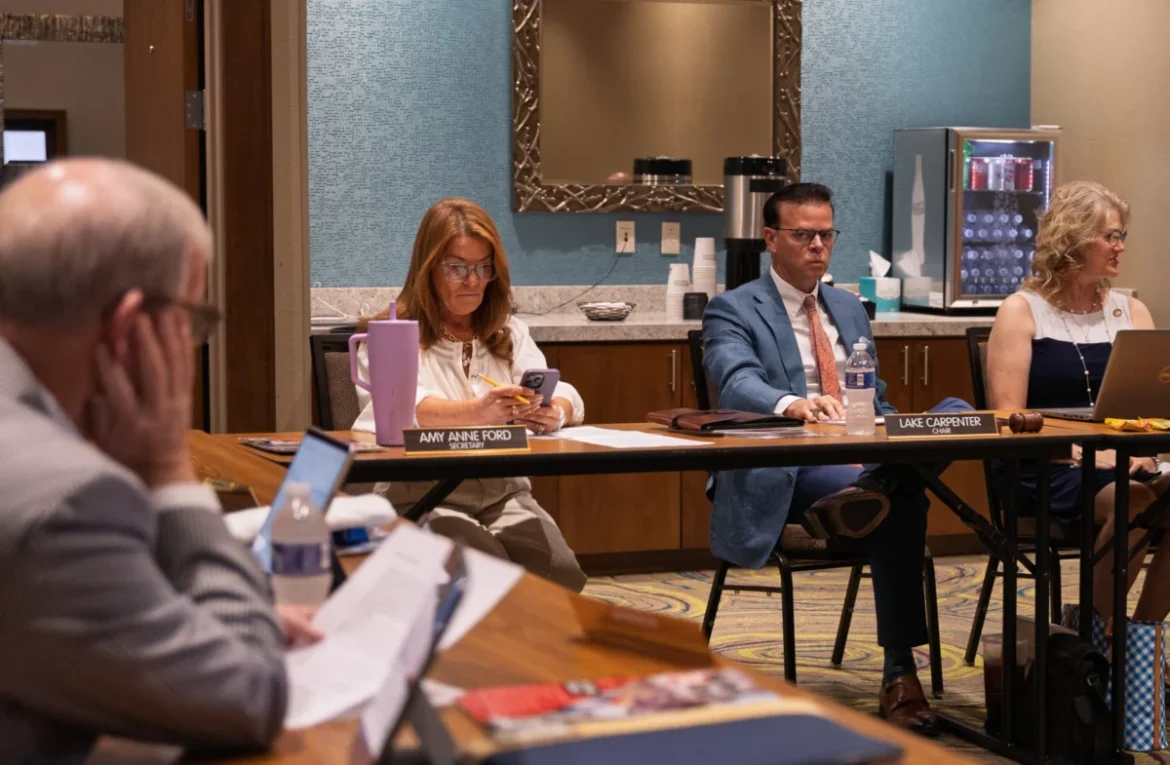
Regent Amy Anne Ford, who has served as the board’s point person on compliance with the governor’s orders, acknowledged the practical difficulty of the new policy. "You’re going to miss out on the best of the best," Ford noted, emphasizing that the lack of tenure acts as an additional barrier for institutions already struggling with their geographic location.

Broader Implications for Higher Education
The move to eliminate tenure at regional institutions has drawn sharp criticism from national experts. Deepa Das Acevedo, an assistant professor of law at Emory University and author of The War on Tenure, suggests that these policies signal to the academic community that a state does not value its institutions. "Your state’s leaders want to keep you insecure and don’t value your institutions enough," she observed, noting that the move disproportionately affects schools that already face high barriers to recruitment.
Cecilia Orphan, an associate professor at the University of Denver, views the situation as a continuation of the "second-class citizen" status often imposed on regional universities. By restricting tenure, she argues, the state is effectively signaling that these institutions are not "real" universities and that their students are not worthy of the same caliber of instruction found at flagship campuses.
This creates a cycle of institutional degradation: if regional schools cannot attract or retain top-tier faculty, the quality of education declines, which in turn impacts enrollment and the ability to serve the local economy. With nearly 90 percent of RUSO graduates choosing to remain in Oklahoma, the health of these institutions is inextricably linked to the state’s long-term economic prosperity.
The Path Forward: Hope for Sunset or Structural Change
Despite the current atmosphere of uncertainty, there is a glimmer of hope among faculty and local lawmakers that the policy may not be permanent. With Governor Stitt’s second term approaching its conclusion, many are looking toward the next administration. There is active discussion among some state legislators about the possibility of letting the executive order expire 90 days after the current governor leaves office, provided a successor does not act to extend it.
State Representative Ronny Johns, who represents the Ada area, has become a vocal advocate for supporting regional schools. "You hear all of us say we want our kids and grandkids to be able to stay in the state and work here," Johns remarked. "That should motivate all of us—the governor, Senate, House—to do all we can to promote those schools and support those schools."
For now, institutions like East Central University are forced to adapt, operating within a framework that requires annual reviews and strict adherence to workforce alignment metrics. While some new hires have accepted positions with the hope that the tenure ban will be reversed, the long-term impact on the stability and quality of the faculty remains a significant concern. The situation in Oklahoma serves as a high-stakes case study for the rest of the nation, illustrating the precarious balance between the desire for political oversight and the necessity of academic stability in sustaining a robust higher education system. As the state moves toward a new political chapter, the future of its regional universities will likely depend on whether policymakers prioritize the long-term health of these institutions or continue to pursue ideological shifts that threaten their foundational integrity.
