
For most of the 20th century, the prevailing scientific model of human origins was envisioned as a tree: a single, sturdy trunk representing our ancestral lineage, which divided into distinct, isolated branches and twigs. Under this paradigm, each species of human relative—or hominin—was considered a solitary, neat branch, culminating in the emergence of Homo sapiens. The conventional wisdom taught in universities for decades suggested that our species originated in Africa, migrated globally, and systematically displaced every archaic human group it encountered, leaving those groups as evolutionary dead ends.
However, the last thirty years of paleoanthropological research have fundamentally dismantled this simplistic narrative. We now understand that the story of human evolution is not one of linear progression or clean replacement, but rather a complex, interconnected web of contact, exchange, and survival. This paradigm shift has been accelerated by groundbreaking new research published in the journal Nature by Qiaomei Fu of the Chinese Academy of Sciences and her team. By recovering biological information from fossils far too degraded for traditional DNA analysis, scientists are finally unmasking the genetic legacy of our most ancient relatives.
A Technological Breakthrough in Paleoproteomics
The primary hurdle in studying deep-time human evolution has always been the fragility of deoxyribonucleic acid (DNA). In warm climates, such as those found in much of East Asia, DNA typically degrades within a few thousand years, leaving researchers with nothing but bone morphology to study. However, the team led by Qiaomei Fu turned to a more resilient material: tooth enamel.
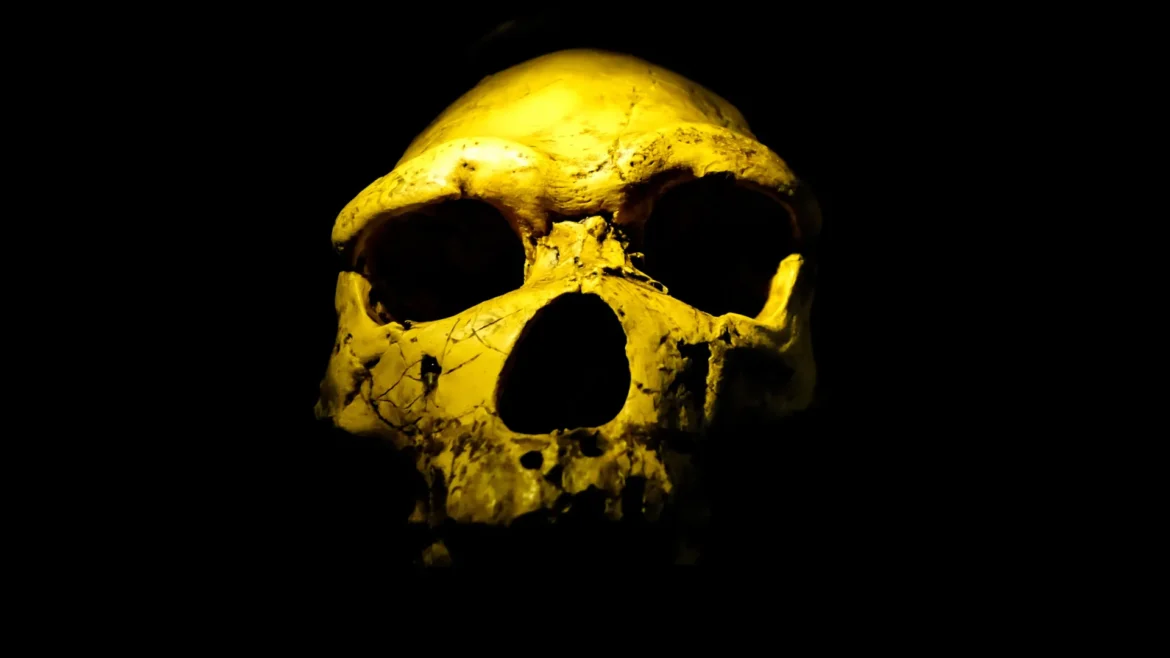
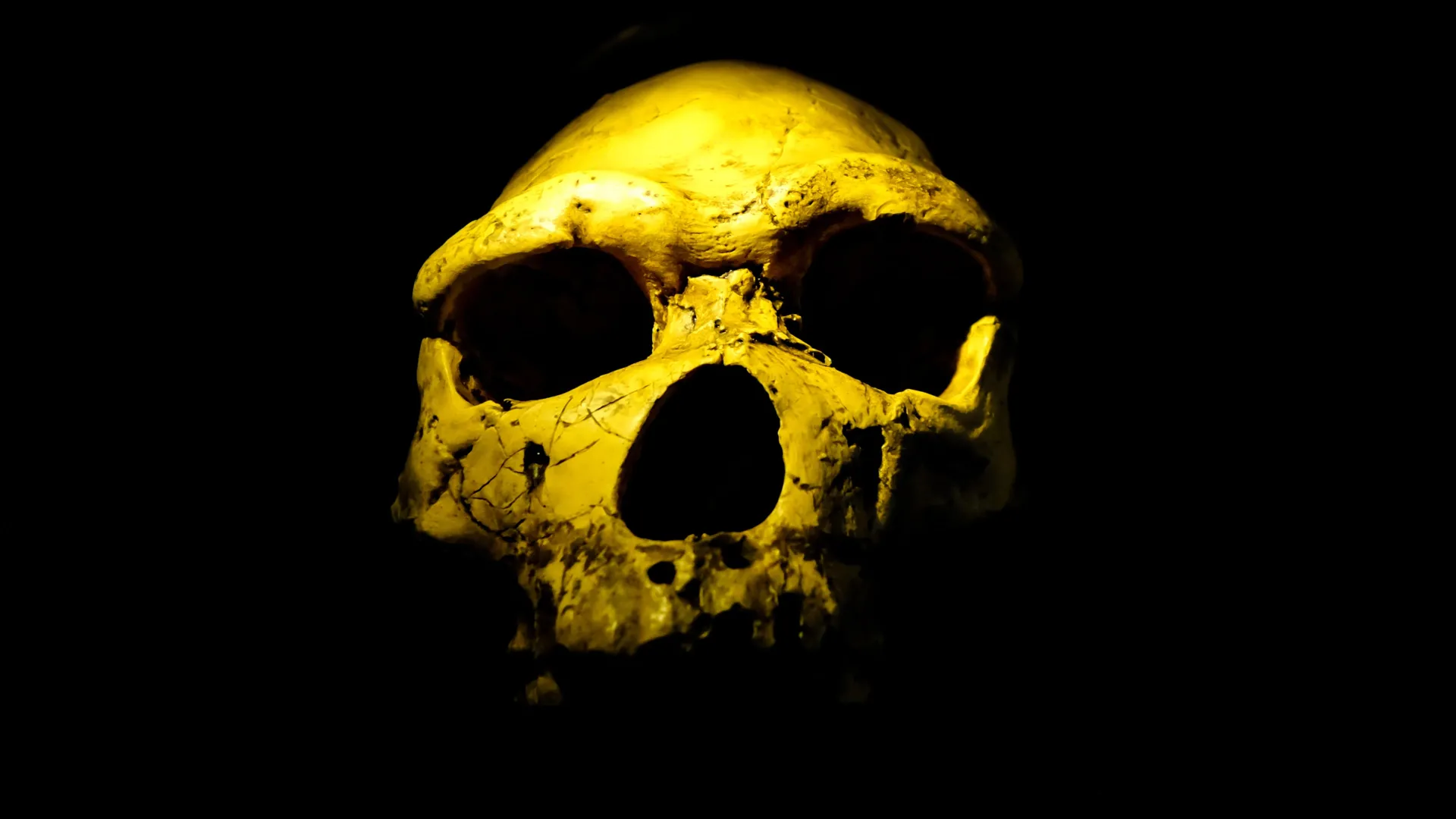
Enamel is the hardest tissue in the vertebrate body and acts as a biological vault, shielding proteins from environmental decay for hundreds of thousands of years. By analyzing the enamel of six teeth collected from three iconic Chinese sites—Zhoukoudian (the source of the famous "Peking Man" fossils), Hexian, and Sunjiadong—the researchers successfully extracted ancient proteins. These specimens date back approximately 400,000 years, a period far beyond the reach of standard genomic sequencing.
The analysis revealed a previously unknown amino acid variant—a precise molecular signature—shared by all six specimens. This discovery not only confirms that these East Asian fossils represent a distinct, cohesive group of Homo erectus, but it also resolves a decades-long debate regarding the taxonomy of the Hexian fossils, which had previously been subject to intense scrutiny regarding their classification.
The Interbreeding Narrative: A Chronology of Contact
Homo erectus holds a singular place in the human story. Evidence suggests they were the first hominin to venture out of Africa, moving into Eurasia nearly two million years ago. As the most geographically widespread human ancestor in history, they occupied vast territories for over a million years.
The new study provides compelling evidence that approximately 400,000 years ago, Homo erectus populations in East Asia interbred with the Denisovans, an enigmatic archaic human group primarily known from Siberia. The researchers identified a specific protein variant in the Homo erectus samples that is also present in Denisovan remains. Crucially, this same genetic marker appears in the populations of modern humans residing in the Philippines and parts of India, occurring at frequencies of 21% and 1%, respectively.
This distribution pattern provides a "molecular thread" that links the ancient Peking Man to modern-day inhabitants of Southeast Asia and Oceania. The most robust scientific interpretation is that this genetic material was transferred from Homo erectus to the Denisovans through interbreeding, and subsequently passed down to the ancestors of modern human populations in the region via Denisovan ancestry. This phenomenon, known as introgression, suggests that our genomes are not the product of a single, pure lineage, but rather a mosaic of contributions from multiple archaic human groups.
A Pattern of Routine Admixture
The findings from the Chinese Academy of Sciences are not an isolated anomaly; they confirm a pattern that has emerged across the field of paleogenomics. Every major hominin lineage that has been examined using genomic tools shows clear evidence of admixture.
For instance, it is now established that modern humans outside of Africa carry approximately 2% Neanderthal DNA. In populations such as Papuans and Aboriginal Australians, that figure is supplemented by an additional 2–5% Denisovan ancestry. Furthermore, research has indicated that West African populations possess genetic signatures from a currently unidentified "ghost" archaic lineage, suggesting that our ancestral map is far more crowded than previously imagined.
A 2019 review in the American Journal of Physical Anthropology documented at least three distinct introgression events between Denisovan-like populations and the ancestors of Southeast Asian and Oceanic groups, with some of these contacts occurring as recently as 20,000 years ago. These data points collectively indicate that interbreeding was not a rare, exceptional occurrence in the human past; it was a routine feature of life for our ancestors.
Implications for Human Adaptation
The significance of these findings extends beyond mere taxonomy. Genomic introgression often provided ancient humans with biological tools for survival. For example, previous studies have shown that Denisovan-derived gene variants in modern Papuan genomes appear to influence immune system function, potentially offering protection against local pathogens.
While the specific functional consequences of the newly identified Homo erectus protein variant remain the subject of ongoing inquiry, the broader precedent suggests that the exchange of genetic material between species served as a mechanism for rapid adaptation to new, diverse environments. As different hominin groups encountered new climates, altitudes, and food sources, the intake of "pre-adapted" genes from long-established regional populations may have been a critical factor in the expansion and success of the human lineage.
Unmasking Ghost Populations
Perhaps the most exciting implication of the proteomic approach is its potential to shed light on "ghost populations"—human lineages that have left no fossilized DNA and have remained invisible to previous methods of inquiry.
We know from the fossil record that Homo erectus survived in Indonesia until at least 100,000 years ago. Similarly, the diminutive Homo floresiensis (the "hobbit") was present on the island of Flores when modern humans arrived, and Homo luzonensis inhabited the Philippines. Despite their relative proximity to modern humans in time and space, these groups have not yielded DNA, and until the recent advancement in enamel analysis, they offered no molecular data whatsoever.
The ability to extract protein information from 400,000-year-old teeth effectively unlocks a new frontier. Researchers are now positioned to apply these same proteomic techniques to the fossils of these enigmatic species. If we can determine whether these groups contributed to the genetic makeup of modern humans, we will be able to fill in the remaining gaps in our evolutionary map.
Toward a New Metaphor
The transition from the "tree of life" metaphor to the "braided river" model represents one of the most profound shifts in 21st-century biology. A river does not move in a single, straight line; it consists of many channels that split, merge, and flow together, constantly exchanging water and sediment. Similarly, the history of human evolution is a record of contact, dispersal, and recurring integration.
Scientific bodies and independent researchers have largely embraced this new complexity. The consensus is shifting toward viewing ancient hominin groups not as "unfortunate cousins" that vanished without a trace, but as integral contributors to the modern human condition. When these ancient populations faded from the archaeological record, they did not disappear entirely; they left behind a molecular inheritance that continues to shape our biology, our immune responses, and our susceptibility to disease.
As we continue to refine our tools for analyzing the deep past, the story of human origins will undoubtedly continue to evolve. Each new discovery of introgression serves as a reminder that the boundary between "us" and "them" has always been porous. We are the survivors of a long, interconnected process of survival, where the exchange of genetic information allowed our ancestors to thrive in a changing world. The study published in Nature is a landmark in this journey, confirming that while our history is complex and tangled, it is, at its core, a shared story of human endurance.
