
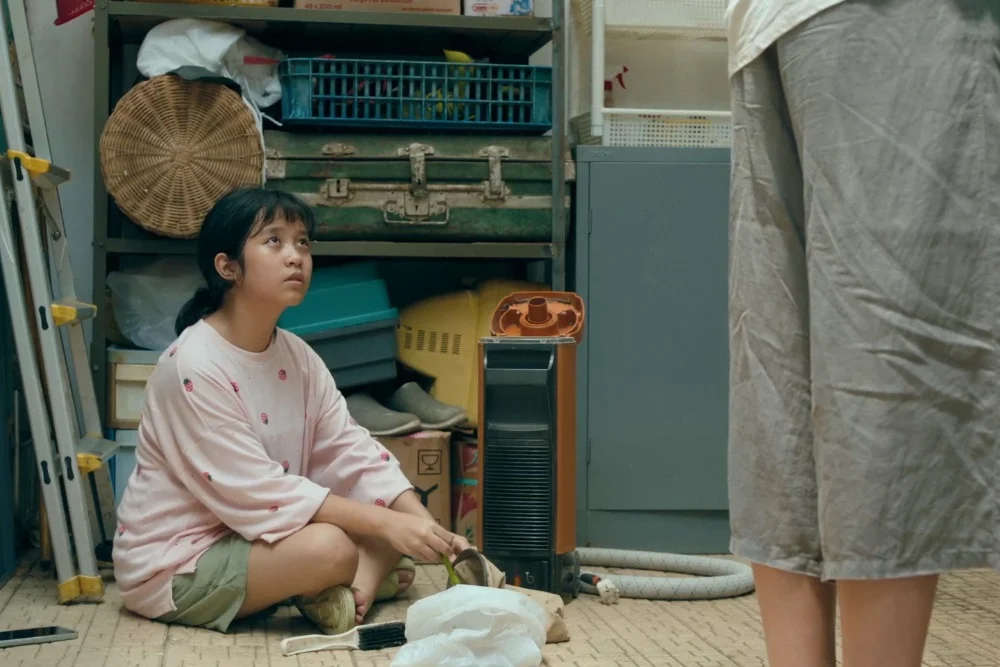
The Tokyo International Film Festival (TIFF) has long served as a vital bridge for Asian cinema, providing a platform for emerging and returning voices to reach international audiences. Among this year’s most anticipated selections in the Asian Future competition is Jani Be Good, the debut feature from Indonesian director Ariani Darmawan. The film arrives after a significant hiatus for the director, who stepped away from the industry for over a decade to focus on her family, and it represents a profound meditation on the complexities of womanhood, maternal expectations, and the silent undercurrents that define domestic life in Indonesia.
A Decade-Long Journey Back to the Screen
Ariani Darmawan’s path to her first feature film was not linear. Known previously for her acclaimed short films such as Sugiharti Halim and Silenced, which garnered attention at prestigious circuits like the International Film Festival Rotterdam and the Busan International Film Festival, Darmawan spent the last ten years navigating the demanding, often invisible labor of raising a family.
Her return to the director’s chair was precipitated by a 2022 outreach from producer Meiske Taurisia of Palari Films. Recognizing the depth in Darmawan’s earlier works, Taurisia sought to collaborate on a project that captured the essence of family drama—a genre Darmawan describes as her natural creative home. The resulting film, Jani Be Good, is a domestic drama that unfolds over four intense days leading up to Christmas, focusing on three generations of a Chinese-Catholic household in Indonesia.
The narrative trajectory begins with a rupture: 13-year-old Jani overhears a volatile confrontation between her mother, Winnie, and her 18-year-old sister, Julia. When Julia flees the home, the remaining family members—the overworked, single-mother accountant Winnie, the observant Jani, and the aging grandmother, Oma—must navigate the fallout of this departure.
The Dynamics of Domesticity and Silence
The film serves as an intimate examination of how power flows through familial hierarchies. Darmawan’s direction avoids the common pitfalls of melodrama, instead opting for a character-driven approach that scrutinizes the "unseen care work" that defines the life of a modern mother.
Darmawan posits that the household, while composed entirely of women, is not immune to the traditional power struggles often attributed to mixed-gender families. She notes that in many Asian households, conflict is frequently suppressed in favor of maintaining a facade of harmony. "If it keeps getting held in and never confronted, it stays a wound and gets passed down to the next generation," Darmawan explains. This cycle of silence is captured visually through the film’s set design; the characters live behind shut gates and barred windows, metaphors for the emotional insulation they employ to survive their daily routines.
By casting the mother, Winnie (played by Sigi Wimala), not as a villain but as a product of her own pressures—financial strain as an accountant and the weight of being the sole breadwinner—Darmawan invites empathy. The film reflects the director’s own evolution; in her youth, she viewed her mother as a force of nature who kept the household running without questioning her inner life. It was only through the experience of motherhood that she began to appreciate the exhaustion inherent in that role.
Production Chronology and Collaborative Process
The production of Jani Be Good was notable for its efficiency and collaborative rigor. Palari Films, known for its commitment to high-quality Indonesian cinema, allocated a 13-day shooting schedule in Bandung—a compressed timeline that demanded absolute precision.
- Pre-Production (Late 2023): The screenplay, co-written by Darmawan and Cyntha Hariadi, underwent extensive development. The cast, including Chempa Puteri, Sigi Wimala, Tutie Kirana, and Hyori Mika, held table reads in Bandung two months before production.
- Rehearsal Phase: The ensemble relocated to Jakarta for focused character work, ensuring that the chemistry between the four leads—who had never worked together previously—was authentic.
- Production (Early 2024): The team returned to the Bandung location for final preparations with cinematographer Teoh Gay Hian and production designer Suherina.
- Release (December 2024): Following its festival run, Palari Films has scheduled a theatrical release in Indonesia for December 10.
Meiske Taurisia, who co-founded Palari Films in 2016, emphasized that her role as a producer is to provide the infrastructure for the director’s vision. "She’s the chef, and she knows her ingredients best," Taurisia stated, noting that the company’s decision to back the project was driven by the maturity of the script’s perspective on the generational transfer of trauma and care.
The Structural Challenges of Indonesian Cinema
The release of Jani Be Good highlights broader systemic issues within the Indonesian film industry. Despite the artistic success of companies like Palari—which gained international acclaim with the Locarno Golden Leopard winner Vengeance Is Mine, All Others Pay Cash—the domestic distribution model remains a significant hurdle.
Currently, Indonesia lacks a robust, nationwide distribution network that can ensure films remain in theaters beyond a brief initial window. Exhibitors often determine a film’s longevity based strictly on performance during its first four days (Thursday to Sunday). This "all-or-nothing" metric creates immense pressure on filmmakers, particularly those creating "artistic" or mid-budget dramas that may not appeal to the mass-market blockbuster demographic.
To combat this, Palari Films has introduced the Kelas Komunitas Palari (Palari Community Class). This initiative trains local film communities across the archipelago to host independent screenings and curated watch parties, effectively decentralizing the exhibition process. Jani Be Good will serve as the pilot for this grassroots strategy, marking a shift in how Indonesian production houses approach audience engagement and long-term sustainability.
Broader Implications and Future Trajectory
The film’s focus on the "constellation" of a family—viewed from the perspective of the youngest member—is a deliberate stylistic choice. Darmawan notes that as the youngest in her own family, she was often disregarded, which afforded her the necessary distance to observe the family dynamic objectively.
The success of this project is critical for the sustainability of the "auteur" model in Indonesia. With many directors struggling to produce a second feature after their debut, the industry faces a potential brain drain. Palari’s current slate, which includes projects from established names like Edwin and emerging voices like Aditya Ahmad and Khozy Rizal, underscores a commitment to cultivating a diverse pipeline of talent.
For Darmawan, the future remains rooted in the domestic sphere. Having established herself as a filmmaker who can find the "sad and sweet" complications in human relationships, she intends to continue exploring these themes. Her work with Kineruku, the independent library and bookstore she founded, keeps her tethered to the intellectual life of Bandung, ensuring that her future projects remain grounded in the tangible, daily experiences of those around her.
As Jani Be Good makes its debut at the Tokyo International Film Festival, it stands as a testament to the resilience of the female perspective in Indonesian cinema. By choosing to center her narrative on the quiet, often overlooked labor of women, Darmawan has crafted a film that is not only a personal reclamation of her career but also a significant contribution to the regional conversation on family, memory, and the unspoken legacies that shape the next generation.
