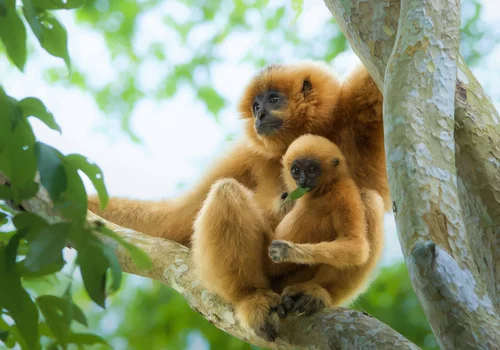
The tropical forests of Asia serve as the ancestral home to twenty distinct species of gibbons, highly intelligent small apes that play an indispensable role in maintaining the health of their ecosystems. As the world marks International Gibbon Day on October 24, conservationists are highlighting a stark reality: these acrobatic primates are facing an unprecedented existential crisis. Driven by the twin pressures of large-scale deforestation and a burgeoning illegal wildlife trade, the survival of the gibbon is increasingly precarious. While these animals are biologically closer to humans and chimpanzees than they are to monkeys, their unique social structures and reproductive habits make them exceptionally vulnerable to human interference.
A Crisis of Demand: The Escalation of the Exotic Pet Trade
The illicit trade in gibbons has reached a harrowing zenith. In 2025 alone, the volume of confiscated individuals surged to record levels, with 336 gibbons recorded in seizure operations between January and August. This figure, while staggering, is widely believed by wildlife experts to represent only a fraction of the actual numbers being removed from the wild.
The mechanics of this trade are brutal. Because gibbons are highly social, they live in tight-knit family units. When poachers target an infant for the exotic pet trade, they rarely capture it without incident. Instead, they frequently shoot the mother from the canopy. As she falls to the forest floor, the infant is torn from her, often sustaining physical trauma during the process. The mortality rate associated with this trade is extreme; according to industry estimates, for every single infant that successfully reaches a final buyer, approximately nine others perish due to stress, malnutrition, injury, or disease during transport. Traffickers, operating on a high-volume, low-survival business model, effectively factor this 80% to 90% mortality rate into their operational costs.
The story of a Malaysian woman known as "Esther" highlights how easily the trade permeates local communities. After being offered a weeks-old primate by a hunter selling wild meat in her village on Borneo, she assumed the animal was a monkey and intervened to prevent its slaughter for food. It was only after bringing the animal, whom she named Joy, into her home that she realized the gravity of the situation: she had become an unwitting participant in the illegal trafficking of a critically endangered ape. Such anecdotes are common, illustrating how the illegal trade exploits both the naivety of the public and the vulnerability of the species.
Chronology of Decline and Recent Conservation Efforts
The decline of the gibbon has been a decades-long trajectory, but the last five years have seen a marked shift in the intensity of threats.
- 2020-2022: IUCN reports confirm that all 20 recognized gibbon species are threatened, with habitat loss being the primary driver of decline.
- 2023: Awareness campaigns regarding the "exotic pet trade" gain momentum as international organizations release documentation exposing the systematic slaughter of mothers to obtain infants.
- 2025: Seizure rates hit an all-time high, overwhelming the capacity of regional rehabilitation centers.
- 2026: A shift in focus occurs, with researchers looking into the economic drivers of demand and community-based conservation initiatives gaining traction, such as the textile collective in Java.
Overwhelmed Infrastructure: The Struggle of Rehabilitation Centers
The surge in confiscated animals has pushed regional rehabilitation facilities—particularly those in North Sumatra—to their absolute limits. These centers, which are often chronically underfunded and understaffed, are currently grappling with an influx of rescued apes that require intensive medical care and long-term rehabilitation before they can even be considered for potential release back into the wild.
Sinan Serhadli, a support officer with a prominent gibbon rehabilitation and release program, has been vocal about the systemic failure of the current protection regime. "Most gibbon babies die—that’s the sad reality," Serhadli noted. The logistical challenge is compounded by the fact that rehabilitation is not a simple process. Because gibbons learn vital survival skills—such as foraging for specific fruits and navigating canopy heights—from their mothers, hand-reared orphans often lack the necessary behavior to survive in the wild. This creates a permanent population of animals in captivity that require lifelong care, further straining the limited resources of conservation NGOs.

Ecological Impact: The "Forest Farmers" of Asia
Gibbons are colloquially known as "forest farmers." Their diet consists primarily of fruits, and as they traverse the canopy, they act as primary seed dispersers for a vast array of tropical plant species. This role is essential for forest regeneration. When gibbon populations disappear, the long-term diversity and structure of the forest suffer.
This ecological necessity is at the heart of recent community-based conservation efforts in Indonesia. In Java, where roughly half of the remaining Javan gibbon population resides within the Gunung Halimun-Salak National Park, a women’s textile-printing collective has turned to art as a tool for preservation. By creating fabrics inspired by the gibbon and the flora of their habitat, these women are not only creating sustainable livelihoods but are also actively participating in a cultural shift that values the animal as a keystone species rather than a commodity. Through this collective, members have reported a heightened understanding of the gibbon’s role in the ecosystem, proving that economic incentives for the local population can be aligned with conservation goals.
Analytical Perspective: Implications for Biodiversity
The threat to gibbons is a microcosm of a larger systemic failure in the protection of biodiversity in Southeast Asia. The transition from a "local meat consumption" model to a "high-demand international pet trade" model represents a dangerous evolution in wildlife crime.
Data-driven analysis suggests that as long as the demand for exotic pets in urban centers remains high, and as long as enforcement at the source remains sporadic due to the vast, inaccessible nature of the forests, the species will continue to face local extinctions. The "1-in-10" survival rate identified by conservationists is a chilling indicator of the industry’s disregard for animal life, suggesting that the trade is inherently unsustainable and requires a multi-pronged approach involving:
- Strict Enforcement: Enhanced patrols in high-risk zones, such as the borders of protected national parks.
- Market Interruption: Aggressive crackdowns on online platforms that facilitate the sale of protected primates.
- Community Engagement: Scaling up projects like the Javan textile collective, which demonstrate to local communities that a living, thriving gibbon population holds more long-term value than a traded infant.
- Public Awareness: Educating potential buyers that "rescuing" an animal from a hunter often fuels the very cycle of death that created the opportunity for the rescue in the first place.
Looking Forward: A Call for Global Action
As International Gibbon Day serves as a reminder of the species’ plight, the consensus among biologists and policy experts is that time is running out. The fragmentation of forests in regions like Borneo and Sumatra means that even if the hunting pressure were to stop tomorrow, the gibbons would still face a precarious future due to habitat loss.
However, the success of localized programs indicates that there is still room for optimism if policy shifts toward holistic protection. For younger generations, initiatives like those provided by Mongabay Kids serve as a crucial educational bridge, ensuring that the next generation of stakeholders understands the biological and social complexity of these apes.
The plight of the gibbon is not merely an issue of animal rights; it is an issue of environmental security. As the "forest farmers" of Asia, their presence is linked to the sequestration of carbon, the maintenance of biodiversity, and the integrity of the tropical ecosystems that provide vital services to the region. Protecting the gibbon is, ultimately, an investment in the future of the Asian wilderness itself. Whether this day becomes a turning point or merely another year of marking decline remains dependent on the willingness of governments to prioritize enforcement and the global community to reject the commodification of wildlife.