
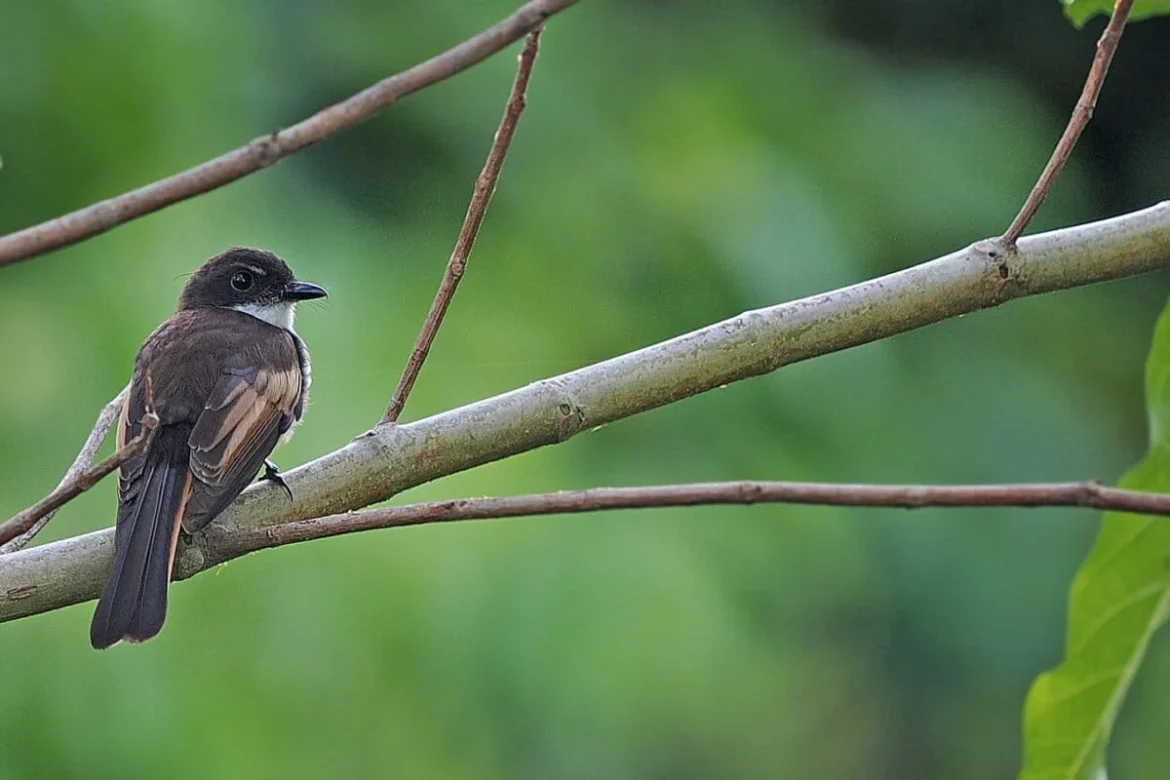
The avian landscape of the Indonesian archipelago has undergone a significant revision following a comprehensive study that identifies a new songbird species, effectively splitting a long-recognized taxon into two distinct entities. For over 120 years, the scientific community operated under the assumption that the cinnamon-tailed fantail (Rhipidura fuscorufa) inhabited both the Babar Islands in the eastern Banda Sea and the Tanimbar Islands, located approximately 135 kilometers (84 miles) to the east. However, a multi-year investigative effort led by James A. Eaton of Birdtour Asia Limited and Alex J. Berryman of BirdLife International has corrected this historical oversight, confirming that the population on the Babar Islands is a unique species now officially named the cheerful fantail (Rhipidura laguceria).
The revelation, published in the Bulletin of the British Ornithologists’ Club, highlights the complexities of island biogeography and the persistence of "cryptic species"—organisms that appear physically similar but are biologically and behaviorally distinct. The discovery underscores the importance of revisiting historical ornithological records with modern analytical tools and field-based experiments, particularly in remote regions like the Wallacean islands of Indonesia.
A Century of Taxonomic Stagnation
The misclassification of the cheerful fantail dates back to the late 19th and early 20th centuries, an era when many Indonesian bird species were first described by European naturalists. During this period, physical appearance—often based on dried museum skins—was the primary metric for species designation. Because the differences in plumage between the Babar and Tanimbar populations are remarkably subtle, early taxonomists grouped them under a single name.
The Babar Islands remained an ornithological "blind spot" for much of the 20th century. Following initial collections, the islands were largely unvisited by professional ornithologists for nearly a hundred years, until a resurgence of interest in 2009. This long gap in field observation allowed the assumption of species uniformity to persist unchallenged. The recent study by Eaton and Berryman represents a culmination of renewed focus on the "forgotten" islands of the Banda Sea, a region characterized by high levels of endemism and complex evolutionary histories.
Methodology: Integrating Museum Science and Field Behavior
To substantiate the claim that the Babar Islands population warranted species-level status, the research team employed a rigorous three-pronged approach involving morphological analysis, bioacoustic study, and behavioral playback experiments.
The researchers began by examining 19 museum specimens labeled as cinnamon-tailed fantails, which had been collected from both the Tanimbar and Babar island groups over the past century. This comparative analysis allowed for a detailed inspection of feather coloration and body measurements that are often difficult to discern in the wild.
Following the physical examination, the team focused on bioacoustics, recording the vocalizations of wild birds on both island groups. In the world of ornithology, song is often a more reliable indicator of species boundaries than plumage, as it serves as a primary mechanism for mate selection and territorial defense. If two populations develop significantly different songs, they are unlikely to interbreed, even if they were to come into contact.
The most definitive evidence came from 132 separate playback experiments conducted over several years. Researchers played recordings of the Tanimbar birds to the Babar birds, and vice versa. This method tests "species recognition." If the birds respond to a recording as they would to a rival or a mate, it suggests they perceive the caller as a member of their own species. The results were stark: birds on both islands routinely responded to recordings of their own local population but showed a consistent lack of interest in the recordings from the neighboring island group.
Distinguishing the Cheerful Fantail from the Cinnamon-tailed Fantail
While the study confirms they are separate species, the cheerful fantail and the cinnamon-tailed fantail remain "sister species" that share a common ancestor. The differences between them are a masterclass in subtle evolutionary divergence.
Morphological Differences
The physical distinctions, while minor, are consistent. The newly named cheerful fantail (Rhipidura laguceria) possesses slightly darker upperparts compared to its Tanimbar relative. Additionally, the extensive cinnamon-colored plumage on the underparts—the feature for which the original species was named—is less pronounced in the Babar population. To the untrained eye, these birds look nearly identical, which explains the 120-year delay in their identification.
Acoustic Divergence
The most profound differences lie in their vocalizations. The researchers described the songs of the cheerful fantail on Babar as consisting primarily of single whistles that rise in pitch toward the end of the note. In contrast, the cinnamon-tailed fantail of the Tanimbar Islands utilizes a more complex vocal structure, combining very short whistles with longer ones. This creates a rhythmic cadence where the pitch fluctuates up and down, a stark departure from the more linear acoustic profile of the Babar birds.
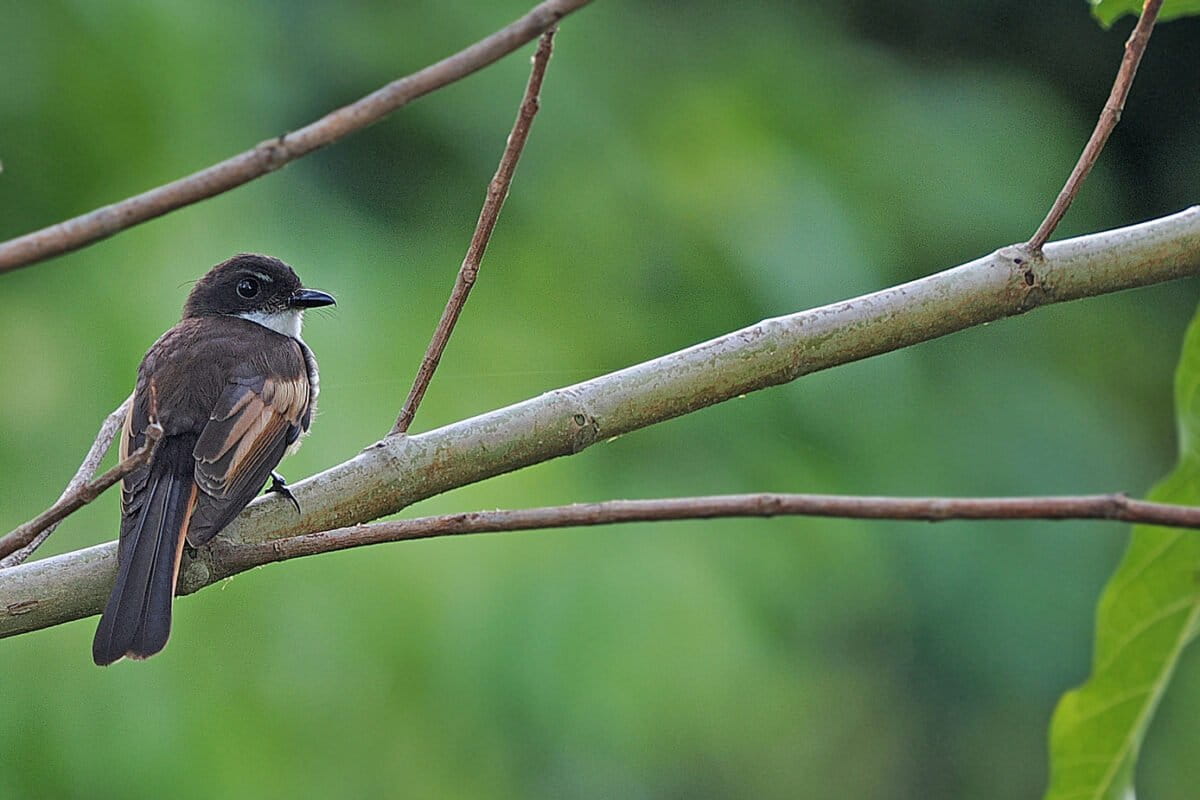
This vocal divergence is a classic example of "character displacement" or "allopatric speciation," where geographic isolation allows two populations to drift apart behaviorally until they are no longer compatible.
Conservation Implications and the IUCN Red List
The taxonomic split has immediate and significant implications for the conservation status of both species. Currently, the cinnamon-tailed fantail is classified as "Least Concern" on the IUCN Red List of Threatened Species. This designation was based on the combined range and population size of birds across both the Tanimbar and Babar islands.
By recognizing the Babar population as a separate species, the known range for both the cheerful fantail and the cinnamon-tailed fantail has been effectively halved. According to the study authors, both species now meet the initial geographical thresholds for being listed as "Threatened." When a species is restricted to a small island group, it becomes inherently more vulnerable to localized threats such as natural disasters, invasive species, or sudden habitat loss.
However, the researchers offered a nuanced perspective on the birds’ survival prospects. Unlike many "specialist" birds that require pristine, primary rainforest, both the cheerful and cinnamon-tailed fantails appear to be "habitat generalists." They show a high tolerance for habitat degradation and are frequently observed in:
- Edge habitats (the transition zones between forest and clearings).
- Glades and forest clearings.
- Scrubland featuring taller trees, such as mango trees.
- Heavily modified human environments.
Crucially, the study noted that both species generally avoid closed-canopy, primary forests, preferring more open or disturbed environments. This adaptability suggests that while their ranges are small, their populations may remain stable even in the face of moderate human encroachment.
The Broader Context of Indonesian Biodiversity
The discovery of the cheerful fantail is part of a larger trend in modern biology where the "Age of Discovery" is being revisited through the lens of genetics and acoustics. Indonesia, an archipelago of over 17,000 islands, is one of the world’s premier biodiversity hotspots. It sits at the crossroads of the Oriental and Australian zoogeographic regions, a zone known as Wallacea.
The Banda Sea islands, including Babar and Tanimbar, are particularly interesting to evolutionary biologists because they are "oceanic islands"—they were never connected to a continental landmass. Every species found there arrived via long-distance dispersal and subsequently evolved in isolation. This isolation is a "species engine," producing unique forms found nowhere else on Earth.
The fact that a distinct species could remain "hidden in plain sight" for over a century suggests that many more undiscovered species likely inhabit the remote corners of Indonesia. It also highlights a critical need for increased funding and support for local and international ornithological surveys.
Expert Analysis: The Significance of the "Cheerful" Designation
The naming of the "cheerful" fantail (Rhipidura laguceria) is also a point of interest. In taxonomic tradition, names are often derived from physical traits, geographic locations, or the names of prominent scientists. The choice of "cheerful" reflects a growing trend in ornithology to incorporate behavioral or aesthetic qualities into common names, potentially making the species more "marketable" for conservation awareness and birdwatching tourism.
From a scientific standpoint, the identification of Rhipidura laguceria serves as a reminder that biodiversity is not a static number. As our understanding of avian communication and genetics improves, the "map of life" continues to become more complex. For the Babar Islands, the recognition of their own endemic fantail provides a point of local pride and a potential catalyst for regional conservation efforts.
Chronology of the Discovery
- 1880s–1900s: Initial avian collections on Babar and Tanimbar islands. The birds are grouped as a single species, Rhipidura fuscorufa.
- 1900s–2009: A "century of silence" where almost no ornithological research is conducted on the Babar Islands.
- 2009: Modern expeditions begin to revisit the forgotten islands of the Banda Sea, noting potential differences in bird calls.
- 2010s–2020s: James A. Eaton and Alex J. Berryman conduct extensive field work, recording songs and performing 132 playback experiments.
- 2023–2024: Analysis of 19 museum specimens confirms subtle morphological differences.
- 2024: Official publication of the study in the Bulletin of the British Ornithologists’ Club, formally describing the cheerful fantail (Rhipidura laguceria).
As the scientific community digests these findings, the focus will likely shift to the IUCN’s upcoming assessment. While the cheerful fantail’s resilience to habitat change is a positive sign, its restricted range makes it a species of high "stewardship responsibility" for Indonesia. The discovery reinforces the notion that even in the 21st century, the natural world still holds profound mysteries, waiting for the right combination of technology, patience, and field expertise to be revealed.
