
A Crop Under Pressure
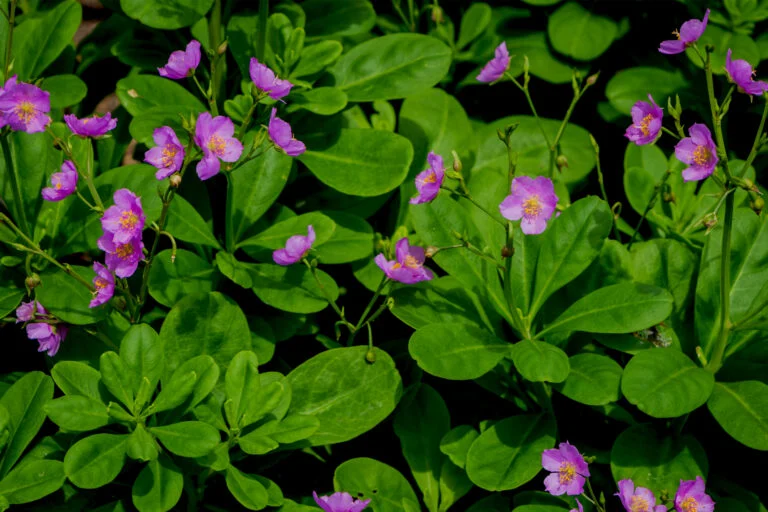
Waterleaf, known scientifically as Talinum fruticosum, is a hardy, fast-growing plant that thrives in the tropics. Cultivated primarily through stem cuttings, it is a staple for millions, particularly in the south, where it is a vital ingredient in iconic soups such as edikang ikong and afang. Unlike delicate crops that require precise conditions, waterleaf has historically been resilient, capable of adapting to varying soil types and temperature ranges. However, recent data and field observations suggest that the plant’s physiological limits are being tested by the increasing frequency of extreme weather events.
In Calabar, farmers like Enono Koka are struggling to maintain their livelihoods. Koka, who manages a large plot, describes a growing season defined by loss. Following relentless, unseasonal rainfall between August and September, the majority of her crops perished, leaving behind only a few spindly survivors. Similarly, veteran farmer Joy David Okon has watched her once-flourishing garden transform into a waterlogged marshland. The soil, saturated beyond its capacity, has become a graveyard for freshly planted stems, which rot before they can establish root systems.

The Science of Survival: Drought vs. Deluge
The challenges faced by Nigerian farmers are supported by recent scientific inquiry. A comprehensive study published in the journal Crops in September 2026 provided a controlled look at how waterleaf responds to extreme moisture fluctuations. Researchers from an international cohort, including institutions in the United States, Ghana, Sri Lanka, and Canada, subjected waterleaf seedlings to conditions simulating acute drought and heavy saturation.
The results were telling: while excessive water significantly hampered growth, drought proved even more lethal. The study found that leaf area decreased 1.9-fold under waterlogging conditions but plummeted 3.8-fold under drought conditions. Efoo Bawa Nutsukpo, an agricultural scientist involved in the study, noted that photosynthesis was severely impaired in both scenarios, but the reduction was markedly more severe when the plants were deprived of water. This creates a "double-edged sword" scenario for Nigerian farmers: they are currently battling the immediate impact of floods, but they remain acutely vulnerable to the extreme heat and dry spells that characterize the transition periods between seasons.
A Changing Climate Landscape
The historical climate of Nigeria, traditionally divided into a distinct wet season from April to October and a dry season for the remainder of the year, is undergoing a profound transformation. Climatological analysis of rainfall data from 1981 to 2022 reveals a bifurcated trend. While northern regions, including the capital city of Abuja, have seen a general decline in total annual rainfall, coastal and southern zones are experiencing the opposite.

These coastal areas are witnessing more intense, concentrated bursts of rain. The unpredictability of these patterns makes planning nearly impossible for the 80% of Nigerian farmers who rely exclusively on rain-fed agriculture. The 2022 and 2024 flood seasons serve as grim benchmarks. The 2024 floods were particularly catastrophic, affecting 29 of the country’s 36 states and resulting in the loss of approximately one million hectares of farmland. The release of water from the Lagdo Dam in neighboring Cameroon, combined with excessive local rainfall, turned agricultural hubs into disaster zones, exacerbating the already fragile supply chain for local vegetables.
Economic Ripples: From Farm Gate to Market Stall
The collapse in waterleaf production has triggered a severe economic reaction throughout the supply chain. In local markets, the scarcity has driven prices to levels that many consumers find prohibitive. Vendors like Anthony, who operates in a bustling Calabar market, report that their daily revenues have dropped significantly. His struggle to maintain stock is compounded by the high perishability of the vegetable; when supply is inconsistent, the risk of rot increases, leading to direct financial losses.
The impact extends to households and the hospitality industry. Consumers who once viewed waterleaf as an affordable, everyday staple are now forced to consider alternatives, moving away from traditional vegetable-based soups. For restaurant owners, the situation is even more dire. Margaret Ibok, a caterer, highlights the impossibility of substituting waterleaf in authentic recipes. "You cannot substitute waterleaf in any of the soups," she explains, noting that the cost of preparing a single pot of afang has skyrocketed, eroding profit margins to the point of bankruptcy.

This localized food inflation is occurring against the backdrop of a broader national crisis. Tensions in the Middle East have spurred a global energy shock, causing fuel prices in Nigeria to climb by over 65% since February. This rise in transport costs, coupled with the scarcity of goods, has driven annual food inflation to nearly 20%, according to the National Bureau of Statistics. The vegetable, once considered a low-cost nutritional resource, has now become a luxury item, further straining the budgets of low-income families.
Potential Paths to Resilience
Despite the bleak current outlook, experts suggest that the situation is not entirely without remedy. The key to stabilizing waterleaf production lies in improved water management and the modernization of farming practices. Agricultural scientists emphasize that even simple interventions—such as constructing raised beds to improve drainage or implementing better irrigation scheduling—could help mitigate the impact of the current weather volatility.
However, more advanced solutions, such as Controlled Environment Agriculture (CEA), remain largely out of reach for the average smallholder. CEA systems, which utilize high-tech, soilless greenhouses to create optimal, weather-independent conditions, have proven successful in Europe and North America. In Nigeria, the prohibitively high installation costs mean that such technology is currently reserved for large-scale commercial entities. This creates a significant "technological gap" that leaves the vast majority of the farming population exposed to the elements.

The Way Forward
As the nation grapples with these shifts, the focus is increasingly turning to early-warning systems and better data integration. The Nigerian Meteorological Agency (NiMet) has been tasked with providing more accurate, localized seasonal forecasts. However, as residents have pointed out, there is often a disconnect between national forecasts and the lived reality on the ground. When warnings are issued, they are often not accompanied by the necessary resources to allow farmers to pivot their planting strategies or protect their crops.
For farmers like Enono Koka, the immediate future remains uncertain. The decision to halt planting until the rain patterns stabilize is a logical, if painful, response to a changing environment. Yet, this pause in production only ensures that the scarcity in the market will continue into the next cycle.
The case of the Nigerian waterleaf serves as a microcosm for the broader challenges of climate change in developing nations. It illustrates how shifts in precipitation do not just affect "climate targets" or "global averages"—they hit the dinner plate. For a country as populous as Nigeria, where agriculture is the backbone of the economy and the primary source of nutrition, the resilience of crops like waterleaf is a matter of national survival. Addressing the vulnerability of these crops will require a multi-faceted approach: one that combines traditional indigenous knowledge with climate-resilient farming techniques, better infrastructure, and a robust support system for the millions of smallholders currently navigating a rapidly warming world. Until then, the "slimy weed" that has fed generations will continue to be a source of both sustenance and significant anxiety for those who grow and eat it.
