
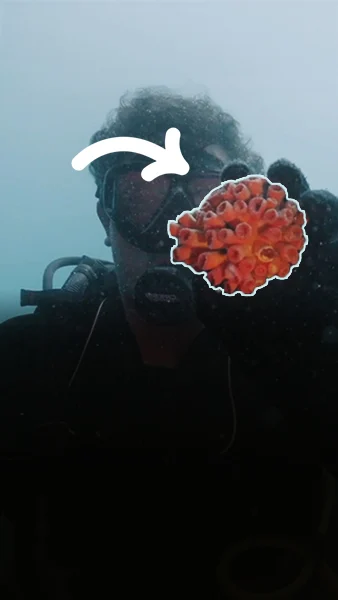
Off the coast of Rio de Janeiro, just miles from the iconic sands of Ipanema Beach, a quiet ecological battle is unfolding beneath the waves. Adriana Gomes, a dedicated biologist, is leading a team of volunteer divers in a manual, labor-intensive mission to remove Tubastraea coccinea—commonly known as sun coral—from the submerged pylons of an offshore oil platform. This invasive species, which lacks natural predators in the Atlantic, has spent decades aggressively colonizing the Brazilian coastline, threatening to outcompete native marine life and destabilize the delicate balance of the region’s protected marine areas.
The Biological Threat of Tubastraea coccinea
The sun coral is not merely an aesthetic addition to the seafloor; it is a biological juggernaut. Native to the Indo-Pacific, Tubastraea coccinea was first identified in Brazilian waters in the 1980s. Scientists believe the species likely arrived in the region via the ballast water of commercial ships or by attaching itself to the hulls of oil tankers. Once introduced, the coral found an environment largely devoid of the checks and balances that exist in its home range.
Unlike native corals, which grow relatively slowly and provide specific ecological niches for local fauna, the sun coral is a prolific colonizer. It is a colonial scleractinian that can grow in various depths, light conditions, and temperatures. Because it has no natural predators in the Atlantic to graze upon its polyps or keep its expansion in check, it spreads rapidly. The coral forms dense mats that effectively "suffocate" native biodiversity by monopolizing space, nutrients, and resources. When it attaches to hard surfaces—such as oil rigs, shipwrecks, and natural rocky reefs—it creates a monoculture that native sponges, algae, and indigenous coral species cannot penetrate.
A Chronology of Colonization
The trajectory of the sun coral invasion in Brazil serves as a textbook case of how invasive species can transform marine ecosystems.
- 1980s: The first confirmed reports of Tubastraea coccinea appear in Brazilian waters, likely linked to the international maritime shipping industry.
- 1990s–2000s: The coral spreads steadily across the southeastern coast. Ecological surveys begin to sound the alarm as the species reaches major ports and offshore infrastructure.
- 2010s: The invasion reaches a critical threshold. The Brazilian Institute of the Environment and Renewable Natural Resources (IBAMA) and academic researchers identify the coral as a significant threat to Marine Protected Areas (MPAs).
- 2020s: Efforts transition from academic monitoring to active mitigation. Programs involving citizen science, such as the one spearheaded by Adriana Gomes, emerge as essential tools in the absence of large-scale government eradication projects.
The Methodology of Manual Eradication
The removal process utilized by Gomes and her team is deceptively simple: it is a manual, physical extraction. Diving in teams, volunteers use specialized tools to carefully scrape the sun coral from the steel structures of the oil platform. This approach is preferred over chemical or biological control methods, which could have catastrophic unintended consequences for the surrounding marine ecosystem.
However, the manual method presents significant challenges. If the coral is not removed in its entirety—including the base tissue—it can regenerate. Furthermore, the act of scraping can release larvae into the water column, potentially spreading the infestation if not managed with extreme precision. The team must work with the patience of surgeons, ensuring that each fragment is collected and removed from the environment entirely, usually in containment bags, to prevent further dispersal.
Supporting Data and Environmental Impact
The impact of the sun coral on the Brazilian coast is quantifiable and alarming. Studies conducted by the Federal University of Rio de Janeiro (UFRJ) indicate that in areas heavily infested by sun coral, the richness of native species can decline by as much as 30% to 50%.
The economic implications are equally significant. Brazil’s offshore oil industry operates thousands of structures that act as artificial reefs. When these structures become hubs for invasive coral, they serve as "stepping stones" that facilitate the spread of the species to pristine natural reefs nearby. The cost of managing this invasion is multifaceted, involving:

- Direct removal costs: Expenses related to professional divers, vessel time, and disposal.
- Loss of ecosystem services: The decline in native coral health affects local fish populations, which are vital for artisanal and commercial fisheries.
- Tourism impacts: As the invasive coral covers popular diving sites and changes the visual landscape of the seafloor, it poses a long-term risk to the diving tourism industry, which generates millions in revenue for the Rio de Janeiro region.
Official Responses and Academic Perspectives
The scientific community in Brazil has been largely unified in its call for action. While organizations like IBAMA have provided guidelines for the handling and disposal of the species, the scale of the invasion has largely outpaced the funding available for official government removal projects. This has necessitated the rise of community-led initiatives.
"The sun coral is an opportunistic survivor," notes one marine ecologist familiar with the project. "When we allow it to colonize human-made structures, we are essentially building a nursery for an invasive species to conquer our natural coastline. The work being done by Gomes and her team is not just a cleanup effort; it is a defensive line for the biodiversity of the Atlantic."
However, there is a cautious consensus among experts: manual removal, while effective on a micro-scale, is a "drop in the ocean" compared to the total area of the infestation. To achieve long-term success, experts argue that Brazil requires a national management plan that includes strict regulations on the cleaning of ship hulls, increased monitoring of port infrastructure, and more robust funding for regional eradication teams.
Broader Implications for Marine Conservation
The situation at Ipanema serves as a microcosm for a global crisis. The proliferation of invasive species is one of the top five drivers of biodiversity loss worldwide. As global temperatures rise and ocean currents shift, many invasive species are finding new, hospitable habitats.
The reliance on volunteer divers highlights a growing trend in conservation: the "democratization of science." Because government agencies are often constrained by bureaucracy and budget cycles, grassroots groups are increasingly the ones on the front lines, utilizing digital platforms to coordinate, document, and execute ecological restoration projects.
For the team working on the Ipanema platform, the mission is as much about awareness as it is about physical removal. By demonstrating that the sun coral can be managed, they hope to inspire similar efforts in other coastal cities. The goal is to create a "defensible zone" around high-value ecological sites, prioritizing the protection of natural reefs where the biodiversity is most critical.
The Path Forward
As the sun coral continues to creep across the seafloor, the work of Adriana Gomes and her team remains a vital, if grueling, necessity. The fight against Tubastraea coccinea is a long-term commitment that requires not only physical stamina but also consistent policy support.
The success of these volunteers underscores a fundamental truth about modern environmentalism: the health of our oceans is increasingly dependent on the collective action of local communities. While the sun coral may have had a 40-year head start, the mobilization of informed citizens, equipped with the right techniques and a clear understanding of the ecological stakes, provides a glimmer of hope that the tide can, indeed, be turned. Whether this model can be scaled to meet the massive, coast-wide challenge of the sun coral remains the defining question for Brazil’s marine conservationists in the coming decade. As the divers continue their work, every colony removed is a victory for the native marine life struggling to survive in the shadow of an unwanted invader.
