
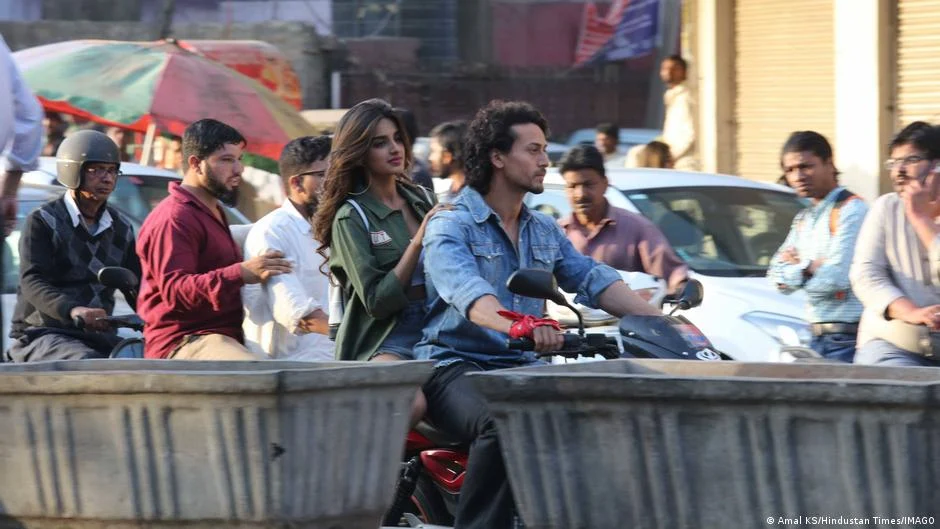
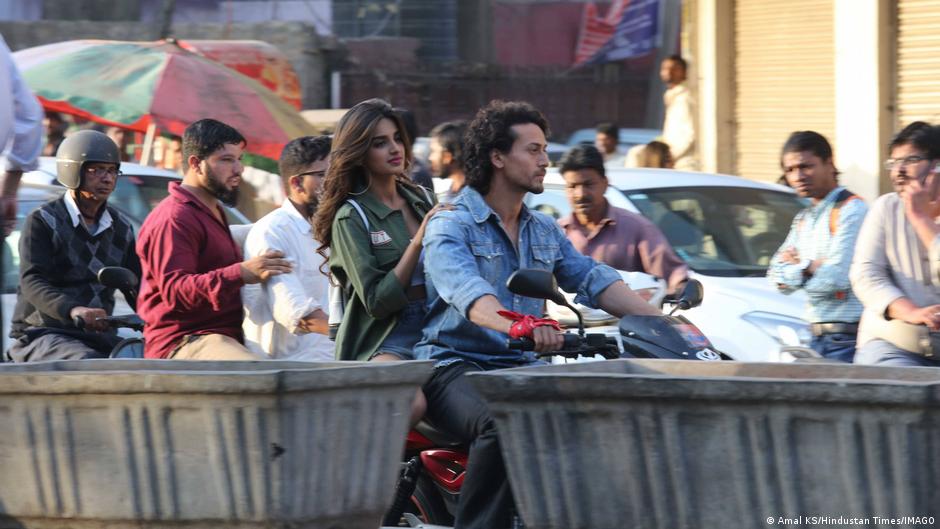
In the entire film industry, whoever works without aligning with us, or works with Salman Khan, will be killed. This chilling ultimatum, delivered in an audio message following a shooting incident targeting actor Tiger Shroff in Mumbai earlier this month, has sent shockwaves through the Hindi film industry. The attack, which left the actor’s driver wounded, serves as a stark reminder that the glamorous facade of Bollywood is once again being encroached upon by the grim reality of organized crime. While authorities are still investigating the precise origin of the threat, the finger of suspicion points toward the Lawrence Bishnoi gang, a syndicate that has successfully weaponized social media and cross-border digital communication to terrorize India’s cultural capital from behind prison bars.
This recent violence is not an isolated occurrence but the latest in a mounting campaign of intimidation against some of India’s most recognizable faces. Since 2022, the industry has witnessed a series of brazen attacks: bullets fired at the residence of superstar Salman Khan, projectiles launched at the home of filmmaker Rohit Shetty, and targeted threats against the family of actress Disha Patani. Even beyond the borders of India, the reach of these syndicates has been felt, with a cafe owned by comedian Kapil Sharma in Surrey, Canada, sustaining three separate attacks. These incidents have forced a long-dormant trauma to the surface, causing industry insiders to draw uncomfortable parallels to the 1990s—a decade defined by mafia control, extortion rackets, and the tragic assassination of industry stalwarts.
A Historical Retrospective: The 1990s Underworld Monopoly
To understand the current climate of fear, one must look back at the era when the Mumbai underworld held an iron grip on Bollywood. During the 1990s, the lines between the film industry and criminal syndicates were perpetually blurred. Crime journalist S. Hussain Zaidi, a veteran observer of Mumbai’s criminal landscape, notes that mafia dons like Dawood Ibrahim and Abu Salem viewed the film industry not just as a source of illicit income, but as a gateway to social legitimacy.
The relationship was symbiotic yet predatory. Gangsters would finance high-budget productions to launder money, simultaneously exerting creative control and demanding hefty "protection" fees. The human cost of resistance was severe. In 1997, the assassination of T-Series music mogul Gulshan Kumar in broad daylight remains a haunting milestone in the industry’s history. By 1998, the situation reached a breaking point, with D. Sivanandhan, the former Police Commissioner of Mumbai, reporting that 101 businessmen—many associated with the film trade—were murdered that year alone. It was a period where the state struggled to maintain a monopoly on violence, and the film industry operated under the constant, suffocating shadow of the "Bhai" (the brothers/gangsters).
The subsequent crackdown, initiated by the implementation of stringent organized crime laws in 1999, effectively dismantled the dominance of these syndicates. Through a combination of electronic surveillance, the establishment of specialized anti-extortion units, and, at times, controversial police encounters, the underworld’s influence was largely curtailed, ushering in a decade of relative stability.
The Bishnoi Syndicate: Crime in the Digital Age
The modern iteration of this threat, embodied by Lawrence Bishnoi, represents a fundamental shift in criminal operations. Bishnoi, a 33-year-old student-politician-turned-gangster, is currently incarcerated in a high-security facility in Gujarat. Despite his confinement, he has managed to orchestrate a sophisticated criminal network that transcends geographical boundaries.
Unlike the old guard of the 1990s, who relied on local physical networks, the Bishnoi gang leverages modern communication technologies. They operate through encrypted messaging apps and social media, allowing them to recruit disaffected youth from rural northern India with promises of notoriety and financial gain. According to experts like author Jupinderjit Singh, the gang functions as a decentralized franchise of terror, where the "brand" of Lawrence Bishnoi attracts young, vulnerable recruits looking for a shortcut to power.

The gang’s geopolitical reach is significant. The Canadian government’s recent designation of the Bishnoi network as a terrorist entity and the FBI’s inclusion of key lieutenant Satinderjeet Singh, alias "Goldy Brar," on its most-wanted list underscore the international gravity of the situation. This is no longer just a local Mumbai issue; it is a transnational security concern that has necessitated cooperation between Indian, Canadian, and American intelligence agencies.
The Motivation: From Moral Vendetta to Financial Extraction
Why target film stars? The motivations appear to be a volatile cocktail of personal vendetta and cold, calculated opportunism. The root of the conflict with Salman Khan dates back to 1998, following an incident involving the killing of a blackbuck—an animal considered sacred by the Bishnoi community. This has become the ideological anchor for the gang’s campaign, allowing them to frame their violent acts as a form of "moral justice" or vengeance.
However, beneath the veneer of ideological retribution lies the pragmatic reality of the "Bollywood ATM." With the traditional mafia influence having been largely eradicated, a power vacuum was created. The Bishnoi gang has stepped into this space, recognizing that the film industry remains a high-liquidity, high-profile sector. By targeting the industry’s soft underbelly, they gain two things: immediate access to extortion funds and the massive publicity that comes with attacking a household name. As one anonymous security consultant noted, "The base material of extortion is the creation of fear. When you attack a star, you aren’t just attacking a person; you are attacking the entire industry’s sense of security."
Official Responses and Industry Anxiety
The response from the government and industry bodies has been characterized by a mix of heightened security measures and urgent calls for intervention. The All Indian Cine Workers Association (AICWA), led by President Suresh Shyamlal Gupta, has petitioned the Ministry of Home Affairs, warning that the return of underworld influence could force prominent figures to flee Mumbai entirely. "Mumbai will not be allowed to go back to the underworld days of the 1990s," the association stated, emphasizing that the economic impact of such insecurity could threaten the livelihoods of hundreds of thousands of workers who depend on the industry.

In response to the mounting pressure, several high-profile stars have significantly increased their private security details. Armored vehicles and round-the-clock protection have become the new standard for the industry’s elite. Yet, the police remain in a difficult position. While they have successfully thwarted several plots, the nature of the threat—directed from prison cells by individuals who are already serving time—complicates traditional law enforcement strategies.
Implications and Future Outlook
The current situation poses a complex challenge for the future of Indian cinema. While experts like S. Hussain Zaidi caution against labeling the current state of affairs as a full-scale "resurgence" of the 1990s, they acknowledge that the psychological impact is profound. The digital transition of the Indian economy, which has made large-scale cash extortion more difficult to conceal, serves as a natural barrier to the kind of systemic racketeering seen three decades ago. However, the use of social media to broadcast threats and claim responsibility creates a climate of persistent, low-level dread that can be just as damaging as direct physical control.
The implication for the industry is clear: Bollywood must transition from an era of unchecked, high-profile lifestyles to a more security-conscious operational model. The reliance on digital platforms by these criminal syndicates also suggests that future counter-terrorism efforts must focus heavily on cyber-intelligence and the disruption of communication lines within the prison system.
As the authorities grapple with the logistics of containing a transnational, prison-run syndicate, the film industry finds itself at a crossroads. Whether Bollywood can effectively neutralize this threat through collective action and enhanced cooperation with state agencies will determine if the current wave of violence remains a manageable disruption or evolves into a structural threat to one of India’s most significant cultural and economic exports. For now, the lights in Mumbai continue to shine, but for those behind the cameras, the shadow of the underworld has undeniably lengthened.
