
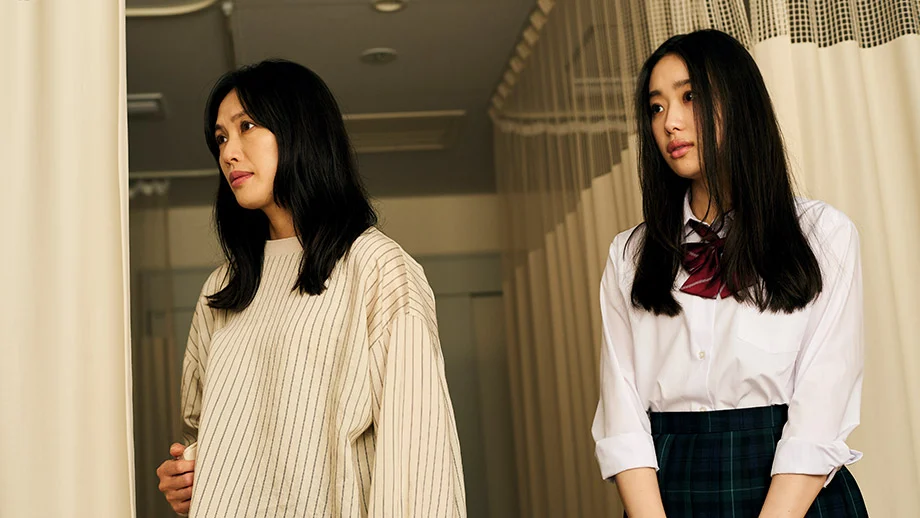
The Tokyo International Film Festival (TIFF), a cornerstone of the global cinematic calendar, serves as the stage for the premiere of Matsumura Shingo’s latest feature, Between Us. Screening within the Nippon Cinema Now section—a competitive and curated strand dedicated to highlighting the most compelling voices in contemporary Japanese film—the production represents a significant entry in the director’s evolving body of work. Starring a versatile ensemble cast including Kawashima Ririka, Kurasawa Anna, Kikuchi Akiko, Usuda Asami, Saito Yoichiro, and Miura Takahiro, the film examines the fragile intersection of long-held secrets and the process of emotional reconciliation.
The Narrative Architecture of Silence
At its core, Between Us is a character study centered on Makoto and Kasumi, childhood companions whose bond is fractured by an unspecified, traumatic incident during a joint family camping excursion. The narrative arc picks up six years later, as the two protagonists find themselves in the same high school drama club.
Director Matsumura employs a distinct stylistic constraint to frame this reunion: a strict prohibition against handheld camerawork. In an era where digital ubiquity has normalized the shaky, kinetic aesthetic of social media and smartphone-captured video, Matsumura argues that the "big screen" requires a more intentional approach. By favoring a tripod-mounted, static lens, he facilitates a patient observation of his actors, allowing the unspoken emotional information—the grief, the resentment, and the longing—to percolate within the frame without the distraction of rapid-fire cutting or artificial movement.
This stylistic choice serves the film’s central theme: the emotional distance between the two leads is mirrored by the physical space maintained in the blocking of each scene. The drama club environment serves as a pressure cooker; Kasumi’s perfectionism and intensity alienate her peers, creating a vacuum that Makoto eventually attempts to fill. Through sophisticated editing, Matsumura bridges this divide, cutting between their individual script readings to create a sense of dialogue that transcends their physical separation, effectively using the artifice of theater to confront their authentic, hidden pain.
Origins and Global Context
The conceptual genesis of Between Us is deeply rooted in a decade of systemic uncertainty. Matsumura cites the 2011 Great East Japan Earthquake as a foundational influence on his perspective regarding human connection. This initial trauma was later compounded by the global COVID-19 pandemic and the escalation of international conflicts, creating a period of personal reflection for the filmmaker.
"There was a period in my life when I thought it was impossible for one to connect with others," Matsumura noted during discussions at the festival. His objective was not to produce a literal depiction of these disasters, but rather to distill the resulting societal fatigue into a microcosm. By focusing on two individuals "facing the other way" and forcing them to confront one another, the film asks what form of energy is generated when barriers are finally dismantled.
This focus on "unresolved" trauma reflects a broader sociological observation. Matsumura notes that while media cycles move quickly—treating earthquakes, nuclear power debates, and wars as discrete, time-bound events—the reality for the victims is one of permanent, unaddressed residue. In the film, the characters’ inability to reconcile their past is a mirror for the collective inability of society to fully process the crises that dominate the news cycle but disappear from the public consciousness once they are no longer trending.
The Japanese Cinematic Landscape
The inclusion of Between Us in the Nippon Cinema Now section provides a window into the current state of the Japanese film industry. Matsumura’s commentary on the production environment highlights a divergence from the Hollywood model, characterized by smaller budgets and more localized, intimate storytelling.
Data from the Motion Picture Producers Association of Japan (Eiren) has historically shown a robust domestic market, yet creators like Matsumura argue that budget constraints have necessitated a move away from "big subject" epics toward smaller, highly specific narratives. This is not necessarily viewed as a deficit. According to Matsumura, the current environment forces filmmakers to reach for subjects within their immediate grasp, resulting in a diverse, non-homogenous ecosystem where no single genre or topic dominates.
This fragmentation of the "mainstream" is a defining feature of Japanese cinema in the mid-2020s. Without a centralized mandate or massive financial backing to pursue blockbuster scale, Japanese directors are increasingly turning toward the idiosyncratic and the personal. As Matsumura observes, the lack of a singular mainstream path allows for a proliferation of artistic styles, as evidenced by the varied lineup in the Nippon Cinema Now section.
Professional Methodology and Actor Dynamics
A notable aspect of the production is the director’s hands-off approach to performance. Matsumura consciously avoided giving his leads, Kawashima Ririka and Kurasawa Anna, specific directives regarding how to portray their characters’ emotional states. Instead, he relied on the actors’ inherent ability to listen and internalize the script’s subtext.
This reliance on naturalistic performance aligns with his broader goal of creating "truthful" cinema. By allowing the actors to process the words and make them their own, the film achieves an intimacy that feels less like a rehearsed performance and more like an observation of genuine interpersonal growth. The script—the very text that gives the film its title—acts as the bridge between the two girls, providing them with a formal, safe structure to vocalize what they could not express in their daily, unscripted lives.
Future Trajectories and Industry Implications
As Matsumura stands at a professional crossroads, his situation reflects the broader tension between artistic autonomy and commercial viability. The filmmaker expresses a dichotomy in his future: the pursuit of purely personal, artistic expression versus the development of content tailored for a mass audience.
"I could follow my instinct and make an artistic film, and express what is inside of me, or I could make a film for the mass audience," he states. This tension is a recurring theme for independent filmmakers globally, but it is particularly acute in the Japanese market, where the bridge between prestige art-house success and widespread commercial penetration remains narrow.
The critical reception of Between Us at the Tokyo International Film Festival will likely influence the trajectory of this debate. If the film resonates with audiences—who are increasingly seeking "human-scale" stories in an era of digital saturation—it could serve as a case study for the value of slow, deliberate, and low-budget filmmaking.
Analysis of the Film’s Impact
The implications of Between Us extend beyond its runtime. By utilizing a "simple" story to tackle the "complex" issue of unresolved trauma, the film challenges the necessity of grand narratives. Its success in the Nippon Cinema Now section highlights a growing appreciation for films that prioritize emotional, rather than structural, density.
For industry analysts, the film serves as a reminder of the resilience of Japanese independent cinema. Despite limited resources compared to international counterparts, the focus on technical precision (such as the exclusion of handheld cameras) and thematic depth (the exploration of the "unresolved" past) ensures that these films remain relevant.
Ultimately, Between Us is a testament to the power of the medium to act as a mirror for contemporary existential fatigue. As the film concludes its run at the Tokyo International Film Festival, it leaves behind a compelling question: if two people, separated by trauma, can find their way back to each other through the shared language of a play, is it possible for a society to do the same through the shared language of cinema? Matsumura does not provide a definitive answer, but his commitment to "observing" the process rather than "solving" the conflict offers a mature, nuanced contribution to the ongoing conversation about modern isolation and the persistent, quiet work of healing.
