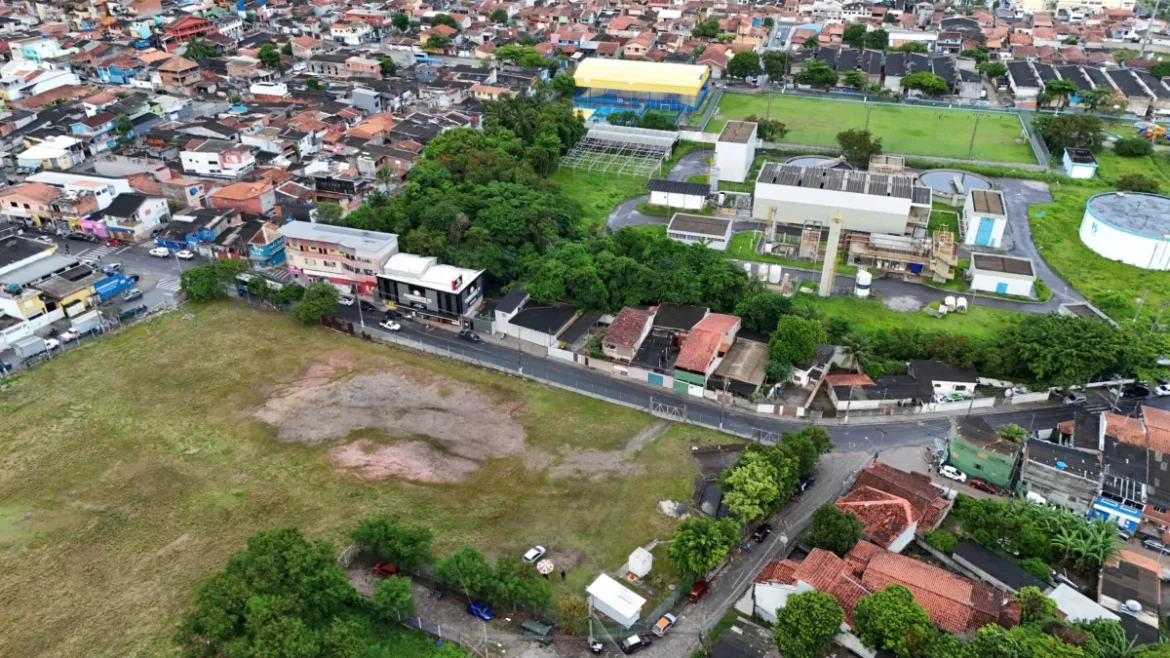
In the coastal city of São Sebastião, Brazil, within the confines of the Itatinga neighborhood, Cosma da Silva stands before the home she has occupied for decades. Her gaze drifts across the nearby residences, her memory serving as a grim directory of oncology cases. She points to a neighbor’s house, then a nearby building, and then another lot. To the residents of Itatinga, cancer is not merely a medical diagnosis; it has become an intrinsic, terrifying feature of the local geography. According to Da Silva, the prevalence of the disease is so high that it defines the community’s mortality.
This pervasive sense of dread is grounded in personal tragedy. Da Silva’s husband, Paulo José da Silva, succumbed to a brain tumor at the age of 51. Da Silva herself recently underwent surgery to remove a nodule, and she now lives with the physical reminders of her treatment—a persistent, burning wound on her chest. As she recovers, she watches her relatives and neighbors navigate similar health crises, convinced that the ground beneath their feet is the silent architect of their suffering.
The residents of Itatinga have long suspected that their health issues are tied to environmental contamination dating back decades. From the 1970s through the 1980s, a portion of the neighborhood served as a disposal site for oily sludge, a byproduct of the intensive oil exploration and processing activities that characterize the region. Years later, as São Sebastião expanded, homes were built directly atop this waste. While environmental agencies have confirmed the presence of toxic substances in the soil and groundwater, the comprehensive health study promised to the community has never materialized, leaving a void of scientific proof and a legacy of institutional neglect.

A Legacy of Industrial Waste and Urban Expansion
Before the rapid urban expansion of the late 20th century, the area now known as Itatinga was a landscape of bamboo groves and small-scale agriculture. As Brazil’s oil industry grew, particularly with the development of the Terminal Marítimo Almirante Barroso (TEBAR)—the largest oil terminal in the country operated by Petrobras subsidiary Transpetro—the need for waste disposal increased. Residents allege that for years, industrial sludge was dumped into the low-lying areas of Itatinga until the land was leveled, subdivided, and sold to unsuspecting families.
Maria do Carmo Barbosa da Silva, a resident for over 30 years, recalls a different time when the neighborhood was lush with crops and a clean river served the community for fishing and washing. However, by the early 2000s, the landscape began to purge its hidden contents. A dark, viscous substance—described by locals as a "black sludge" with the pungent odor of burnt oil—began seeping into backyards, bubbling up through sidewalks, and pooling in vacant lots.
This "oily sludge" is a complex mixture of hydrocarbons, heavy metals, and chemical additives generated during the storage and transport of petroleum. For the people of Itatinga, the appearance of the sludge coincided with a perceived spike in chronic illnesses. Maria do Carmo, now 58, suffers from a litany of ailments, including respiratory distress, chronic pain, glaucoma, and depression. Her daughter experiences persistent leg pain, and her eight-year-old granddaughter is frequently hospitalized for respiratory issues. Her mother, who was healthy before moving to the neighborhood, eventually died after battling uterine cancer and a secondary tumor that cost her her sight.
The Chemical Threat: Benzene and Hydrocarbons
The concerns of the residents are not without scientific merit. For nearly two decades, a paper trail of reports from the São Paulo State Environmental Company (CETESB), the State Prosecution Service (MPSP), and the Federal Prosecution Service (MPF) has documented the presence of hazardous materials in Itatinga.

Technical assessments conducted by CETESB identified benzene and various hydrocarbons in the soil and groundwater. Benzene, in particular, is a well-documented human carcinogen. The International Agency for Research on Cancer (IARC) and the Brazilian National Cancer Institute (INCA) classify benzene as a Group 1 carcinogen, meaning there is sufficient evidence that it causes cancer in humans, specifically leukemia and other blood-related disorders. Health experts emphasize that there is no "safe" level of exposure to benzene; prolonged contact can damage the immune system, cause chromosomal aberrations, and lead to severe respiratory and ocular irritation.
Despite these findings, the crucial link between the recorded environmental contamination and the specific health outcomes in the community remains unproven. In 2011, a Conduct Adjustment Commitment (TAC)—a legal instrument used in Brazil to resolve environmental and civil disputes—was signed between Petrobras, the municipality of São Sebastião, and the State Prosecution Service. The agreement was intended to address the remediation of the site. In 2018, an amendment was added specifically mandating a "Cross-Sectional Health Study" to evaluate the biological impact on the exposed population.
The Abandonment of Scientific Inquiry
The health study was viewed by the community as the only path toward truth and potential reparations. However, the study was never conducted. The municipality of São Sebastião defended the failure, citing "failed bidding processes" and a lack of "qualified institutions" willing to take on the project. Local officials also pointed to the "methodological complexity" of the research, arguing that the COVID-19 pandemic made the necessary in-person household surveys impossible to conduct safely.
By 2025, the requirement for the health study was effectively scrapped. In a second amendment to the TAC, the study was replaced by a financial transfer of R$ 2.46 million (approximately $479,000) from Petrobras to the city. These funds were earmarked for the Municipal Land Regularization Fund, a move that shifted the focus from public health to administrative land management. As of now, the municipal government has not provided a detailed account of how these funds have been utilized, or if they have been spent at all.

Juliano Bueno, director of Arayara, a leading Brazilian environmental litigation organization, has been a vocal critic of this pivot. Bueno, who holds doctorates in environmental risks and energy, argues that the cancellation of the study represents a fundamental failure of justice. "You can’t say for sure that the illnesses are related to the contamination, but you can’t say they aren’t either," Bueno noted. "The study was the tool designed to answer that question. By replacing it with money, the state has turned the right to health and truth into a bargaining chip."
Analyzing the "Sacrifice Zone"
The situation in Itatinga fits a global pattern that environmental sociologists and human rights advocates call a "sacrifice zone." These are geographic areas where marginalized or socially vulnerable populations are disproportionately exposed to environmental hazards due to industrial activity. In these zones, the response from corporations and government agencies often focuses on "liability management"—settling legal disputes and fulfilling minimum regulatory requirements—rather than addressing the human health impacts or providing long-term medical care.
According to Bueno, a just resolution for Itatinga would require three pillars: truth, reparation, and guarantees of non-repetition.
- Truth: An independent, peer-reviewed epidemiological study to determine the actual health risks.
- Reparation: Permanent, specialized healthcare for residents and acknowledgment of the decades of exposure.
- Non-repetition: The implementation of permanent environmental monitoring systems to detect vapor intrusion or groundwater shifts.
"Soil is a medium; people are the end," Bueno emphasized, highlighting that environmental remediation of land is meaningless if the people living on that land continue to suffer from the legacy of the waste.

Official Responses and Continued Impasse
Petrobras has consistently maintained that there is no evidence linking the reported illnesses in Itatinga to the historical contamination. While the company participated in the TAC and funded remediation efforts, it told investigators that the land-filling and urbanization of the area occurred without its direct involvement or oversight. The company frames its current actions as an exercise in "socio-environmental responsibility" rather than an admission of legal liability for the initial disposal.
The municipality of São Sebastião has also pushed back against the residents’ claims of a cancer cluster. Citing an Epidemiological Technical Report covering the period from 2006 to 2026, city officials stated that the Oncology and Nephrology Support Center (CAON) recorded only 25 patients from Itatinga undergoing treatment over the last decade. They argue this average of two to three cases per year is consistent with other neighborhoods. However, critics point out that this data does not specify whether these patients live in the high-risk "sludge zone" or the broader neighborhood, which houses over 5,000 people. Furthermore, raw oncology stats do not account for the respiratory issues, autoimmune disorders, or skin conditions reported by residents.
CETESB, the state environmental regulator, currently considers the remediated area safe for its current use, noting that the most contaminated sections remain fenced off and vacant. However, the agency admitted that complementary studies are still needed to assess "underground vapor intrusion"—the process by which volatile chemicals like benzene can seep from the soil into the air of nearby buildings. Petrobras is reportedly scheduled to begin field work for this vapor analysis later this year.
A Community Still Waiting for Answers
For the families of Itatinga, technical reports and financial transfers offer little comfort. Geraldo Ribeiro, who cares for his wife as she undergoes cancer treatment, summarizes the community’s frustration: "They have studied the land, but we are also here. A study of the area must be a study of us."

The case of Itatinga remains a stark reminder of the long-term costs of industrial development when paired with weak urban planning and delayed environmental oversight. As the "black sludge" continues to be a part of the neighborhood’s history, the residents remain caught in a cycle of illness and uncertainty, waiting for a scientific validation that may now never come. The replacement of a health study with a land regularization fund suggests that, for the authorities, the priority is to move past the legal dispute rather than to understand the human toll of the waste buried beneath the bamboo groves of the past.