
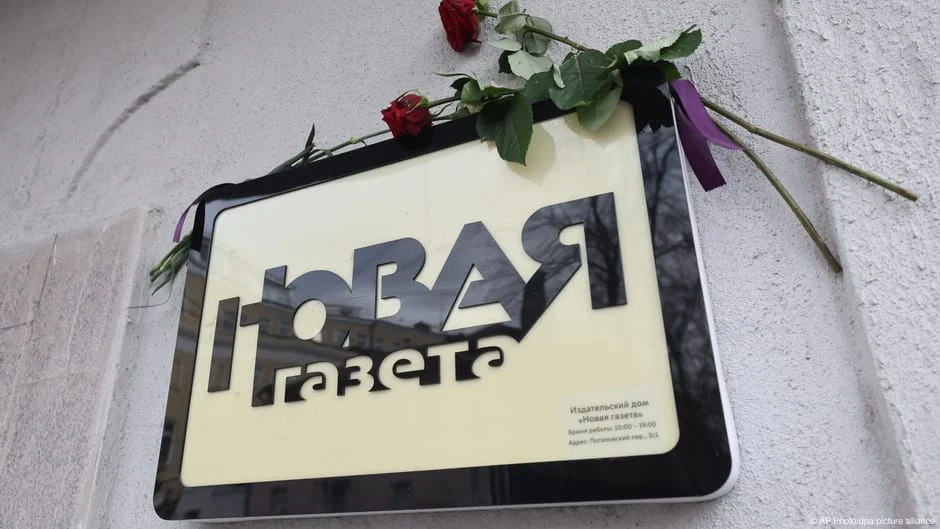
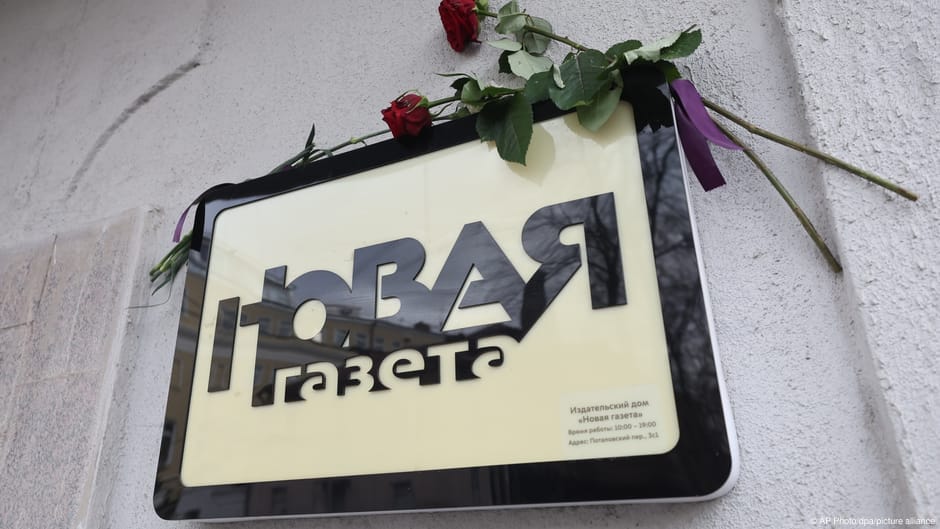
The closure of the Moscow offices of Novaya Gazeta on Monday signals the end of an era for the last major bastion of independent investigative journalism in Russia. The newspaper, which once symbolized the spirit of openness known as "glasnost" in the post-Soviet landscape, formally shuttered its physical operations following years of relentless state-led administrative and judicial pressure. This development represents a definitive turning point in the Russian government’s systematic campaign to neutralize independent media, effectively silencing the last significant outlet capable of documenting systemic corruption, human rights abuses, and the realities of the ongoing conflict in Ukraine from within the country’s borders.
The editorial team, led by Nobel Peace Prize laureate Dmitry Muratov, finalized the shutdown after facing a combination of "foreign agent" designations, prohibitive financial sanctions, and forced evictions. For decades, the publication served as a vital, albeit embattled, record of the country’s democratic aspirations. Its demise now leaves a vacuum in the Russian media space, as the state consolidates control over the flow of information to its citizenry.
A Chronology of Suppression: From Glasnost to Censorship
The decline of Novaya Gazeta did not happen overnight; it was the result of a long-term, calculated strategy of attrition. Founded in 1993 with seed money provided by the late Mikhail Gorbachev—using a portion of his 1990 Nobel Peace Prize funds—the newspaper was born from the optimism of the early post-Soviet era. It quickly established a reputation for fearless investigative reporting, often at a high personal cost to its staff.
The timeline of the paper’s recent struggle is inextricably linked to the intensification of the Kremlin’s wartime policies:
- 1993–2021: The paper operates as a critical voice, investigating high-level corruption and conflicts in Chechnya. During this period, six of its journalists, including the renowned Anna Politkovskaya, are murdered in connection with their reporting.
- October 2021: Editor-in-chief Dmitry Muratov is awarded the Nobel Peace Prize, providing the newspaper with a temporary layer of international prestige and protection.
- February 2022: Following the full-scale invasion of Ukraine, the Russian government introduces draconian wartime censorship laws. The law effectively criminalizes any reporting that deviates from the Kremlin’s narrative, including the use of the word "war."
- March 2022: Novaya Gazeta suspends its print edition and online operations within Russia to avoid being completely dismantled by the regulator, Roskomnadzor.
- September 2022: The paper’s media license is officially revoked by a Moscow court at the request of state censors.
- November 2026: After attempting to operate in a reduced, online-only capacity while facing blocked financial channels and the designation of staff as "foreign agents," the outlet officially closes its Moscow office.
The Financial and Legal Strangulation of Dissent
The closure was not merely a result of political intimidation but a consequence of calculated economic warfare. The Kremlin’s strategy against Novaya Gazeta utilized a multi-pronged approach that made sustained operations untenable. By branding the outlet a "foreign agent," the state triggered a series of regulatory hurdles that stigmatized the publication and limited its ability to partner with advertisers.
Furthermore, the government imposed strict prohibitions on Russian banks, forbidding them from processing donations from the newspaper’s readers. In a move designed to sever the paper’s lifeline, officials ensured that the outlet could not sustain the costs of digital hosting or staff salaries. This "financial quarantine" forced the editorial board into an impossible position: they could either continue under the threat of further legal action or shutter operations to protect their staff from the growing risk of arrest and imprisonment.
Data from the Committee to Protect Journalists (CPJ) suggests that the number of journalists imprisoned in Russia has reached record levels since 2022, reflecting a broader trend where media outlets are treated as extensions of state security threats rather than independent entities.
Official Responses and the "Rotational" Narrative
The Kremlin’s response to the closure has been characterized by studied indifference and attempts to frame the event as a standard market adjustment. Dmitry Peskov, the long-standing Kremlin spokesman, characterized the closure as a "rotational process" in a competitive media market. By dismissing the shutdown as a mundane corporate change rather than a targeted political action, the administration aims to minimize international outcry and domestic awareness.
However, the reality on the ground contradicts this assessment. As the editorial team vacated the premises, footage emerged of senior staff, including editor-in-chief Sergei Sokolov, removing portraits of their fallen colleagues from the office walls. These photographs served as a stark reminder of the human cost of the paper’s commitment to the truth. For the staff, the closure is not a "rotational" change but a "killing" of an institution, as Sokolov stated last month.
The Broader Impact on Russian Civil Society
The loss of Novaya Gazeta carries profound implications for the state of information in Russia. With the shuttering of this platform, the Russian public is left with virtually no mainstream, non-state-aligned media. This void is increasingly filled by state-controlled television and social media channels that propagate the government’s worldview, significantly narrowing the possibility for a public debate on the war in Ukraine or the country’s domestic political direction.
Dmitry Muratov, in his final remarks, emphasized the distinction between the current administration and the Russian people, specifically the younger generation. He urged international observers to maintain hope, noting that the spirit of dissent is being pushed underground rather than eliminated. "We cannot blame the citizens themselves for this," Muratov stated, underscoring the environment of extreme fear and intimidation that the current legislative framework has created.

Looking Toward the Future: The Diaspora Option
The question remains whether the closure in Moscow represents a final death knell for Novaya Gazeta or merely a transition to exile. Many other independent Russian media outlets, including TV Rain (Dozhd) and Meduza, have already successfully transitioned to operating from hubs in the European Union and beyond. By moving their servers and editorial staff abroad, these organizations have managed to bypass domestic censorship, albeit at the cost of losing their direct physical connection to their domestic audience.
The leadership of Novaya Gazeta has remained ambiguous about their next steps. While the Moscow office is closed, the possibility of a "resurrection" in an external, digital-only capacity remains a topic of internal discussion. Irina Vorobyova, a staff journalist, characterized the paper’s ethos as a "good virus," suggesting that the collective expertise and culture of the outlet would persist in its former employees, even if the formal structure remains dismantled in Moscow.
Analytical Implications: The Shrinking Public Sphere
The closure of Novaya Gazeta serves as a case study in the rapid erosion of democratic institutions in Russia. The outlet’s history—spanning from the hope of the 1990s to the repression of the 2020s—mirrors the country’s trajectory. The systematic elimination of such outlets suggests that the Kremlin is no longer content with merely managing the news cycle; it is actively engaged in the total erasure of any institutional memory that contradicts the state-approved narrative.
The international community, which has long lauded the paper’s courage—as evidenced by the 2021 Nobel Peace Prize—now faces a challenge in supporting independent Russian voices that are forced into exile. As these journalists scatter across the globe, the focus will likely shift to how they can continue to reach their audience inside Russia, where the state is increasingly utilizing sophisticated firewall technologies to block foreign-hosted independent reporting.
Ultimately, the closure of Novaya Gazeta is more than just a media story; it is a significant historical marker. It signifies that the environment for dissent in Russia has reached a point where the risks associated with speaking the truth have become insurmountable for any formal organization. As the last office door closes in Moscow, the focus of independent Russian journalism moves to the digital fringes, where it must contend with an increasingly isolated and heavily monitored information landscape.
