
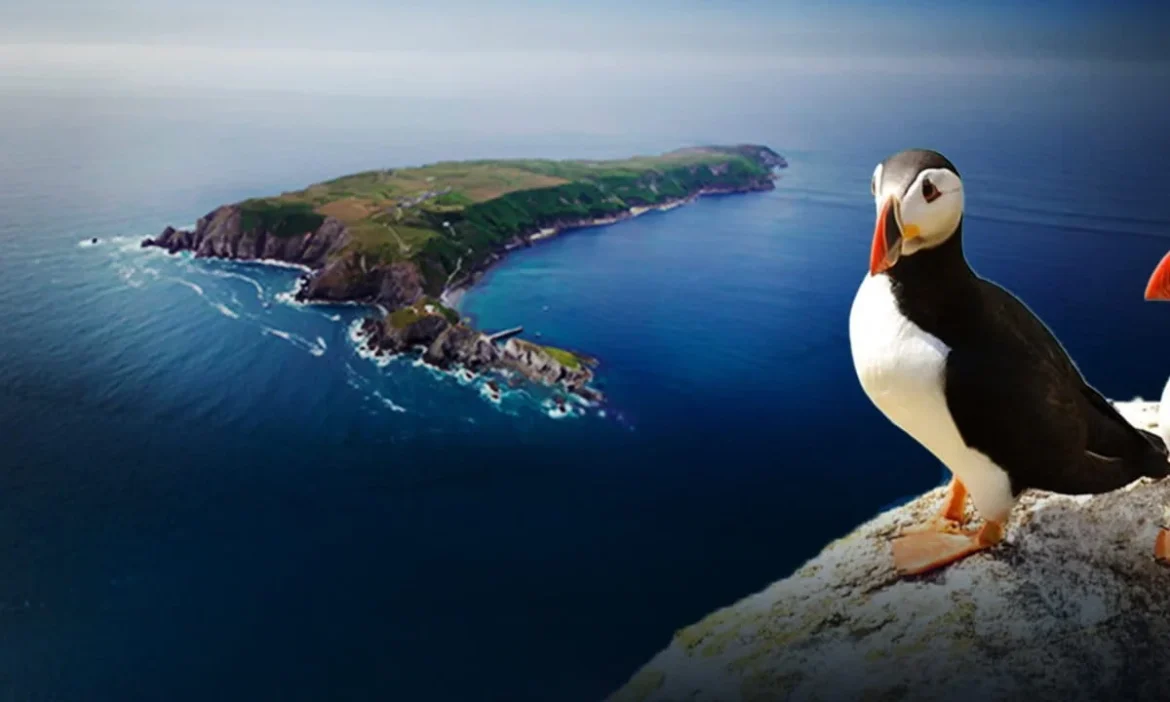
The rugged granite outcrop of Lundy Island, situated in the tempestuous waters of the Bristol Channel between the coasts of Devon and South Wales, stands today as a global beacon for ecological restoration. For decades, this remote island has served as a living laboratory for conservationists, local fishermen, and policymakers. By integrating aggressive terrestrial predator eradication with pioneering marine spatial planning, Lundy has transformed from a degraded ecosystem into a thriving sanctuary for both avian life and marine biodiversity. This recovery, defined by the successful rebounding of seabird populations and the establishment of the United Kingdom’s first "no-take zone," offers a compelling case study in how human communities and nature can coexist through shared stewardship and evidence-based management.
A History of Ecological Degradation and Recovery
In the early 2000s, Lundy Island faced a precarious environmental future. The island’s status as a critical nesting ground for seabirds—including Atlantic puffins, razorbills, guillemots, and Manx shearwaters—was severely compromised by the presence of non-native brown rats. Introduced accidentally by human activity, these predators devastated native colonies by raiding burrows to consume eggs and chicks. By 2000, the seabird population had plummeted to approximately 6,000 individuals, a figure that signaled imminent local extinction for several species.
The turning point occurred in 2003 with the implementation of a comprehensive eradication program. Removing the invasive rat population was a high-stakes decision that required significant scientific planning and public support. The operation, which was monitored closely by conservationists, proved remarkably successful. Over the subsequent two decades, the absence of terrestrial predators allowed seabird numbers to surge, rising from the initial low of 6,000 to an estimated 48,000 birds by the mid-2020s. This recovery is particularly notable given the broader context of the United Kingdom’s biodiversity crisis, where many seabird colonies are currently facing sharp declines due to climate change, overfishing, and habitat loss.
Pioneering Marine Protected Areas
While the terrestrial recovery of Lundy is a significant achievement, the island’s most enduring legacy lies in the waters surrounding its rocky shores. In 2003, Lundy became the site of the United Kingdom’s first official "no-take zone" (NTZ). This designated area, which prohibits all forms of fishing and extraction, was not the result of top-down mandates, but rather the product of a grassroots, collaborative effort between marine biologists, government bodies, and the local fishing industry.
The design of the zone was pragmatic. Rather than imposing a blanket restriction on all maritime activity, stakeholders utilized a zoned approach. The NTZ occupies a specific stretch of the island’s eastern coast—selected for its high biodiversity value—while surrounding waters remained open to regulated, small-scale, and sustainable fishing practices. By mapping out areas for lobster potting and rod-and-line fishing alongside strictly protected zones, the community ensured that the economic livelihoods of local fishers were preserved while simultaneously creating a biological refuge.
The "Spillover Effect" and Economic Benefits
The biological success of the no-take zone has been documented through extensive longitudinal monitoring. Scientific surveys conducted by the Inshore Fisheries and Conservation Authority (IFCA) and independent researchers have demonstrated a rapid and robust recovery of commercially important species, most notably the European lobster (Homarus gammarus).
Within five years of the zone’s implementation, the density of lobsters within the protected area had increased significantly compared to surrounding fished waters. Beyond the increase in sheer numbers, the average size of individual specimens also trended upward. A critical observation for the fishing community has been the "spillover effect." As the population density within the NTZ reaches carrying capacity, adult lobsters migrate into adjacent, unprotected waters. Local fishermen who initially expressed skepticism have reported that their yields outside the boundary have improved, effectively turning the conservation area into a "nursery" that supports the broader regional fishery.

Protecting Fragile Benthic Habitats
The significance of Lundy’s marine protection extends beyond individual species to the structural health of the seabed. The Bristol Channel features a complex array of underwater environments, including rocky reefs, kelp forests, and delicate sessile organisms like pink sea fans. These species are characterized by their slow growth rates and extreme vulnerability to physical disturbance.
Historical practices such as trawling and dredging posed an existential threat to these habitats, as they effectively "plowed" the seabed, destroying decades of coral and sponge growth in mere minutes. The prohibition of these intensive methods within the protected zone has allowed for the slow, steady regeneration of the benthic floor. Conservationists emphasize that these habitats are the foundation of the marine food web, providing essential shelter and nursery grounds for juvenile fish and crustaceans. By safeguarding the physical structure of the seabed, the island has ensured the long-term viability of the marine ecosystem.
Collaborative Governance as a Model
The Lundy model demonstrates that effective conservation requires social license. The project’s success is frequently attributed to the involvement of the local fishing community from the project’s inception. By ensuring that the needs of the people who depend on the sea were represented in the planning process, the initiators of the no-take zone minimized conflict and maximized compliance.
Former fishermen, such as Geoff Huelin, have emerged as vocal proponents of the system, noting that the benefits to the ecosystem are so apparent that there is little incentive for illegal activity within the restricted area. This high level of community buy-in serves as a template for other marine conservation efforts across the British Isles and beyond. It highlights the importance of transitioning from adversarial conservation—which often pits environmentalists against industry—to a model of shared responsibility.
Broader Implications and Future Challenges
Despite these successes, Lundy remains a small island in a vast, changing ocean. As sea temperatures rise and ocean acidification accelerates, the future of the island’s marine and avian life remains subject to global environmental pressures. The challenge for the next decade will be to integrate current local protections with broader climate-adaptation strategies.
Furthermore, the island continues to balance its dual identity as a conservation site and a tourist destination. Managing the impact of thousands of annual visitors—who arrive to witness the island’s wildlife—requires careful infrastructure management to prevent the degradation of nesting sites and sensitive coastal flora.
The Lundy experience offers three primary lessons for modern environmental policy:
- Targeted Eradication Works: The removal of invasive species from contained environments like islands is one of the most effective tools for rapid biodiversity recovery.
- Community-Led Zoning is Resilient: Marine Protected Areas (MPAs) are more likely to be successful and durable when designed in partnership with local industry, rather than imposed from above.
- Biodiversity Benefits Economies: Through the spillover effect, environmental protection is not a zero-sum game; it can provide tangible economic benefits to local stakeholders by replenishing stocks in neighboring areas.
As policymakers continue to debate the expansion of Marine Protected Areas to meet international "30 by 30" targets—the goal of protecting 30% of the world’s oceans by 2030—the lessons learned on this small, windswept rock in the Bristol Channel remain highly relevant. Lundy serves as a proof-of-concept that when humanity provides nature with the space and stability to recover, the natural world is capable of remarkable resilience. The island remains a vital sanctuary, a place of disconnection from the mainland, and a testament to the power of deliberate, collaborative environmental management.
