

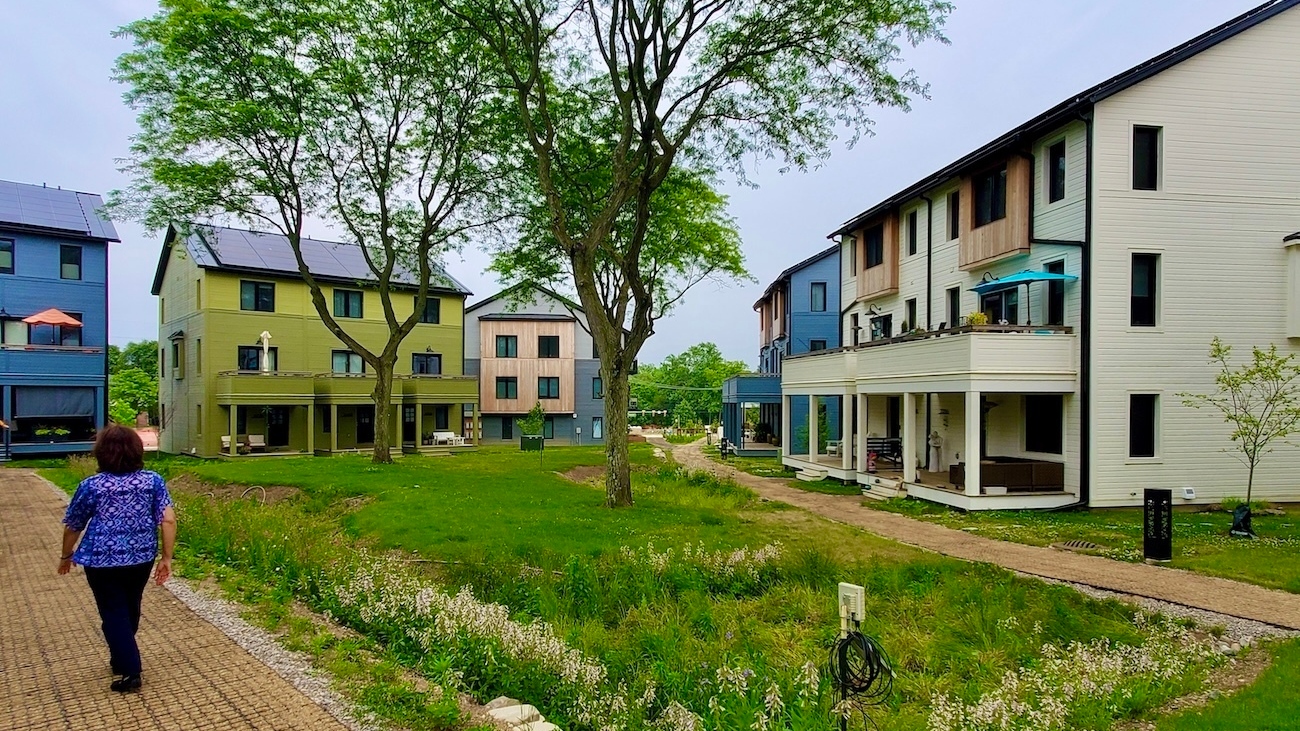
In the evolving landscape of American energy, the quiet town houses of the Veridian at County Farm development in Ann Arbor, Michigan, represent a radical departure from the traditional grid. Residents like Mitch and Lori Hall are not merely consumers of electricity; they are nodes in a sophisticated, decentralized energy network. By living in a fossil-fuel-free, net-zero-energy community, these homeowners generate as much solar power as they consume, utilizing advanced home battery systems to store energy for peak evening demand. Now, this localized sustainability effort is transitioning into a regional experiment as Detroit-based utility DTE Energy prepares to integrate these homes into a Virtual Power Plant (VPP), marking a significant milestone in Michigan’s clean energy transition.
The Mechanics of a Virtual Power Plant
A virtual power plant is not a physical facility with turbines or chimneys; it is a software-driven aggregation of distributed energy resources (DERs)—such as home solar arrays, battery storage, and smart appliances—that act in concert to provide grid services. In the case of the Veridian project, DTE Energy will remotely coordinate the fleet of residential batteries installed at the site. When the grid faces periods of high demand or instability, the utility can trigger these batteries to discharge their stored solar energy back into the local distribution network.
This bidirectional flow of power transforms the traditional utility model. Instead of relying solely on centralized "peaker plants"—typically older, fossil-fuel-heavy facilities that are expensive to operate and environmentally taxing—utilities can tap into the stored capacity of thousands of homes. By smoothing out these demand peaks, the VPP reduces the immediate need for costly grid-infrastructure upgrades and minimizes the dispatch of carbon-intensive generation, ultimately benefiting both the grid operator and the end consumer.
A Chronology of Innovation at Veridian
The roots of the Veridian pilot extend back to 2019, when Matt Grocoff, founder of the development firm Thrive Collaborative, first envisioned a neighborhood that functioned less like a static residential project and more like a biological ecosystem. Grocoff drew inspiration from the symbiotic relationships found in nature, such as the subterranean fungal networks that allow trees to share nutrients. He sought to replicate this efficiency in the built environment, proposing a system where homes mutually share energy resources rather than relying on a linear, one-way power flow from a distant plant.
The development phase was rigorous. Thrive Collaborative focused on creating high-performance buildings, installing solar infrastructure, and partnering with German battery manufacturer Sonnen USA. The timeline for the project unfolded in phases:
- 2019: Conceptualization of the VPP-enabled neighborhood model by Thrive Collaborative.
- 2020–2024: Construction of the initial market-rate residences equipped with integrated solar and battery storage.
- 2025: Installation of affordable housing units, currently slated for future integration into the energy network.
- Late 2026: Launch of the DTE Energy pilot program, utilizing Sonnen’s proprietary software to manage the fleet.
Currently, 44 market-rate homes are ready for enrollment, with plans to expand to nearly 100 battery-equipped residences as construction continues at the 120-unit site.
Data and Economic Implications
The shift toward VPPs comes at a critical juncture for the United States power grid. Rapid electrification, the proliferation of electric vehicles, and the massive energy requirements of data centers are placing unprecedented strain on existing transmission and distribution systems. According to recent forecasts, data center power demand alone could reach unsustainable levels by the end of the decade, necessitating creative, rapid-deployment solutions.
A report published earlier this month by the Brattle Group highlights the massive potential of this technology, estimating that by 2050, the integration of 524 gigawatts of distributed energy resources into VPPs could result in an average household savings of $122 per year. Beyond direct consumer savings, the systemic benefits are substantial. RMI, a clean energy think tank, notes that the "untapped capacity" in residential storage is vast, offering a pathway to grid stability that avoids the multi-billion dollar capital expenditure required for traditional "wires and poles" infrastructure upgrades.
Perspectives from Stakeholders
Joi Harris, president and CEO of DTE Energy, framed the pilot as a strategic move toward grid reliability. "This pilot is an opportunity to test an approach that could ultimately provide a lower-cost way to meet growing energy needs and strengthen reliability," Harris said in a formal statement. For the utility, the pilot provides the necessary data to determine how residential batteries can be modeled into long-term resource capacity planning.
From the resident perspective, the value proposition is twofold: financial compensation and convenience. Mitch Hall, a resident of Veridian, noted that the automation of the system is a primary benefit. "DTE will pay us a little bit to be part of this project," Hall explained. "A neat part about the virtual power plant is you don’t have to spend a lot of time learning and trying to optimize. DTE will manage that battery for you." While DTE has not yet disclosed the specific compensation structure, the model typically involves credits on monthly electricity bills or direct payments for participating in demand-response events.
The Path Toward Scalability
The Veridian pilot is designed as a "test bed," according to Geoff Ferrell, executive vice president of the VPP business unit at Sonnen USA. The initial program is expected to deliver approximately 300 kilowatts of power over three hours. While this is a modest beginning, history suggests that small pilots can rapidly scale.

Ferrell points to the "Wattsmart Battery" program in Utah, Wyoming, and Idaho as a successful blueprint. That initiative began in 2017 with a single apartment complex, the Soleil Lofts, and quickly grew to include over 7,900 participants after initial data proved the efficacy of residential battery aggregation.
However, some experts argue that the industry should move beyond the pilot phase. Kevin Brehm of RMI notes that the technology is already proven. "Do you need another pilot?" Brehm asked, pointing to the numerous existing VPP programs across the country that provide clear data on performance and reliability. Nevertheless, Brehm acknowledges that for utilities, these pilots serve as essential educational tools, allowing staff to integrate distributed assets into day-to-day operations and long-term capacity planning.
Broader Impacts and Future Outlook
The influence of the Veridian project is already reaching beyond the borders of Michigan. Developers across the United States are looking to the Ann Arbor model as a gold standard for sustainable community design. Peace Hill, a development in Townsend, Washington, is among those currently exploring similar energy-sharing frameworks.
As the energy transition accelerates, the success of the Veridian VPP will likely serve as a litmus test for regulatory and utility appetite for decentralized power. If DTE Energy can successfully demonstrate that residential batteries can provide consistent, reliable grid services without compromising customer comfort, it may set a precedent for utilities nationwide to embrace VPPs as a primary tool for decarbonization.
The transition from a centralized grid to a decentralized, interactive network is technically complex and requires significant coordination between homeowners, technology providers, and utilities. Yet, as the climate crisis intensifies and the demand for electricity continues to climb, the "ecosystem" model championed by Veridian offers a compelling vision of a more resilient, efficient, and equitable energy future. By turning every home into a potential power plant, the industry is not just changing how energy is produced—it is redefining the relationship between the utility and the community it serves.

