
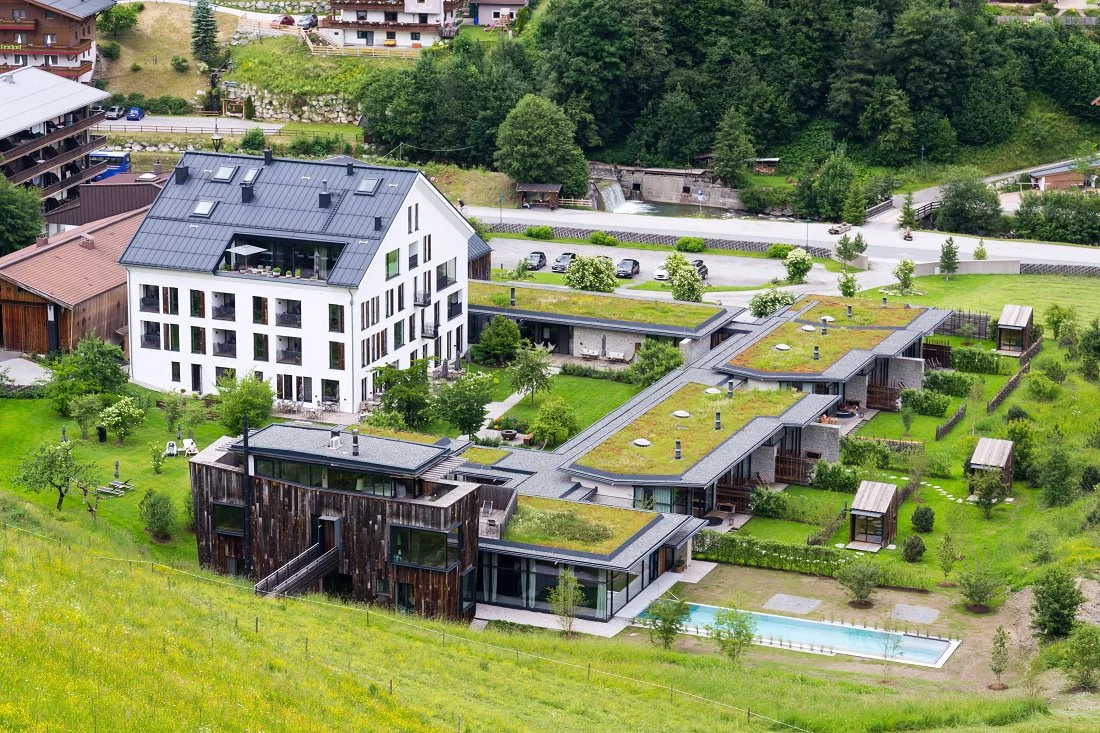
For a decade and a half, the city of Toronto served as North America’s premier proving ground for sustainable architecture, demonstrating what an aggressive green roof mandate could achieve. When the municipality enacted its pioneering bylaw in 2009—becoming the first jurisdiction on the continent to legally require living roofs while simultaneously establishing rigorous construction standards—it catalyzed the development of more than 1,200 vegetated rooftops across the urban landscape. However, that era came to an abrupt halt on November 3, 2025, when the provincial government of Ontario exercised its legislative authority to revoke the specific provisions within the City of Toronto Act that had empowered the bylaw. Executed with no advance notice or phase-out period, the reversal sent shockwaves through the architectural and environmental communities.
This sudden policy pivot encapsulates the broader, highly polarized state of green roof regulations in 2026. Across North America and Europe, sustainable construction practices are facing a significant political and economic backlash. Intense housing-cost pressures and affordability crises are driving various regional governments to dilute, suspend, or entirely eliminate green building mandates under the banner of accelerating construction. Simultaneously, other progressive municipalities are doubling down on climate resilience, introducing strict urban canopy regulations that frequently allow developers to choose between traditional vegetation, solar photovoltaic panels, or hybridized roofing systems. For building owners, real estate developers, municipal planners, and homeowners navigating this fractured regulatory environment, the central question has evolved from whether to build sustainably to determining precisely which roofing system under local jurisdiction yields the optimal structural and financial value.
Anatomy and Evolution of Modern Living Roofs
Often referred to as living roofs, eco-roofs, or vegetated roofs, modern systems are far more sophisticated than the traditional sod roofs that dotted the European landscape during the Middle Ages. Contemporary engineering dictates a multi-layered assembly installed directly over a robust waterproof membrane. According to municipal standards established in cities like Toronto, a fully compliant green roof requires, at minimum, a specialized root repellent layer, a comprehensive drainage matrix, a filtering geotextile fabric, an engineered lightweight growing medium, and carefully selected plant life.
Industry classifications typically divide these systems into two distinct categories: extensive and intensive. Extensive roofs utilize a shallow growing medium—typically just a few inches deep—and are planted with hardy, drought-tolerant species such as sedums, mosses, and alpine herbs. These lightweight systems require minimal structural reinforcement and are primarily designed for environmental performance rather than public recreation. Conversely, intensive roofs utilize significantly deeper soil profiles capable of supporting complex ecosystems featuring grasses, perennial shrubs, and even mature trees. These heavy-duty installations often double as accessible rooftop gardens or urban parks.
The economic disparity between the two approaches is substantial. Data previously published by the U.S. Environmental Protection Agency indicates that a basic, inaccessible extensive roof can cost anywhere from one-tenth to one-third of the price required to construct an intensive, publicly accessible rooftop garden. Despite these upfront capital expenditures, lifecycle analyses underscore their long-term value. A historical study conducted by the U.S. General Services Administration estimated that the cumulative heating and cooling energy savings generated by green roofs on commercial and public buildings fully offset their initial installation costs within approximately 6.2 years.

Global Environmental Impact and Climate Metrics
As urban heat islands intensify under the pressures of global climate change, the scientific consensus regarding the environmental efficacy of living roofs continues to strengthen. Project Drawdown, a prominent non-profit research organization focused on climate solutions, ranks green roofs and cool roofs collectively as the 73rd most effective strategy for mitigating global warming. The organization projects that these technologies could achieve an estimated 0.77 gigaton reduction in carbon dioxide emissions globally by the year 2050, provided they are scaled to cover approximately 30% of global roof space alongside a 60% adoption rate for cool roofs.
Recent empirical research underscores these projections. A landmark 2024 study published in Nature Cities calculated that implementing city-wide green roofs in Seoul, South Korea, could reduce building energy use intensity by up to 7.7%. Another comprehensive study published the same year in Nature Urban Sustainability projected that by the year 2100, the strategic integration of green and cool roofs could reduce HVAC energy consumption by up to 71.72% across six diverse global cities. Furthermore, a broad 2023 meta-analysis confirmed that vegetated roofing systems successfully reduce underlying rooftop surface temperatures by an average of 30 degrees Celsius during punishing summer months, directly combating urban heat island effects.
Residential Versus Commercial Implementation
While the environmental benefits are globally scalable, adoption patterns remain heavily skewed toward commercial and multi-unit residential sectors. Single-family homeowners have historically been slow to adopt green roofs as a standard construction choice, primarily due to high upfront design and installation costs. Data from mid-decade housing assessments indicated that single-family residences accounted for less than two percent of all green roof installations in the United States.
Multifamily housing developments, by contrast, benefit from economies of scale that easily justify the initial capital expenditure while frequently crossing the square-footage thresholds that trigger mandatory green roof policies. Consequently, multifamily projects accounted for roughly 22 percent of green roof installations, leaving the overwhelming majority of the market to industrial, institutional, and commercial real estate. Nevertheless, private homeowners retain access to various municipal grants and tax incentives designed to defray retrofit costs.
Notable architectural achievements globally demonstrate the vast versatility of these systems. In Urbana, Illinois, Carle Foundation Hospital’s "Will’s Garden" earned a 2023 Award of Excellence for its wheelchair-accessible therapeutic rooftop garden, overcoming severe engineering hurdles to flourish in just six inches of growing medium. In Europe, prominent developments such as the LXK Office and Residential Campus in Berlin and the striking Kö-Bogen II commercial complex in Düsseldorf—which boasts one of the continent’s largest green facades featuring over 30,000 hornbeam plants—showcase the aesthetic and ecological potential of living architecture. Meanwhile, massive infrastructural installations like the six-acre living roof atop the Vancouver Convention Centre, the 1.7-million-plant roof of the California Academy of Sciences in San Francisco, and the heavily studied green roof atop Chicago City Hall remain international benchmarks for sustainable urban design.

The Fall of Toronto’s Mandate and the 2026 Regulatory Landscape
Toronto’s groundbreaking 2009 bylaw originally targeted new commercial, institutional, and multi-unit residential developments possessing a gross floor area exceeding 2,000 square meters. Developers unable to integrate the mandated vegetation percentage into their architectural blueprints were permitted to pay an in-lieu fee of $200 Canadian dollars per square meter of missing eco-roof space. For years, this policy successfully expanded the city’s green infrastructure.
However, the political landscape shifted dramatically with the passage of Bill 17, formally titled the Protect Ontario by Building Faster and Smarter Act, which was pushed through the provincial legislature on June 3, 2025. The legislation aimed to streamline housing development by barring municipalities from enforcing environmental building requirements that exceed the baseline provincial building code. This move directly targeted Tier 1 of the Toronto Green Standard, prompting immediate legal battles and political friction.
Proponents of the repeal argued that municipal environmental mandates unnecessarily inflate construction costs during an affordability crisis. Steven Peck, founder of Green Roofs for Healthy Cities, highlighted local industry analyses suggesting that Toronto’s green roof requirements added between $1.00 and $2.50 CAD per square foot to the construction of condominium living spaces—a marginal figure when units were commanding between $800 and $1,200 CAD per square foot. Despite the elimination of the mandate, green roofs remain entirely legal and voluntary in Toronto, with municipal authorities actively maintaining their Eco-Roof Incentive Program to encourage voluntary retrofits on existing structures.
North American and European Policy Divergence
As of 2026, mandatory green roof policies across North America and Europe present a fragmented picture, with several major metropolitan areas pivoting toward flexible compliance pathways that pair vegetation with solar installations:
- New York City: Enforced via Local Laws 92 and 94 of 2019, the city mandates a "sustainable roofing zone" combining green roofs, solar arrays, or a hybrid of both for all new construction and major roof replacements.
- San Francisco: Under the 2017 Better Roofs Ordinance, developers must dedicate 15% of available roof space to solar panels or 30% to living roofs, with specific districts like SoMa requiring a combination of 15% solar and 50% vegetation.
- Denver: The city’s Green Buildings Ordinance requires new construction and major roof permits exceeding 25,000 square feet to combine cool roofing with a sliding scale of vegetation ranging from 18% for existing retrofits up to 60% for new builds.
- Portland, Oregon: While maintaining its Central City ecoroof standard for large buildings, the city introduced regulatory relief packages in 2024 permitting solar panels as a direct compliance alternative for residential projects.
- Cambridge and Somerville, Massachusetts: Cambridge enforces an 80% green or solar coverage requirement for new buildings over 25,000 square feet, levying a hefty fee of $64.29 per square foot for unbuilt vegetated areas in 2026. Somerville enacted similarly stringent rules requiring 80% vegetative coverage on mid-rise and high-rise developments.
- France: French national laws progressively raised mandatory rooftop environmental coverage from 30% to 40% on July 1, 2026, with a scheduled increase to 50% by July 2027. However, legislative debates in early 2026 have introduced proposals to strip the vegetation option in favor of mandatory solar, sparking intense debate over European Union building directives.
Incentives Versus Real-World Uptake

Governments continue to deploy financial carrots to stimulate private sector participation, though historical uptake remains unexpectedly sluggish. In June 2026, New York State extended New York City’s green roof property tax abatement program through June 30, 2031, offering tax relief capped at $10 per square foot citywide and $15 per square foot in designated community districts. Despite these lucrative financial incentives, historical Department of Finance records revealed that only a tiny fraction of eligible buildings successfully claimed the abatement, prompting lawmakers to continuously recalibrate the program parameters. Concurrently, municipal grant programs—such as New York City’s Department of Environmental Protection green infrastructure grants—have distributed millions across private retrofit sites, though program closures in other jurisdictions, like Washington, D.C.’s RiverSmart Rooftops rebate, highlight the precarious nature of public sustainability funding.
Looking Ahead: Overcoming Barriers to Adoption
Persistent barriers continue to hinder widespread market penetration. A general lack of public and private sector awareness, limited municipal promotion, and a shortage of regionally experienced contractors routinely slow adoption rates. Furthermore, economists and urban planners emphasize the urgent need for expanded empirical research to accurately price and monetize the distributed environmental and energy-saving benefits that green roofs provide to surrounding urban infrastructure.
As cities grapple with the dual imperatives of rapid housing development and aggressive climate adaptation, the future of urban roofing will likely rely on flexible, hybridized policy frameworks. Whether driven by strict municipal mandates or bolstered by financial tax abatements, the integration of living architecture into the modern skyline remains a critical tool in the global fight against urban warming.

