
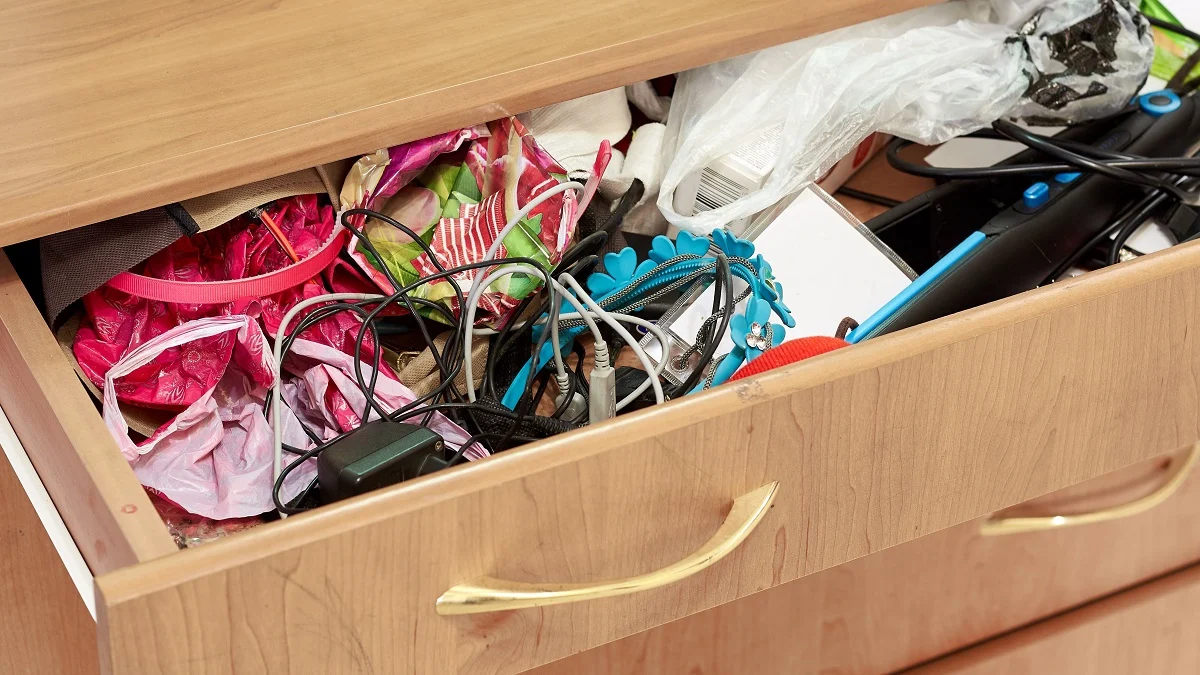
The average household clutter repository—commonly known as the junk drawer—often contains a predictable assortment of forgotten relics: obsolete smartphones, discarded eyeglass frames, tangled charging cables, and non-working watches. While the immediate impulse for many consumers is to discard these items or sweep them into municipal waste streams, a growing movement toward sustainability and circular economy practices is encouraging a critical reevaluation of household waste. Rather than surrendering these items to landfills, individuals are increasingly finding innovative ways to repurpose everyday hardware, thereby reducing environmental footprints and curbing consumer spending.
Recent data underscores the sheer volume of idle electronics accumulating in residential spaces. According to the Allstate Protection Plans 2025 Mobile Survey, consumer habits regarding device retention highlight a continuous cycle of upgrades: approximately 27% of American consumers replace their smartphones every two years, 23% retain them for three to four years, and 21% continue usage only until mechanical or software failure forces a replacement. Crucially, the same survey reveals that the average American household maintains roughly 1.8 unused, idle smartphones stored away in drawers, closets, and storage boxes. When multiplied across national demographics, this translates to tens of millions of functional electronic devices lying dormant while possessing significant residual utility.
The evolution of telecommunications networks further complicates the fate of older mobile devices. A pivotal technological shift occurred when major U.S. wireless carriers officially phased out their legacy 3G networks, a transition largely completed by 2022. Consequently, mobile devices limited strictly to 3G connectivity can no longer place standard cellular calls or connect to modern voice networks. Federal Communications Commission (FCC) guidelines clarify that for a device to operate on contemporary infrastructure, it must support 4G LTE with Voice over LTE (VoLTE) or advanced 5G capabilities. Consumers inspecting their legacy devices must verify these technical specifications before attempting to rely on them for daily communication tasks.

Despite these network restrictions, retired smartphones and tablets retain substantial standalone functionality. Even without an active carrier plan or a SIM card, an unactivated mobile device retains the ability to connect to residential Wi-Fi networks. This enables users to repurpose old hardware as dedicated streaming terminals, kitchen recipe displays, home automation controllers, or digital photo frames that cycle through family memories. Furthermore, federal regulations mandate that any mobile phone capable of receiving a cellular signal must be able to connect to emergency services. Even without an active subscription to a commercial wireless carrier, a fully charged smartphone with a functioning radio can still access 911 services, making these devices invaluable emergency beacons. Emergency management agencies frequently recommend keeping an unactivated, fully charged smartphone in an emergency preparedness kit, particularly for residents living in regions vulnerable to natural disasters such as earthquakes, hurricanes, or tornadoes.
Beyond the realm of personal electronics, consumer habits surrounding eyewear present another significant opportunity for waste reduction. Designer eyeglass frames from luxury brands such as Tom Ford, Dolce & Gabbana, Oakley, and Ray-Ban represent a substantial financial investment. When lenses become scratched or outdated, consumers often feel compelled to purchase an entirely new set of frames. However, specialized aftermarket retailers—such as Revant Optics—have emerged to address this inefficiency, offering customized replacement lenses compatible with dozens of major eyewear brands. By swapping out damaged lenses or upgrading to specialized tints tailored for distinct activities like fishing, cycling, or skiing, consumers can extend the lifespan of expensive frames indefinitely, bypassing the retail markup of a completely new purchase.
Furthermore, the protective cases accompanying each pair of purchased glasses frequently accumulate in large quantities, often exceeding any practical household requirement. Rather than discarding these rigid containers, consumers are finding clever secondary applications for surplus eyeglass cases. Their durable construction and compact dimensions make them ideal storage units for organizing delicate items such as charging bricks, specialized electronic cables, cosmetics, sewing kits, or stationery supplies. Some households even utilize them as discreet storage vaults for emergency cash reserves and spare keys, keeping essential items safe from children or casual visitors.
Timepieces represent another category of personal accessories frequently abandoned due to minor cosmetic wear or mechanical fatigue. Traditional wristwatches often end up in jewelry boxes simply because a leather strap has worn out, a metal clasp has failed, or the battery has died. Horological experts and jewelry designers note that replacing a watch band—transitioning from a worn leather strap to a modern metallic mesh bracelet, a durable nylon NATO strap, or a flexible rubber band—can entirely revitalize the aesthetic of an old watch. For individuals struggling with traditional buckles, alternatives such as expandable metal expansion bands or secure butterfly clasps offer enhanced comfort and accessibility.

When a watch mechanism is definitively broken beyond repair, the chassis can be transformed into avant-garde jewelry or decorative art. Using basic engraving tools, crafters can etch intricate designs into watch faces, repurposing them into unique pendants, statement necklaces, cufflinks, or charm bracelets. Miniature components within mechanical watches—such as gears, springs, and dials—are frequently harvested by hobbyists for use in steampunk sculptures, mixed-media art pieces, and custom crafting projects.
The broader implications of these upcycling practices extend far beyond individual household organization. Environmental scientists and municipal waste management authorities have long pointed to electronic waste (e-waste) and consumer goods disposal as major contributors to municipal landfill congestion. Discarded electronics contain heavy metals, toxic polymers, and rare earth elements that require careful recycling protocols to prevent environmental contamination. By extending the operational lifecycle of smartphones, eyewear, and accessories, consumers actively mitigate the demand for raw manufacturing materials, lower corporate carbon footprints, and reduce overall municipal waste volume.
Ultimately, the humble junk drawer serves as a microcosm of modern consumer behavior, capturing the tension between convenience and sustainability. As economic pressures fluctuate and environmental awareness grows, reevaluating the utility of everyday items offers a practical method for exercising fiscal responsibility while simultaneously conserving global resources. A systematic review of forgotten household items reveals that what was once considered waste may simply be an opportunity for reinvention.

