
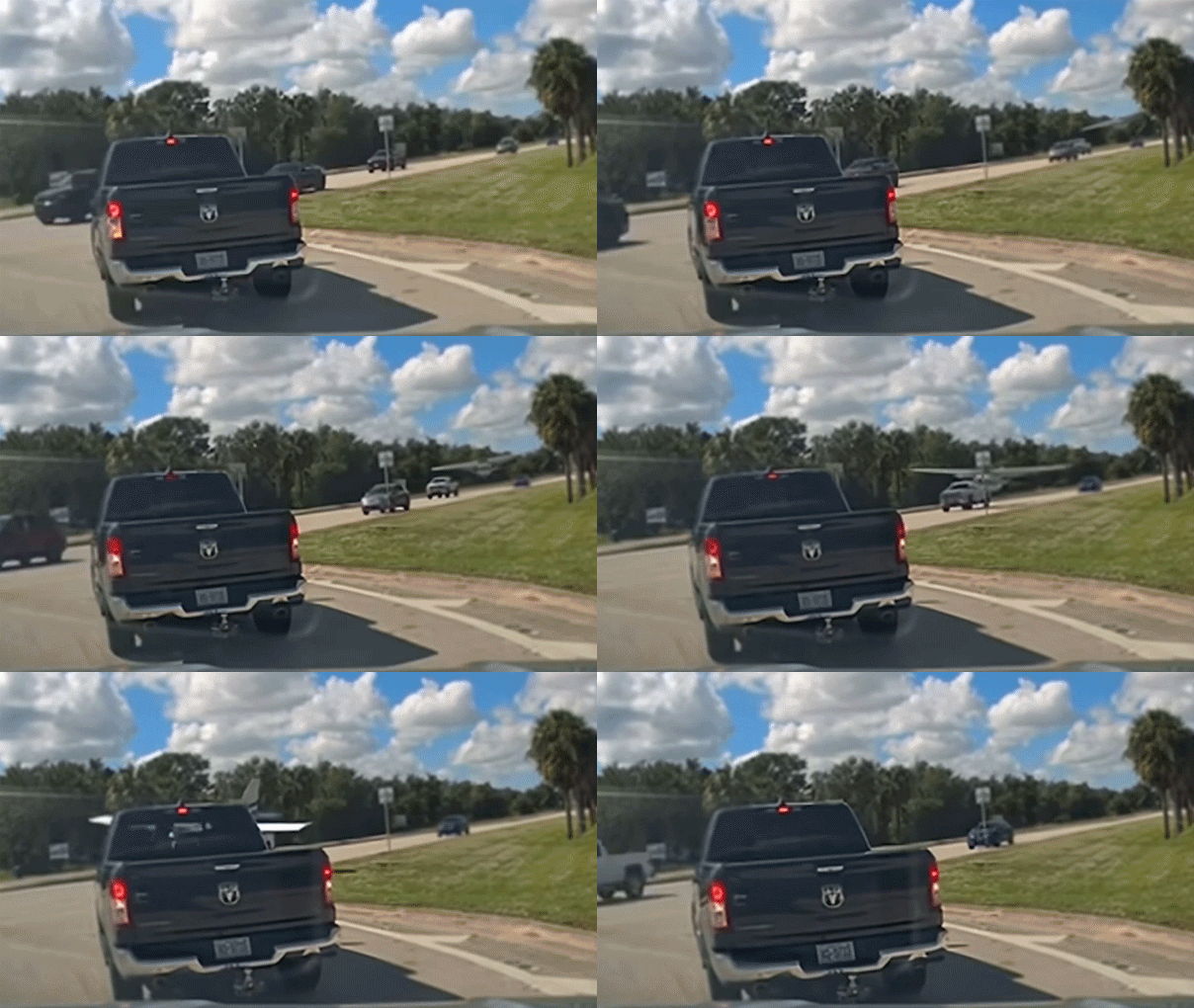
A routine Saturday morning flight turned harrowing in North Fort Myers, Florida, when a small twin-occupant aircraft experienced a sudden mechanical failure and was forced to execute an emergency landing on a bustling roadway. The blue-and-white Cessna, registered as N2905U, touched down on Bayshore Road near the intersection of Interstate 75 shortly before noon, clipping the rear of a moving pickup truck in a dramatic sequence captured on local dashcam and surveillance video. Miraculously, despite the high-risk nature of impromptu highway landings and the physical contact with a civilian vehicle, local law enforcement confirmed that no injuries were reported among the plane’s two occupants or the driver of the truck.
The incident has once again turned public and regulatory attention toward the critical protocols governing general aviation safety, emergency pilot procedures, and the complex logistical challenges of managing unexpected aircraft arrivals on public thoroughfares. As federal authorities initiate a formal inquiry, local officials have praised the rapid coordination of emergency responders who secured the scene and prevented what could have been a catastrophic tragedy.
Chronology of the Flight and Emergency Landing
Flight tracking data provided by FlightAware establishes a clear timeline for the events of Saturday, November 7, 2026. The aircraft departed from its origin point in Sebring, Florida, at approximately 11:00 a.m. EST, embarking on what was initially planned as a standard regional flight.
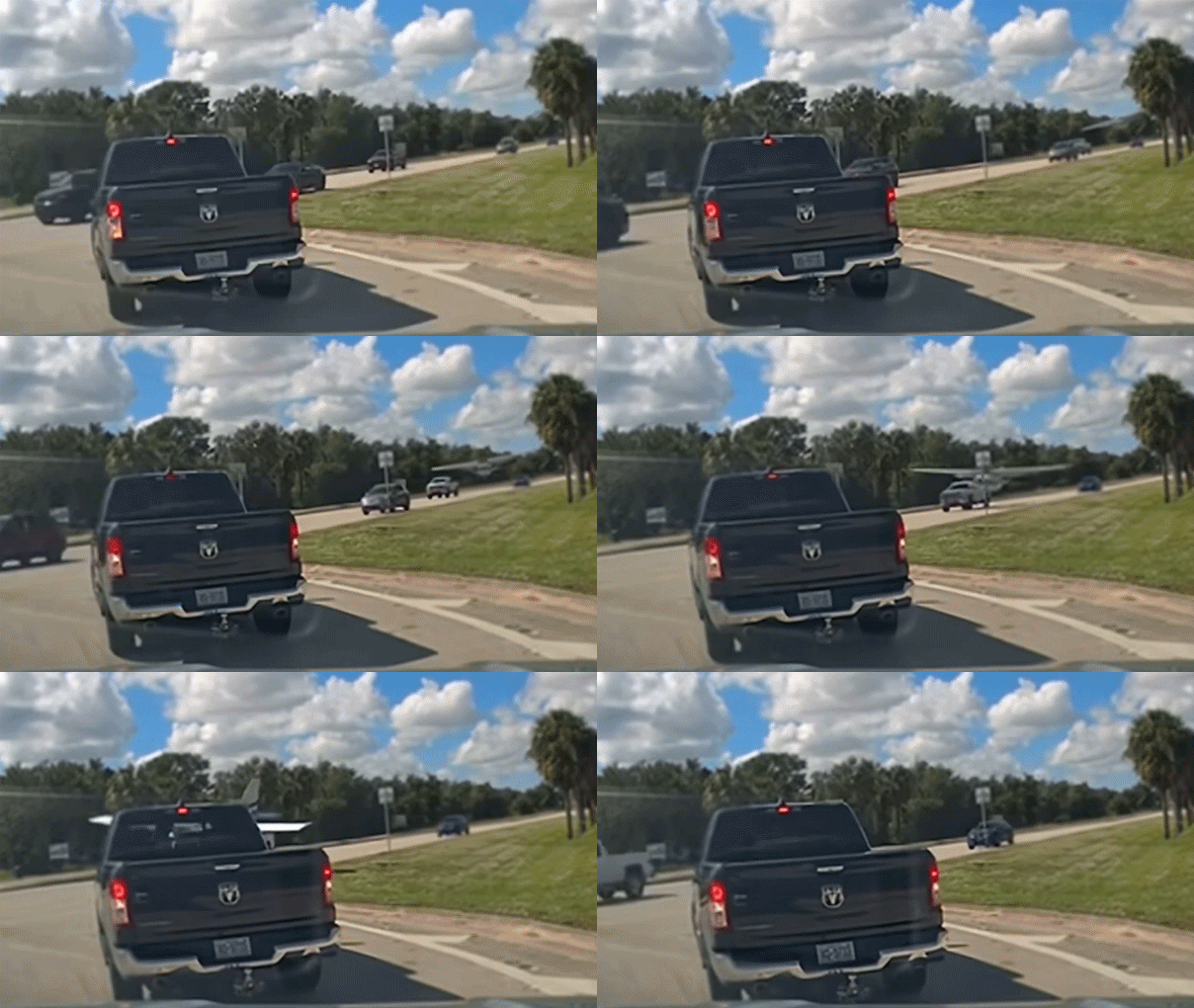
For the first forty minutes of the journey, flight parameters appeared normal as the aircraft cruised across central and southwest Florida airspace. However, at approximately 11:50 a.m., roughly fifty minutes into the flight, the pilots encountered an acute mechanical malfunction. Deprived of standard operational capabilities and facing the immediate need to set the aircraft down, the pilot in command bypassed conventional airstrips in favor of the nearest viable, unobstructed expanse of flat surface: Bayshore Road in North Fort Myers.
Dashcam footage retrieved from the scene shows the Cessna descending rapidly toward the asphalt, its landing gear deploying just moments before contact. As the aircraft made hard contact with the roadway, it maintained a significant forward velocity, veering slightly toward eastbound traffic. In the final moments of the roll, the starboard wing clipped the rear quarter-panel of a moving civilian pickup truck. The impact caused minor vehicular damage and jolted the truck, but both vehicles maintained their balance, allowing the pilot to bring the disabled plane to a halt along the grassy roadside shoulder.
Official Responses and On-Scene Operations
Within minutes of the touchdown, the Lee County Sheriff’s Office, along with units from Bayshore Fire Rescue and the Florida Department of Transportation (FDOT) Southwest Florida district, converged on the site. Emergency personnel swiftly established a perimeter, temporarily halting traffic along Bayshore Road to mitigate the risk of secondary collisions or fuel-ignition hazards.
Lee County Sheriff Carmine Marceno issued a public statement addressing the incident, expressing immense relief over the absence of casualties.

"Thankfully, this incident had a positive outcome, and no one was injured," Sheriff Marceno stated. "Given the recent tragic news involving aviation accidents, we are especially grateful that everyone is safe."
Marceno extended formal commendations to the patrol deputies, transportation officials, and rescue personnel whose swift tactical deployment secured the roadway. Photographs released by the sheriff’s office in the immediate aftermath depicted the Cessna resting alongside the highway, its fuselage largely intact save for minor structural impacts sustained during the truck collision. Investigators from the Federal Aviation Administration (FAA) arrived shortly thereafter to document the physical evidence, inspect the wreckage, and begin interviewing the two pilots.
General Aviation Safety and Regulatory Context
The North Fort Myers landing unfolded against a backdrop of heightened public sensitivity regarding aviation safety in the state of Florida. The incident occurred less than a week after a high-profile aviation disaster in Greenacres, Palm Beach County, where a Learjet crashed on Sunday, November 1, resulting in the fatalities of all nine individuals on board. While federal investigators have emphasized that each aviation event is distinct, the temporal proximity of these occurrences has intensified discussions surrounding regional air safety, mechanical reliability, and emergency preparedness.
Statistically, emergency landings on highways represent a minute fraction of total general aviation incidents, yet they are among the most hazardous maneuvers a pilot can attempt. According to safety data compiled by the National Transportation Safety Board (NTSB), forced off-airport landings—dictated by engine failure, fuel starvation, or mechanical breakdown—account for roughly 10 to 15 percent of all general aviation accidents annually. Pilots are trained extensively to prioritize forced landings in open fields, pastures, or bodies of water to minimize civilian exposure; however, when altitude and gliding distance severely restrict options, highways are sometimes evaluated as the only remaining alternative, despite the inherent dangers posed by vehicular traffic, power lines, and median barriers.

Implications and the Ongoing Investigation
The primary objective of the ongoing FAA investigation will be to determine the precise nature of the mechanical failure that compromised the Cessna’s flight path over southwest Florida. Investigators will examine the aircraft’s engine components, maintenance logs, avionics data, and fuel quality. Furthermore, the agency will evaluate the pilot’s decision-making process during the descent to ensure adherence to federal airspace and emergency protocol standards.
While structural damage to both the aircraft and the pickup truck remains limited, the event serves as a stark reminder of the unpredictability inherent in private aviation. As federal investigators continue their technical review of flight N2905U, local authorities in Lee County are expected to reopen full access to Bayshore Road following the removal of the aircraft and the finalization of on-site forensic mapping. The cooperation between local emergency services and federal oversight bodies will remain central to establishing the definitive sequence of events that transformed a suburban Florida highway into an improvised runway.
