
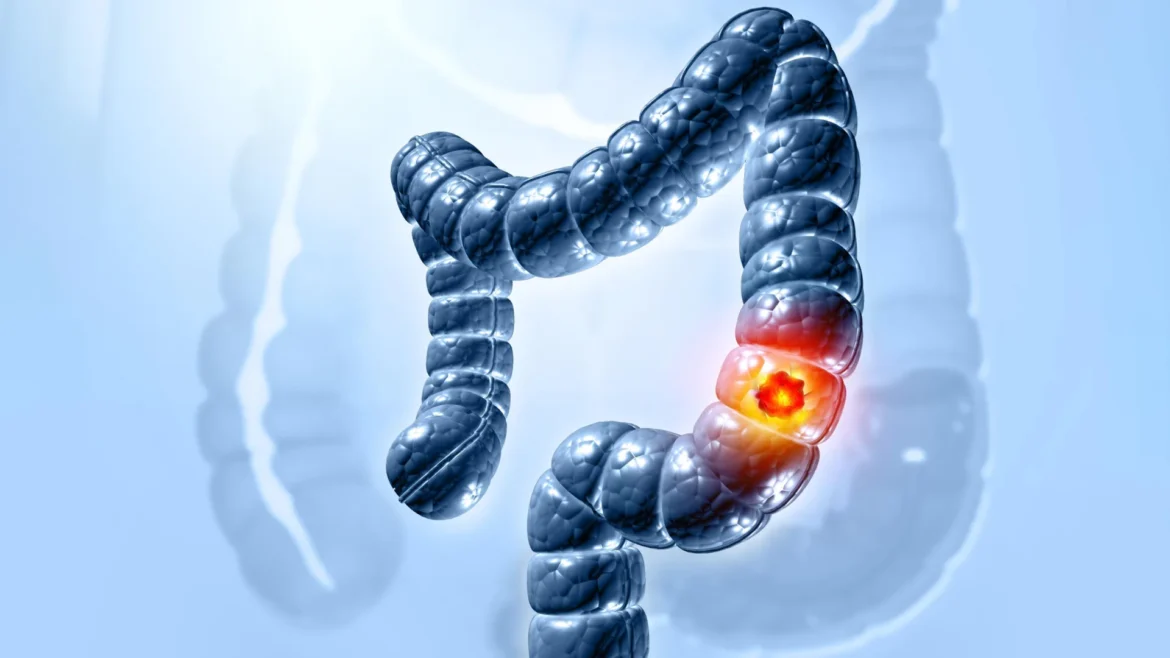
Scientists have uncovered how a toxin produced by a common gut bacterium gains access to colon cells, solving a mystery that has puzzled researchers for more than 15 years. The discovery not only explains how the toxin begins damaging the colon but also points to a possible new way to block its effects before they contribute to colorectal cancer. This groundbreaking research, published in the prestigious journal Nature, offers a critical insight into the intricate interplay between the gut microbiome and human health, with significant implications for disease prevention and treatment.
The multi-institutional team, spearheaded by researchers at the Johns Hopkins Kimmel Cancer Center Bloomberg~Kimmel Institute for Cancer Immunotherapy and the Johns Hopkins University School of Medicine, has identified claudin-4 as the crucial host protein that the toxin, known as BFT (Bacteroides fragilis Toxin), must first attach to before it can inflict damage on colon cells. This finding represents a significant leap forward in understanding the pathogenesis of BFT-associated conditions, ranging from inflammatory bowel diseases to colorectal cancer.
The Elusive Receptor: A Decades-Long Scientific Quest
For over a decade and a half, the scientific community has been grappling with the precise mechanism by which BFT initiates its destructive cascade within the colon. While it was established that BFT, secreted by the ubiquitous bacterium Bacteroides fragilis, played a pivotal role in colon inflammation and tumor development, the molecular "key" that allowed it entry into colon cells remained elusive.
Bacteroides fragilis is a commensal bacterium, meaning it typically coexists peacefully with its host, residing in the digestive tract of a significant portion of the human population, estimated to be present in up to 20% of healthy individuals. However, certain strains of Bacteroides fragilis harbor the capacity to produce BFT, a potent toxin that can disrupt the delicate balance of the gut environment. Previous foundational work from Dr. Cynthia Sears’ laboratory at Johns Hopkins had demonstrated that BFT exerts its damaging effects by cleaving E-cadherin, a vital protein responsible for maintaining the integrity of the colon’s protective epithelial barrier. This disruption, as shown in a seminal Nature Medicine study, was directly linked to chronic inflammation and subsequently, the promotion of colon tumor formation.
The critical question that persisted was: if BFT targets E-cadherin, why didn’t it appear to bind directly to it? This observation strongly suggested the involvement of an intermediary molecule, a receptor that facilitated the toxin’s access to its ultimate target. The identification of this receptor was paramount to understanding and potentially intercepting BFT’s harmful actions.
CRISPR Unleashes a Breakthrough: Unmasking Claudin-4
The breakthrough arrived through a sophisticated genomewide CRISPR screening effort, a powerful genetic engineering technology that allows scientists to systematically inactivate genes within cells to observe the resulting effects. Led by Maxwell White, an M.D./Ph.D. candidate in the Sears lab, and conducted in collaboration with the laboratory of Matthew Waldor at Harvard Medical School, the researchers employed this cutting-edge technique to identify the missing link in the BFT pathway.
The team meticulously disabled individual genes in colon epithelial cells, one by one, and then exposed these modified cells to BFT. Their goal was to pinpoint which gene, when inactivated, rendered the cells resistant to the toxin’s damaging effects. The results were striking and immediate. A particular protein, claudin-4, emerged as a standout candidate. When the gene responsible for producing claudin-4 was knocked out, BFT was rendered completely incapable of binding to the colon cells, and crucially, E-cadherin remained unharmed.
"It took a while to get the assay working and validate the approach, but once we were able to do the screen, claudin-4 was a clear, resounding top hit," stated White, reflecting on the pivotal moment. "That was an exciting moment."
The discovery of claudin-4 as the BFT receptor was unexpected by many in the field. The prevailing hypothesis among researchers was that the receptor would likely be a signaling protein, such as a G-coupled protein receptor, which are known to mediate a wide array of cellular responses. However, claudin-4 belongs to a different class of proteins, the claudins, which are primarily known for their role in forming tight junctions that seal the spaces between epithelial cells, thereby regulating paracellular permeability. Furthermore, a review of existing literature failed to reveal any other toxin that operates via a similar mechanism, where it first binds to a separate receptor before attacking its primary molecular target. Most toxins in the protease class, for instance, bind directly to the molecules they degrade.
Direct Confirmation: Biophysical and In Vivo Validation
To solidify their findings and provide irrefutable evidence of the interaction, the Johns Hopkins researchers joined forces with structural biologists F. Xavier Gomis-Rüth and Ulrich Eckhard at the Molecular Biology Institute of Barcelona. Utilizing advanced biophysical techniques, White and the Barcelona team were able to demonstrate that BFT and claudin-4 form a stable, one-to-one complex under laboratory conditions. This provided the first direct physical evidence confirming that the toxin indeed binds to claudin-4 before initiating its damaging effects on colon cells.
The validation process extended to living systems through a crucial collaboration with the laboratory of Min Dong at Harvard Medical School. Working alongside Kang Wang and his colleagues, the researchers investigated the behavior of BFT in mouse models, a standard approach for studying disease mechanisms and testing therapeutic interventions.
A Molecular Decoy: Promising Therapeutic Avenues Emerge
The identification of claudin-4 not only solved a long-standing scientific enigma but also immediately opened up promising avenues for therapeutic intervention. The research team ingeniously designed a molecular decoy strategy. They created a soluble version of claudin-4, engineered to display the specific parts of the receptor that BFT recognizes and binds to.
In this elegant therapeutic approach, the decoy claudin-4 proteins act as decoys, intercepting BFT before it can reach its intended target on the surface of colon cells. When BFT encounters these soluble decoy molecules, it preferentially binds to them, effectively neutralizing its ability to attach to and damage the colon epithelium.
This strategy proved remarkably successful in animal models. The decoy effectively protected mice from BFT-induced colon damage, demonstrating the potential of this approach to prevent the toxin’s harmful effects.
"This approach could be iterated upon with small molecules or other biologics that have better pharmacological properties," White commented, highlighting the adaptability and future potential of this therapeutic concept. The team is now actively exploring which specific types of therapies, whether small molecule inhibitors or larger biologic agents, might be most effective in blocking the toxin in a clinical setting.
Unanswered Questions and Future Directions
Despite the monumental progress, the research is not without its remaining challenges. While the researchers have unequivocally identified the receptor and demonstrated its tight binding to BFT, a crucial piece of the puzzle is yet to be fully resolved: capturing the precise experimental structure that reveals exactly how the toxin and claudin-4 fit together at an atomic level.
The complexity of this interaction has proven challenging even for state-of-the-art artificial intelligence modeling tools, such as AlphaFold, which have revolutionized structural biology but were unable to fully elucidate the intricate binding interface in this specific case. Obtaining this detailed structural information could provide even deeper insights into the toxin’s mechanism of action and potentially lead to the design of even more targeted and potent therapeutic agents.
Broader Implications for Gut Health and Cancer Prevention
The implications of this discovery extend far beyond the immediate understanding of BFT’s action. The gut microbiome is increasingly recognized as a critical determinant of human health, influencing everything from digestion and immunity to mental well-being and susceptibility to chronic diseases. This research underscores the intricate molecular dialogues that occur between gut bacteria and host cells, and how disruptions in these dialogues can have profound consequences.
The link between BFT, chronic inflammation, and colorectal cancer is a significant concern. Colorectal cancer is a leading cause of cancer-related deaths worldwide, and understanding the environmental factors that contribute to its development is paramount for effective prevention and treatment strategies. By identifying the precise entry point of BFT into colon cells, this study provides a critical target for interventions aimed at preventing the inflammatory cascade that can lead to cancer.
The development of a molecular decoy that successfully blocks BFT’s damaging effects in animal models offers a tangible path toward developing novel therapies. This could lead to new diagnostic tools to identify individuals at higher risk due to the presence of specific Bacteroides fragilis strains or BFT activity. More importantly, it paves the way for the development of preventative or therapeutic agents that could mitigate the inflammatory and carcinogenic effects of BFT.
The National Institutes of Health and other funding bodies, including the Bloomberg~Kimmel Institute for Cancer Immunotherapy, Janssen Research and Development, Cancer Research UK, and the Howard Hughes Medical Institute, have provided crucial support for this research. This underscores the significant scientific and public health interest in unraveling the complexities of the gut microbiome and its role in disease.
The ongoing efforts to further elucidate the precise structural details of the BFT-claudin-4 interaction, coupled with the exploration of therapeutic applications, promise to yield significant advancements in our fight against BFT-associated diseases, particularly colorectal cancer. This work exemplifies the power of collaborative, multi-disciplinary research in tackling complex biological questions and translating fundamental discoveries into potential clinical benefits.
A Timeline of Discovery
- Over 15 years ago: Researchers observe that the toxin BFT, produced by Bacteroides fragilis, causes colon inflammation and promotes tumor growth, but the mechanism of entry into colon cells remains unknown.
- Earlier research from Dr. Cynthia Sears’ lab: Demonstrates that BFT cleaves E-cadherin, disrupting the colon’s protective barrier and driving colon tumor formation.
- Present study: A multi-institutional team led by Johns Hopkins researchers initiates a genomewide CRISPR screen to identify the BFT receptor.
- CRISPR screening: Identifies claudin-4 as the crucial host protein required for BFT binding to colon cells.
- Biophysical validation: Researchers at the Molecular Biology Institute of Barcelona confirm that BFT and claudin-4 form a stable one-to-one complex.
- In vivo testing: Collaborations with Harvard Medical School researchers demonstrate that a molecular decoy of claudin-4 successfully protects mice from BFT-induced colon damage.
- Publication in Nature: The comprehensive findings are published, detailing the mechanism of BFT entry and the potential for therapeutic intervention.
- Ongoing research: Scientists continue to investigate the precise structural details of the BFT-claudin-4 interaction and explore the most effective therapeutic strategies.
The journey from identifying a problematic gut bacterium to pinpointing the exact molecular handshake that allows its toxin to infiltrate our cells is a testament to scientific perseverance and innovation. This discovery not only solves a long-standing puzzle but also illuminates a new path toward safeguarding colon health and potentially preventing the development of colorectal cancer.
