

The gleaming white-washed villages of the Greek Cyclades are often viewed through a lens of aesthetic charm, yet their pearly facades were born of necessity rather than style. For centuries, islanders have applied thick layers of lime-based paint to their cliffside dwellings to harness the albedo effect—the physical phenomenon where light-colored surfaces reflect solar radiation back into the atmosphere. This ancient practice functions as a primitive but highly effective form of climate control, preventing the sun’s energy from being absorbed into the stone and mortar of the structures. In the contemporary era, as global temperatures shatter records with alarming frequency, these low-tech solutions are moving from the realm of historical curiosity to the center of a critical debate regarding modern urban resilience.
For millennia, human civilizations in the world’s most inhospitable climates flourished by building with the environment rather than against it. In the deserts of Iran, ancient engineers perfected the "badgir," or wind catcher—towering chimney-like structures that pull cool breezes downward into homes and vent hot air out. In the humid tropics of Southeast Asia, traditional Malaysian houses were constructed on stilts to maximize cross-ventilation and mitigate flood risks. These "passive" strategies allowed for human habitation in extreme heat long before the first kilowatt of electricity was ever generated. However, the 20th-century advent of mechanical air conditioning (AC) fundamentally severed the link between architecture and local climate, creating a modern built environment that is increasingly viewed as a "cold-blooded" liability in a warming world.
The Great Decoupling: How AC Reshaped the American Landscape
The trajectory of American architecture shifted permanently in 1947 when engineer Henry Galson developed the first low-cost, window-mounted air conditioning unit. Prior to this "people’s air conditioner," homes in the United States were regionally distinct and climate-responsive. New Orleans featured "shotgun" houses with aligned doors to facilitate airflow; Boston’s "saltbox" roofs were angled to deflect harsh winter winds; and the Southwest utilized thick adobe walls to provide thermal mass, keeping interiors cool during the day and warm at night.
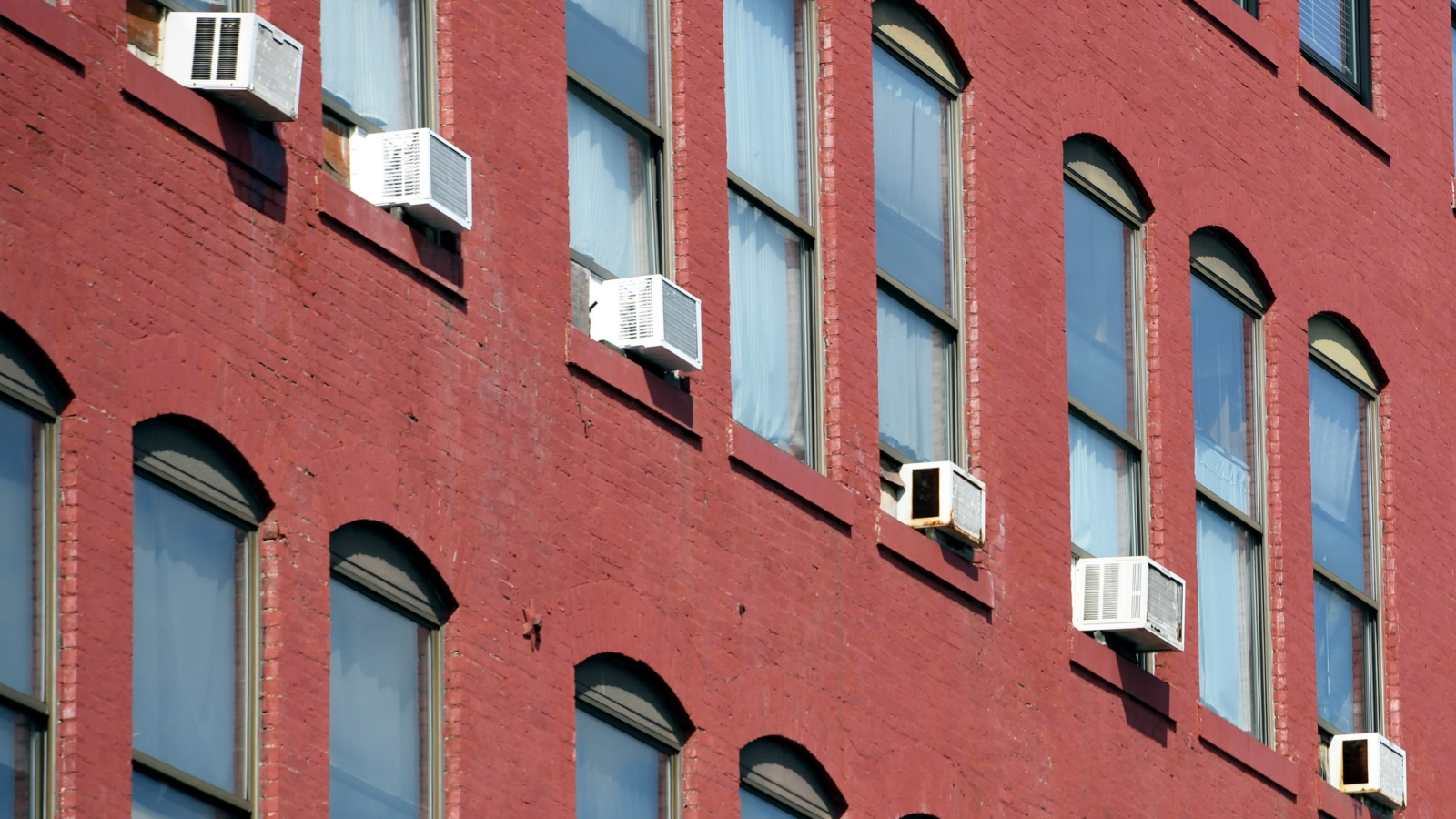
The democratization of AC allowed developers to abandon these nuanced designs in favor of mass-produced, standardized housing. As millions of veterans returned from World War II, the demand for rapid suburban expansion led to the creation of neighborhoods characterized by thin-walled "boxes" and sprawling "McMansions." These structures, often built with cheap drywall and large, unshaded windows, were designed with the implicit assumption that a mechanical cooling system would always be available to override the building’s inherent thermal failures.
This technological shift fueled the meteoric rise of the Sunbelt. Phoenix, Arizona, which had a population of just 65,000 in 1940, transformed into a metropolis of over 1.6 million people. Across the South and Southwest, cities that were once nearly uninhabitable in the summer months became year-round hubs of commerce. Public health data supports the life-saving impact of this transition; since 1960, the likelihood of an American dying on a day of extreme heat has plummeted by approximately 80 percent, a victory almost entirely attributable to the ubiquity of AC.
The Vulnerability of the Mechanical Shield
While air conditioning has undoubtedly saved lives, it has also created a profound systemic vulnerability. By designing buildings that cannot maintain habitable temperatures on their own, modern society has placed its survival in the hands of an aging and increasingly stressed electrical grid. When the power fails during a heatwave, modern American homes do not simply become uncomfortable; they become dangerous.
The risks are no longer theoretical. In July 2024, Hurricane Beryl knocked out power for more than two million residents in the Houston area. In the sweltering aftermath, the heat proved deadlier than the storm itself, as residents trapped in poorly insulated, unventilated homes succumbed to hyperthermia. This follows a broader trend: the number of major power outages in the United States has doubled over the past two decades, driven by a combination of extreme weather events and a grid that was never designed for the current level of demand.

The stakes are highest in "heat island" cities like Phoenix. A recent study published in the journal Environmental Science & Technology modeled a hypothetical scenario in which a major blackout coincides with a five-day heatwave in Phoenix. The researchers estimated that such an event would result in nearly 13,000 deaths and require emergency medical care for half of the city’s population. Without the mechanical "lung" of the AC, the city’s concrete-heavy, tree-sparse environment would rapidly turn residential interiors into ovens.
The Passive House Revolution: Building a Thermal "Thermos"
To address this fragility, a growing movement of architects and engineers is advocating for "Passive House" standards—a rigorous building methodology that focuses on the building envelope rather than mechanical systems. If a conventional American home is like a plastic water bottle that loses its temperature almost immediately, a passive house is designed like a high-performance thermos.
The principles of passive design are deceptively simple but require precision in execution:
- Super-insulation: Using significantly thicker insulation than required by standard building codes to create a robust thermal barrier.
- Airtightness: Eliminating leaks and drafts to prevent the exchange of indoor and outdoor air.
- High-Performance Windows: Utilizing triple-pane glass with specialized coatings to admit light while rejecting solar heat.
- Thermal Bridge Elimination: Ensuring that conductive materials (like steel studs) do not create "bridges" that carry heat into the building.
- Ventilation with Heat Recovery: Using mechanical systems to provide fresh air while capturing the energy from the outgoing air.
The efficacy of this approach was famously demonstrated in the "Ice Box Challenge," where two structures—one built to standard code and one to passive standards—were filled with ice and left in the summer sun. After one month, the standard building’s ice had entirely melted, while the passive structure retained nearly half of its original ice mass.

Alexander Gard-Murray, executive director of Passive House Massachusetts, notes that these buildings provide "passive survivability." In the event of a power outage during a 100-degree heatwave, a passive home might only rise to 80 degrees over several days, whereas a standard home could reach life-threatening temperatures within hours.
Economic Hurdles and the "Split Incentive" Problem
Despite the clear benefits to public health and grid stability, passive design remains a niche market in the United States, accounting for roughly one percent of new construction. The primary barrier is not technology, but economics and policy.
While a passive home can reduce heating and cooling costs by up to 90 percent, it typically carries an upfront cost premium of 2 to 5 percent. In the world of commercial development, this creates a "split incentive" problem: the developer pays the additional construction costs, but the future tenant or homeowner reaps the savings on utility bills. Without mandates or significant incentives, many developers opt for the cheaper, less resilient path.
Furthermore, the political landscape for energy efficiency has become increasingly volatile. Recent shifts in federal policy have seen the expiration or reduction of tax credits intended to offset the costs of high-performance building materials. Mark Ginsberg, a founding partner of Curtis + Ginsberg Architects, points out that "burying our heads in the sand" regarding climate change has real-world consequences for housing production. "We’ve used sustainable technologies as a luxury item for too long," Ginsberg argues, "when in reality, these are the tools of survival for low-income populations who are most at risk during a blackout."

Scaling Resilience: Beyond the Individual Building
The solution to the cooling crisis likely lies in a hybrid approach that integrates ancient wisdom with modern technology. While air conditioning will remain a necessity in many parts of the world, it can be supplemented by urban-scale passive strategies.
Research indicates that if Phoenix were to implement "cool roofs"—painting rooftops white to reflect sunlight—citywide mortality during a blackout could drop by 66 percent. Similarly, increasing the urban tree canopy to 50 percent would provide enough shade to lower ambient temperatures by several degrees, potentially saving thousands of lives.
As Europe grapples with its own "new world of heat," where traditional thick-walled masonry is no longer sufficient to combat record-breaking temperatures, and the U.S. faces the looming threat of grid failure, the mandate for the building industry is clear. The era of the "cold-blooded" building must end. By returning to the principles of orientation, shading, and thermal mass, and combining them with the precision of modern passive engineering, architects can create a built environment that does not just keep people cool, but keeps them alive when the power goes out.
The lessons from the Greek islands and the Iranian deserts have come full circle. In a world where 175 million Americans are now routinely placed under heat alerts, the most advanced technology we can employ may be the simplest: a well-placed awning, a thick wall, and a coat of white paint.

