
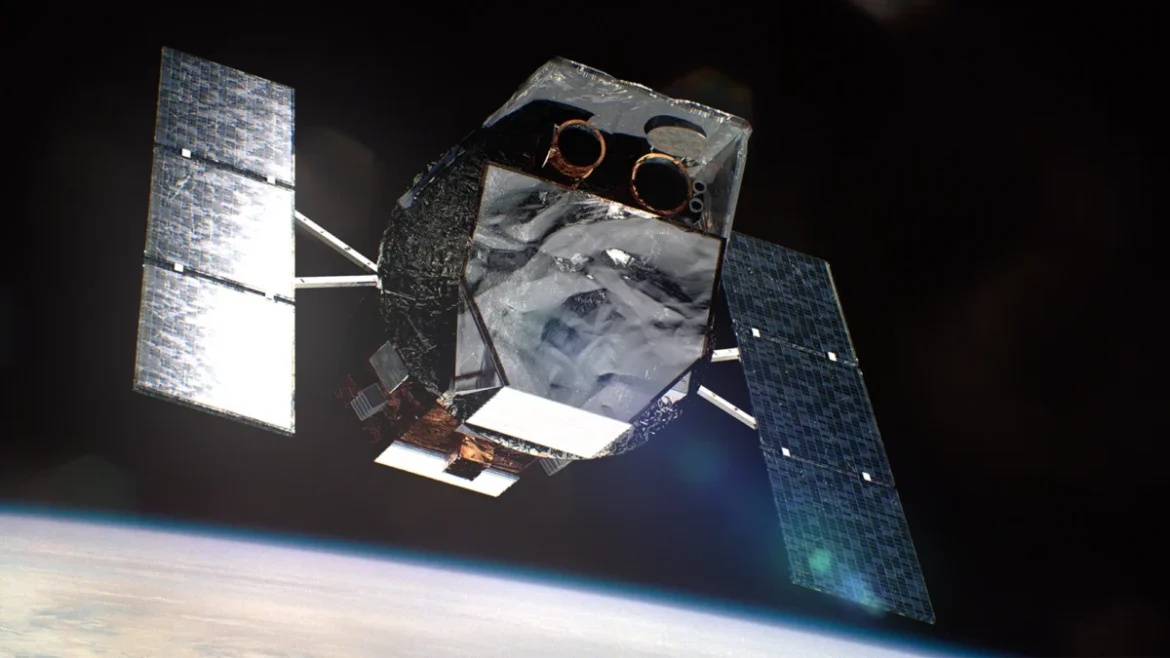
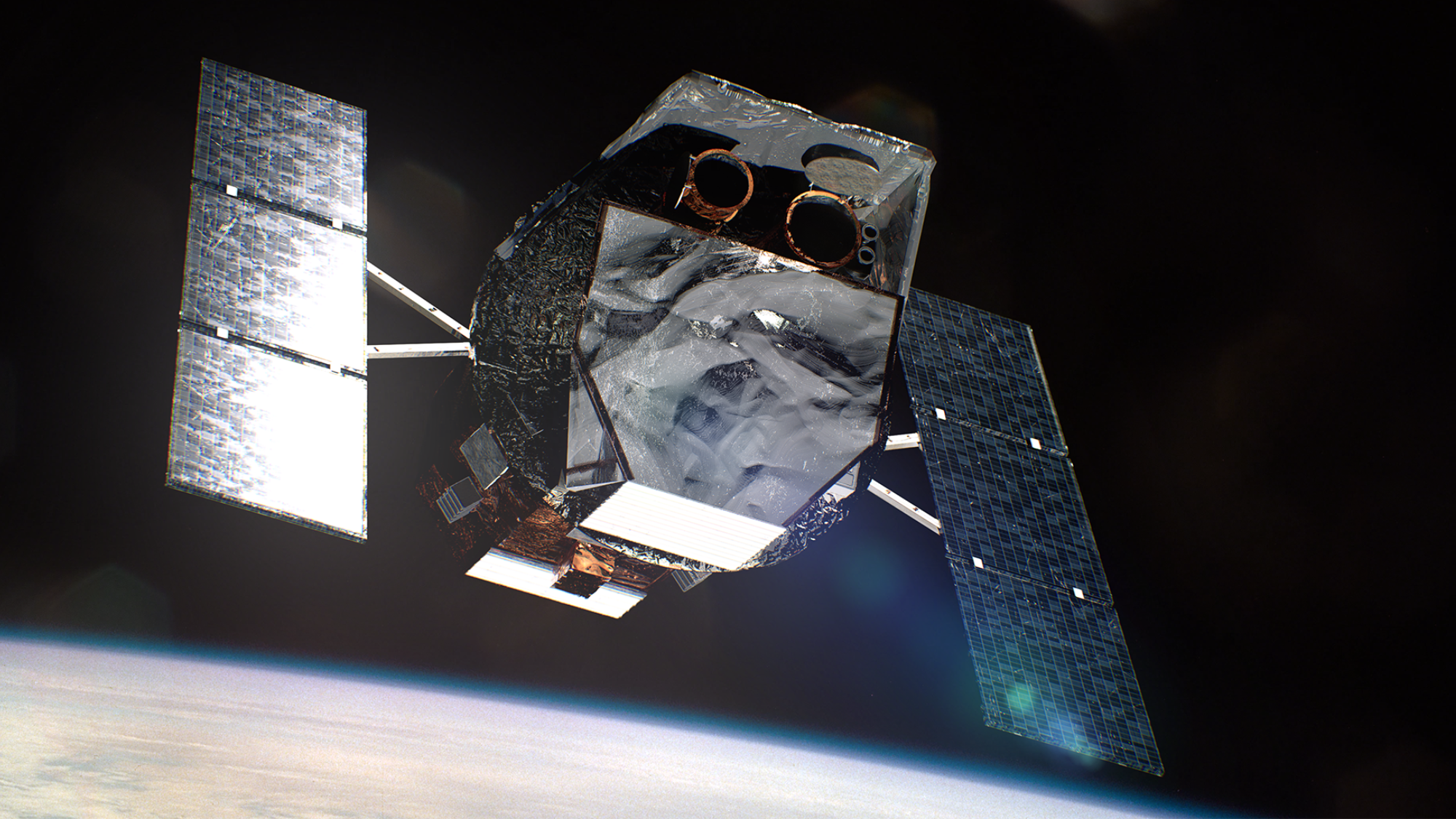
The Neil Gehrels Swift Observatory, a cornerstone of high-energy astrophysics for over two decades, has resumed its critical observation of the cosmos after operating in a restricted, power-saving mode for several months. Following the definitive cancellation of a commercial rescue mission intended to extend the observatory’s lifespan, NASA officials confirmed on August 26, 2026, that the Ultraviolet/Optical Telescope (UVOT) and the X-ray Telescope (XRT) have been brought back online. While these primary instruments have returned to active data collection, the Burst Alert Telescope (BAT) remains offline as engineers work through technical protocols to reintegrate the instrument into the satellite’s operations in the coming weeks.
This development marks a bittersweet chapter for the mission, as the resumption of scientific activity is essentially a final act for the aging satellite. With no propulsion system to combat the increasing atmospheric drag caused by heightened solar activity, the observatory is now in the final months of its operational life.
A Chronology of the Swift Mission and Its Final Act
Launched in November 2004, the Neil Gehrels Swift Observatory—originally known as the Swift Gamma-Ray Burst Mission—was designed to provide rapid, autonomous detection of gamma-ray bursts (GRBs). Throughout its 22-year tenure, the observatory has fundamentally altered our understanding of the most violent explosions in the universe, providing real-time data that allows ground-based telescopes to follow up on transient events in the deep universe.
The current crisis began in early 2025, when solar activity reached levels that significantly increased the density of the Earth’s upper atmosphere. Because Swift lacks an onboard propulsion system to perform station-keeping maneuvers, it has been steadily losing altitude. By February 2026, NASA transitioned the satellite into a "safe" mode, reducing its instrument usage to conserve power and minimize the wear on internal components while the agency pursued a novel commercial solution.
In 2025, NASA entered into a partnership with Katalyst Space, a startup specializing in orbital servicing. The plan, which was widely viewed as a test case for future "space tug" technologies, involved the deployment of a craft named LINK to capture the Swift observatory and boost it into a higher, more stable orbit. The rescue attempt reached a critical juncture in August 2026, but the mission was officially abandoned on August 19 after the LINK spacecraft suffered an uncontrollable spin, rendering it unable to safely rendezvous with the observatory.
The LINK Technology Demonstration
While the rescue attempt failed to save the primary mission objective, the Katalyst Space team has utilized the failed mission as a data-gathering opportunity for future orbital servicing. Following the cancellation of the rendezvous, the LINK spacecraft remained in orbit to conduct a series of technical maneuvers.
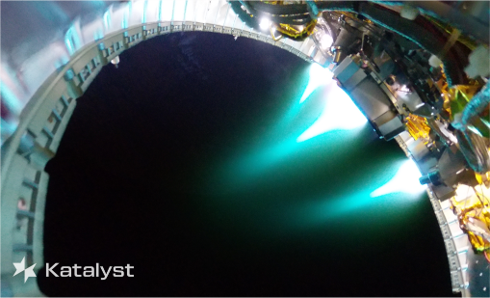
On August 30, 2026, the spacecraft successfully fired all three of its xenon-fueled thrusters simultaneously, a significant milestone for a commercial propulsion system. Despite the failure to attach to Swift, the mission provided invaluable telemetry data regarding how such spacecraft behave during proximity operations. During the operation, the LINK craft maneuvered to within approximately 9 miles (14.5 kilometers) of the observatory.
"We got so close, but so far," remarked Ghonhee Lee, CEO of Katalyst Space, during an interview with the Associated Press. The proximity allowed the team to capture high-resolution imagery of the observatory in its natural environment, providing a visual record of the hardware that has spent nearly a quarter-century in low Earth orbit. NASA officially stated on September 4 that the continued testing of LINK’s capabilities will serve to inform the development of next-generation servicing technologies, which are considered vital for the future of sustainable space infrastructure.
The Physics of Orbital Decay
The predicament facing Swift is a classic problem in orbital mechanics. Low Earth Orbit (LEO) is not a vacuum in the absolute sense; it contains trace amounts of gas that create drag on any orbiting body. As solar activity increases—a phenomenon observed during the current solar cycle—the Earth’s atmosphere expands, increasing the density of the thermosphere at the altitudes where satellites reside.
For an object the size and mass of Swift, this drag exerts a constant decelerating force. Without a propulsion system to "boost" the altitude, the satellite’s orbit inevitably decays. NASA estimates that for the next 30 to 60 days, Swift will remain at an altitude of approximately 185 miles (300 kilometers).
The agency’s decision to resume science operations during this final period is a strategic move to maximize the return on investment before the inevitable re-entry. However, the window is closing rapidly. Once the observatory descends below the 185-mile threshold, the rate of orbital decay will accelerate exponentially. NASA officials have indicated that once this threshold is breached, the ability to maintain precise pointing—which is necessary for the telescopes to function—will become impossible.
The satellite is projected to re-enter the Earth’s atmosphere between October and December 2026. Given its robust construction, most of the satellite is expected to burn up during the high-velocity, high-temperature descent through the atmosphere.
Scientific Implications and Legacy
The return of the UVOT and XRT to active service provides astronomers with a final, precious window of opportunity to capture high-energy phenomena. The data collected during these last few months will be instrumental in calibrating newer observatories and comparing current high-energy events with the massive historical database curated by Swift over the last two decades.
The legacy of the Neil Gehrels Swift Observatory is extensive. By providing a rapid-response capability, Swift effectively bridged the gap between space-based high-energy detection and ground-based optical astronomy. This "multi-messenger" approach has been essential in characterizing gamma-ray bursts, which are caused by the most extreme events in the universe, such as the collision of neutron stars or the collapse of massive stars into black holes.
Furthermore, the mission has served as a training ground for a generation of astrophysicists who grew up analyzing "Swift data." The collaborative nature of the mission, involving international partnerships and open-access data policies, has set the gold standard for modern space missions.
Future Outlook for Orbital Servicing
The failure of the LINK mission, while disappointing, has highlighted the inherent risks of attempting to service non-cooperative or aging spacecraft. The industry is currently in a "learning by doing" phase, where the line between success and failure is often determined by the unforeseen complexities of orbital dynamics.
For NASA, the Swift experience underscores the necessity of building future observatories with modularity and propulsion in mind. As private companies continue to push the boundaries of satellite servicing, the lessons learned from the final days of the Swift mission—both in terms of the technical challenges of rendezvous and the realities of orbital decay—will likely influence the requirements for future LEO assets.
As of early September 2026, the scientific community is making the most of the observatory’s revival. Every incoming packet of data is being treated as a high-priority asset. While the end is now fixed on the calendar, the mission continues to contribute to our understanding of the universe, standing as a testament to the durability of human engineering. Even as it descends toward its final resting place, the Neil Gehrels Swift Observatory remains an active participant in the exploration of the high-energy cosmos, fulfilling its duty to the very end. The project serves as a reminder that in space exploration, even a mission that concludes in a controlled re-entry can be viewed as a profound success, having exceeded its intended mission duration and provided an unprecedented catalog of astrophysical discoveries.
