
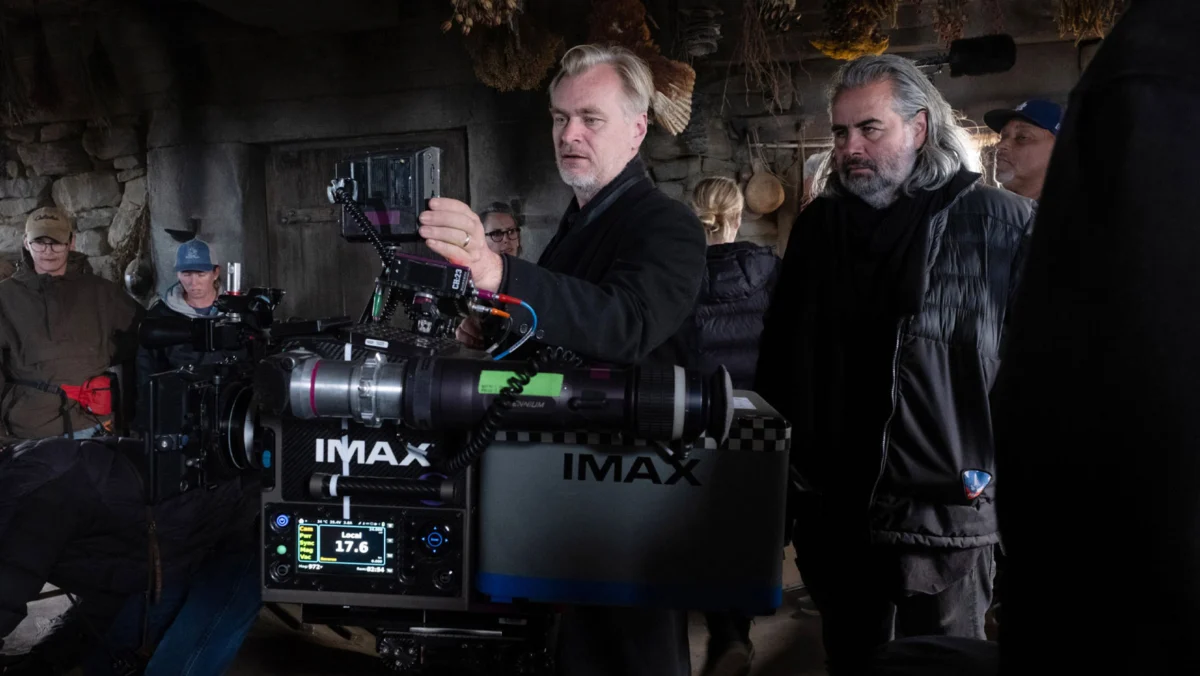
Imax Corporation has officially crossed the $600 million threshold in global box office receipts for the current quarter, a figure that underscores a period of unprecedented momentum for the large-format exhibition giant. Speaking at the prestigious Goldman Sachs Communacopia media conference, Imax CEO Rich Gelfond highlighted that the company is currently on track to shatter its previous quarterly performance records. To put this growth into perspective, Gelfond noted that the company’s previous "best quarter ever" reached approximately $350 million—a benchmark achieved during the third quarter of 2023. With weeks still remaining in the current quarter, the company’s trajectory suggests a significant shift in how audiences are engaging with premium large-format (PLF) cinema experiences.
The Catalyst of Premium Content
The current surge is being driven by a strategic pivot in the company’s programming, most notably the massive success of Christopher Nolan’s latest project, The Odyssey, released in partnership with Universal Pictures. Gelfond, who previously served as a vocal proponent for the film’s potential, noted that the success of the project is indicative of a broader shift in consumer behavior. Historically, the record for a single film in the Imax format was held by James Cameron’s Avatar, which generated $230 million in global receipts during its initial theatrical run. The Odyssey is currently trending toward the $500 million mark, a feat that is particularly notable given that Imax screens represent a fractional percentage of total global cinema infrastructure.
Gelfond used these figures to emphasize a vital point regarding market saturation and brand loyalty. By focusing on high-fidelity, director-driven spectacles, Imax has managed to cultivate an audience that prioritizes the "Imax experience" over the specific genre of the film being presented.
Diversification Beyond the Superhero Genre
For over a decade, the box office landscape was dominated by superhero franchises, which became the bread and butter of the exhibition industry. However, Gelfond suggests that the market for these films has begun to reach a point of diminishing returns. "As much as I still believe in superhero movies, I don’t think there is anything so unique about them that says, ‘I have to see this in Imax,’" Gelfond remarked.
In response, the company has aggressively diversified its slate to include a wide array of content, ranging from live music events and sports to international language cinema. Last year alone, Imax released 120 individual pieces of content. This strategy is intended to shift consumer habits toward a model where viewers ask, "What is playing at the Imax?" rather than only attending for specific tentpole franchises. Future programming highlights include:
- Resident Evil (Sony): Strong early tracking indicates significant interest.
- Dune: Part Three: Pre-sales for the film have already reached record-breaking levels, despite the release date being months away.
- The Further Mis-Adventures of Cliff Booth (Netflix): Directed by David Fincher and starring Brad Pitt, this film will receive an exclusive two-week theatrical window beginning November 25.
- Narnia: The Musician’s Nephew (Greta Gerwig): Scheduled for early 2027.
- The Thomas Crown Affair (Amazon MGM): Directed by and starring Michael B. Jordan, arriving in March.
- The Beatles Project (Sony): A four-part film series scheduled to begin rolling out in 2028.
The Economics of the Large Format
The business model that sustains this growth is multifaceted. Imax typically retains approximately 18 cents on every dollar of box office revenue, a figure that is shared with exhibitors and studios depending on the specific nature of the licensing agreement. However, the company has recently evolved its financial structure to maximize returns.
Historically, Imax relied on a model where exhibitors funded the installation of Imax technology, while the company acted primarily as a licensor. Under the current leadership, Imax has shifted toward a joint-venture model. In this arrangement, Imax assumes a larger portion of the upfront capital investment in exchange for a higher percentage of the box office receipts. According to Gelfond, this risk-sharing strategy has proven highly lucrative, with internal modeling suggesting that the payback periods for these new installations are significantly shorter than previous projections.
Merchandising and Fandom as Revenue Streams
Beyond traditional ticket sales, Imax is increasingly looking to monetize its brand through physical merchandise. A recent test involving the sale of limited-edition Imax-branded popcorn buckets resulted in an immediate sell-out, with 2,500 units moving in less than 90 minutes. The speed at which these items disappeared from shelves confirmed to management that there is a deep, untapped potential for consumer products. Gelfond confirmed that the company plans to lean heavily into merchandising as part of its 2027 growth strategy, viewing it as a mechanism to deepen brand loyalty among its most dedicated fan bases.
Industry Consolidation and Filmmaker Relationships
Addressing concerns regarding the ongoing wave of industry consolidation—specifically the potential mergers and acquisitions involving major studios like Paramount and Warner Bros.—Gelfond remained composed. He noted that Imax’s strength lies in its long-standing, direct relationships with high-profile filmmakers.
"We’ve built this business over 60 years," Gelfond stated. "Our primary relationships are with the filmmakers. Wherever the filmmakers go, that is where we focus our efforts."
This filmmaker-first approach is reflected in the company’s ongoing collaboration with major studios. For instance, Imax has maintained a robust pipeline of high-profile productions, including the Mission: Impossible franchise and Top Gun: Maverick, the latter of which became a touchstone for the post-pandemic box office recovery. Gelfond also signaled openness to expanding partnerships with streamers, noting that companies like Apple and Amazon are increasingly recognizing that an Imax release creates a "halo effect" that bolsters the long-term streaming performance of their titles.
Fact-Based Implications for the Future
The implications of Imax’s current performance are significant for the broader film industry. First, the data suggests that the "premium" segment of the market is far more resilient than the general theatrical market. While mid-budget and standard theatrical releases have struggled to regain their pre-2020 footing, the demand for PLF screens remains robust, suggesting that audiences are increasingly willing to pay a premium for a superior viewing experience.
Second, the shift toward a more diverse content slate—including live concerts and sports—could provide a buffer against the traditional "boom-and-bust" cycle of the film release calendar. By filling the gaps between massive blockbusters with high-quality alternative content, Imax is effectively increasing the utility of its global network of screens.
Finally, the success of the joint-venture model indicates that the exhibition industry is moving toward a more collaborative relationship between technology providers and theater owners. By de-risking the capital requirements for exhibitors, Imax has successfully accelerated its global footprint, ensuring that its technology remains the gold standard for cinematic presentation.
As Imax moves toward the final quarter of the year, the combination of high-demand pre-sales, a diversified slate, and an emerging merchandising strategy positions the company to continue its growth trajectory. Whether this momentum can be sustained through 2027 and beyond will likely depend on the company’s ability to maintain its high-tier filmmaker relationships while successfully navigating the volatile landscape of theatrical distribution. However, given the current financial metrics, Imax appears to be on a stable, upward path that sets a new standard for what a modern exhibition company can achieve.

