
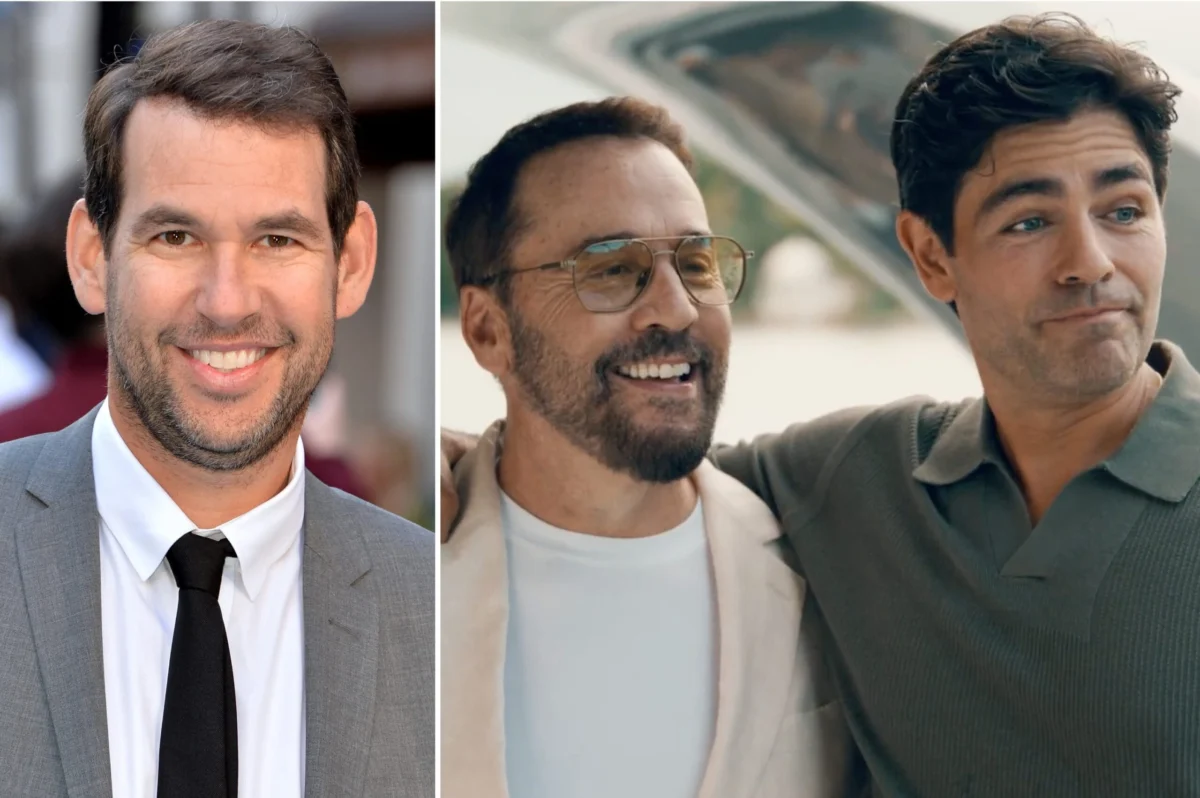
The creative legacy of the HBO cultural phenomenon Entourage has become the subject of a heated public dispute following the release of a promotional advertisement for the gambling platform Betr. The three-minute commercial, which features stars Jeremy Piven and Adrian Grenier, has drawn sharp condemnation from the show’s creator, Doug Ellin, who publicly labeled the production a “cheap, shitty imitation” of his work. While the advertisement attempts to capitalize on the nostalgic chemistry between the two actors, the fallout has highlighted the growing friction between creators, performers, and the commercial entities that seek to leverage the iconography of long-concluded television programs.
The Genesis of the Conflict
The controversy began on Wednesday when the gambling app Betr, co-founded by influencer-turned-entrepreneur Jake Paul, released a new marketing campaign titled Betr 2.0. The spot features Piven and Grenier in a high-end setting—a mansion party transitioning to a yacht—recreating the fast-paced, industry-insider dynamic that defined their portrayals of Ari Gold and Vincent Chase for eight seasons on HBO.
Although legal disclaimers maintain that the actors are appearing as themselves rather than their iconic characters, the visual cues, dialogue pacing, and power dynamics were unmistakably engineered to evoke the spirit of the series, which aired from 2004 to 2011. Following the release, Ellin took to social media, including Instagram and X (formerly Twitter), to express his frustration. He stated that he had received hundreds of messages from fans questioning his involvement in the project, prompting him to clarify that he had no role in the commercial’s development and held a deep disdain for the final product.
Chronology of the Entourage Brand
To understand the intensity of the reaction, one must look at the trajectory of the Entourage franchise. The series, which garnered critical acclaim and a dedicated cult following, focused on the life of movie star Vincent Chase and his inner circle in Hollywood. Jeremy Piven’s portrayal of the aggressive, high-powered super-agent Ari Gold was a cornerstone of the show, earning him three consecutive Primetime Emmy Awards for Outstanding Supporting Actor in a Comedy Series between 2006 and 2008.
Following the series finale in 2011, the brand expanded into a 2015 feature film, which saw the original cast return to the big screen. Since then, the prospect of a reboot has been a frequent topic of speculation in entertainment media. However, Ellin has maintained a complex relationship with the intellectual property. While he has previously expressed interest in revisiting the world of the characters, he has more recently indicated that a revival is unlikely without significant financial and creative incentives. His 2022 project, Ramble On, attempted to capture a similar energy with a different cast, including Kevin Connolly and Kevin Dillon, but failed to secure a broadcast partner, leaving the original Entourage series as the primary pillar of his professional reputation.
The Creator’s Grievance: Intellectual Property and Integrity
Ellin’s primary objection centers on the perceived commodification of his creative labor. In his video statements, he emphasized the exhaustive process of character development and scriptwriting that defined the series. "I would suffer, along with many other people, over every syllable, every fucking word," Ellin remarked. His frustration is rooted in the belief that the commercial "distills" the nuance of his writing into a shallow emulation, stripping away the context and effort that made the original series resonate with audiences.
Furthermore, Ellin directed pointed criticism toward Piven. He claimed that the actor had historically distanced himself from the Entourage franchise in the years following the series conclusion, suggesting that Piven’s willingness to participate in the Betr ad was purely financial. "I actually had to beg Piven to do the show because he didn’t want to do it," Ellin noted, highlighting a perceived hypocrisy in the actor returning to a familiar, show-adjacent persona for a gambling advertisement after years of seeking to establish distance from the character of Ari Gold.
Betr’s Stance and the Commercial Response
In response to the mounting public criticism, a spokesperson for Betr issued a statement defending the campaign. The company highlighted the success of the spot in terms of traditional marketing metrics, noting that it had generated nearly 10 million organic social media views within the first 24 hours of its release.
"We were excited to bring Jeremy and Adrian back together, appearing as themselves," the statement read. "Creating that kind of unexpected cultural moment with two amazing actors was exactly what we wanted for Betr 2.0." The company further suggested that the response from the public has been "overwhelmingly positive," and expressed gratitude toward Ellin for drawing additional attention to the ad, effectively categorizing his critique as a form of inadvertent promotion.
Industry Implications and the Rise of Nostalgia Marketing
The tension between Ellin and the makers of the Betr advertisement points to a broader trend in the entertainment and advertising sectors: the weaponization of nostalgia. As streaming platforms and legacy networks seek to maximize the value of intellectual property, actors are increasingly appearing in commercials that function as "mini-reboots." This strategy allows brands to bypass the legal and logistical hurdles of a full-scale television revival while still tapping into the existing fan base of a show.
From a legal and industry perspective, this practice occupies a gray area. While the actors are protected by the "playing themselves" distinction, the aesthetic mimicry of a copyrighted show creates a friction that often leaves original creators feeling disenfranchised. Intellectual property law primarily protects scripts, characters, and specific plot lines, but it does not protect the general "vibe" or chemistry of a performance—a loophole that brands are increasingly exploiting.
A Comparative Analysis of Creative Ownership
The conflict also underscores a persistent struggle in Hollywood regarding the relationship between talent and the material they inhabit. For many actors, the opportunity to repurpose a recognizable persona for a commercial spot represents a lucrative and low-risk career move. For the writers and creators, however, this reuse can feel like an erosion of the creative integrity of the original work.
Ellin’s reaction is consistent with a growing chorus of writers who are increasingly vocal about the "theft" of their creative DNA in the digital age. His assertion that he would rather see people "flip burgers" than engage in what he considers the dilution of his work reflects a rigid stance on artistic purity that stands in stark contrast to the transactional nature of modern brand marketing.
Looking Ahead
As of this writing, there has been no official response from Jeremy Piven’s representatives, and the commercial continues to circulate on social media platforms. The incident serves as a bellwether for how legacy media properties will be handled in the coming years. As brands compete for attention in an increasingly fragmented media landscape, the reliance on established cultural touchstones will likely increase, as will the potential for legal and public conflicts between the architects of these stories and the entities that wish to repurpose them.
For the fans of Entourage, the episode serves as a reminder of the show’s enduring, albeit contentious, legacy. Whether the commercial is viewed as a harmless bit of fun or a cynical exploitation of artistic effort remains a point of debate. What is clear, however, is that for the creator of the show, the line between a tribute and a "shitty imitation" is not just a matter of opinion, but a matter of professional principle and the preservation of a creative body of work that defined a decade of television history.

