
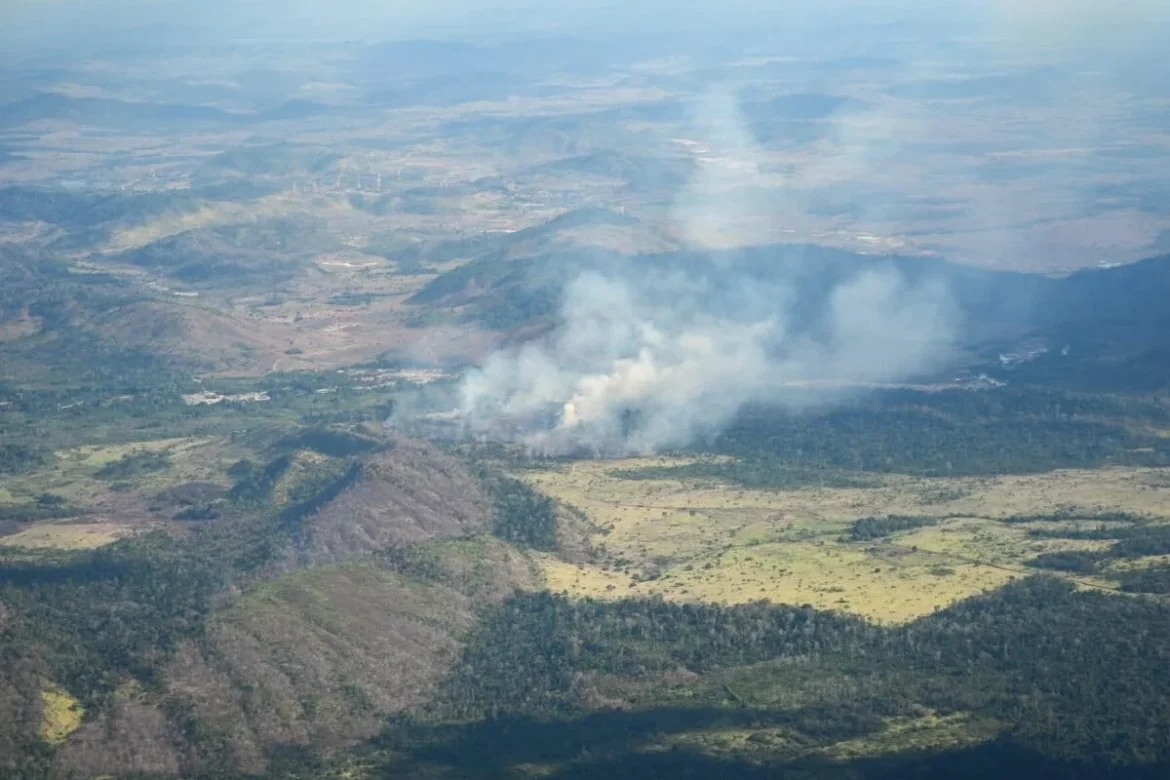
A broad coalition of legal and environmental organizations has launched a landmark legal offensive targeting JBS, the world’s largest meat processor, and a dozen major global financial institutions. Filed on November 5, 2024, the 14 formal complaints represent a significant escalation in the battle against environmental degradation, alleging that profits derived from cattle raised on illegally deforested land in the Brazilian Amazon constitute "proceeds of crime." This legal strategy seeks to hold not just the meat producer, but its international financiers, accountable under stringent anti-money laundering (AML) statutes in the United Kingdom, Ireland, Germany, and the Netherlands.
The Transnational Legal Coalition, which includes the Global Legal Action Network (GLAN), the European Center for Constitutional and Human Rights (ECCHR), Mighty Earth, FIND, and King’s College London, argues that the financial sector has become an unwitting, yet complicit, conduit for capital generated through ecological destruction. By framing environmental crime as a financial offense, the coalition is attempting to force regulators to treat the trade of "tainted" beef with the same scrutiny applied to drug trafficking or corruption proceeds.
The Scope of the Allegations
The core of the legal action rests on extensive research conducted by the environmental nonprofit AidEnvironment. According to their findings, JBS suppliers have been linked to more than 6.5 million hectares (approximately 16 million acres) of deforestation within the Brazilian Amazon between 1988 and 2026. This staggering figure represents a vast area of biome loss, much of which involves land protected under Brazilian federal law.
The complaints highlight that over 80% of the farms sampled in the study—all of which serve as direct or indirect suppliers to JBS—exhibit clear evidence of illegal land clearing. Specifically, the findings identify the encroachment into "Legal Reserves," which are mandatory forest conservation areas within private properties, and "Areas of Permanent Preservation," where vegetation clearing is strictly prohibited to maintain hydrological and soil integrity.
A critical component of the case involves the role of Barclays, the British banking giant. As JBS’s largest financier, Barclays is alleged to have earned $1.7 billion in revenue from its business relationship with the meat processor between 2018 and 2023. This revelation, stemming from a 2024 investigation by Global Witness, suggests that the financial infrastructure supporting JBS is deeply entwined with the company’s operational footprint in the Amazon, including areas of significant human rights concern.
Chronology of Conflict: A Pattern of Contention
The current legal complaints are the culmination of years of mounting evidence and failed oversight. The timeline of this systemic issue is well-documented:
- 2010: JBS enters into agreements with the Brazilian Federal Prosecution Office to implement monitoring systems designed to screen suppliers and prevent the purchase of cattle from illegally deforested land.
- 2018–2023: During this five-year period, Barclays provides extensive financial services to JBS, reaping an estimated $1.7 billion in profit, even as reports of supply chain irregularities continue to emerge.
- 2024: Global Witness releases a comprehensive report identifying that nearly 8,000 head of cattle originating from the illegally occupied Apyterewa Indigenous territory in Pará were integrated into the JBS supply chain.
- November 5, 2024: The Transnational Legal Coalition files 14 formal complaints with prosecutors and financial regulators across four European nations, initiating the current legal challenge.
The Apyterewa territory case remains one of the most damning pieces of evidence. The Centre for Climate Crime Analysis found that despite the land being under legal protection and indigenous control, cattle raised there were successfully laundered through intermediary farms before being processed by JBS, demonstrating a sophisticated "cattle laundering" process that bypasses existing monitoring protocols.
Official Responses and Corporate Defenses
In response to the filings, JBS has categorically denied the allegations, characterizing the campaign as an attempt to penalize the company without providing the necessary evidentiary transparency. In an official communication, the company maintained that it has been proactive in monitoring its supply chain since 2010.

"JBS regrets that the NGO’s campaign has withheld the purported data on which its allegations against JBS are based, which prevents the Company from taking action on them," a company spokesperson stated. "We cannot comment without access to the methodology of the purported study."
JBS further emphasized that its internal systems are designed to automatically block farms that appear on official "blacklists" for illegal deforestation or those that overlap with restricted conservation units. The company contends that it is committed to zero-deforestation goals and that it continues to refine its technological capacity to trace indirect suppliers—a notoriously difficult task in the Brazilian cattle industry.
Conversely, the financial institutions named in the complaints—including Barclays—have largely remained silent or declined to comment on specific client relationships. The silence from the banking sector highlights the delicate position they occupy: caught between the necessity of maintaining major global corporate clients and the increasing pressure from institutional investors and civil society to adopt rigorous Environmental, Social, and Governance (ESG) criteria.
The Intersection of Financial and Environmental Law
The legal theory being tested by the Transnational Legal Coalition is that environmental crime is, by definition, a financial crime. If regulators in the U.K., Ireland, Germany, or the Netherlands accept this premise, the implications for global meat processing would be transformative.
Mariana Gutiérrez, an investigator at FIND, noted, "JBS has raised billions in the past year alone despite well-documented deforestation risk in its Brazilian supply chain." By targeting the flow of capital, the coalition hopes to create a "chilling effect" on the investment community, forcing banks to conduct deeper due diligence on their clients’ supply chains.
Under current anti-money laundering (AML) frameworks, financial institutions are required to perform "Know Your Customer" (KYC) checks. If a bank knowingly or negligently facilitates transactions involving the proceeds of environmental crime, they could theoretically face heavy fines, loss of licensure, or severe reputational damage. The legal action is essentially an attempt to broaden the definition of "criminal proceeds" to include profits generated from the illegal exploitation of natural resources.
Broader Implications for Global Markets
The case against JBS serves as a litmus test for the effectiveness of international environmental policy in the face of corporate globalization. If the complaints lead to investigations or prosecutions, it will signify a major pivot in how multinational corporations are held accountable for the activities of their supply chains.
- Supply Chain Transparency: The requirement for real-time, granular tracking of cattle from birth to slaughter will become the gold standard. Currently, the "indirect supplier" loophole—where cattle are moved from an illegal farm to a "clean" farm before being sold to a processor—remains a significant hurdle.
- Regulatory Harmonization: The involvement of multiple European jurisdictions suggests a move toward harmonizing environmental accountability laws. As the EU pushes for stricter deforestation-free supply chain regulations, banks and meat processors will find it increasingly difficult to operate in jurisdictions with varying levels of oversight.
- Investment Risks: Institutional investors, such as pension funds and sovereign wealth funds, are becoming increasingly sensitive to the risks posed by companies linked to deforestation. A legal ruling against JBS could trigger a massive divestment wave, significantly impacting the company’s ability to secure favorable credit terms.
Conclusion: A New Frontier in Litigation
The filing of these complaints marks a turning point where environmental advocacy, legal innovation, and financial regulation intersect. While JBS continues to maintain that its internal controls are sufficient and that the allegations lack the necessary data to be actionable, the scale of the documentation provided by organizations like AidEnvironment and Global Witness provides a compelling narrative for regulators.
As the global community grapples with the accelerating impacts of climate change, the pressure to protect the Amazon—a vital carbon sink—is shifting from mere advocacy to the courtroom. Whether or not the current complaints result in convictions or regulatory sanctions, they have successfully brought the connection between the global meat industry and the financial institutions that bankroll it into the public spotlight. The outcome of these legal actions will likely dictate the future of corporate responsibility and environmental protection in the global supply chain for years to come.
