
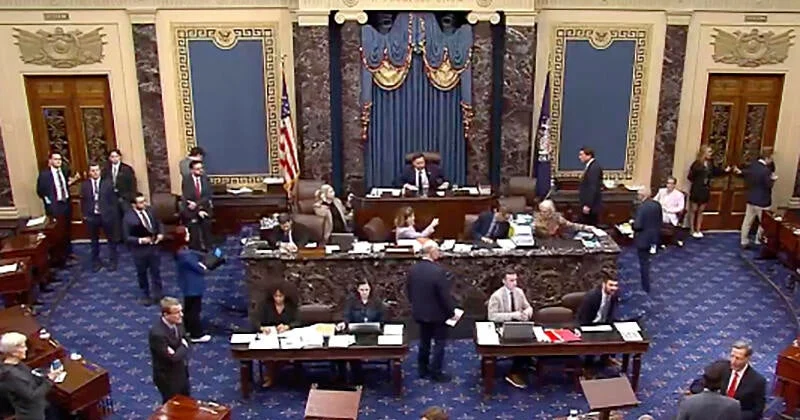
The 2026 midterm elections have reached a critical juncture, with control of the United States Senate hanging in the balance. Voters across the country are casting ballots in an election cycle that has defied conventional historical trends and devolved into fierce legal and political battles in several key states. Among the most closely watched and contentious contests is the Senate race in Alaska, where Democratic challenger Mary Peltola and Republican incumbent Senator Dan S. Sullivan are locked in a bitter struggle that has drawn national attention, allegations of voter fraud, and federal litigation.
As polls close and election analysts evaluate the final figures, the broader national landscape reveals a highly competitive map. According to CBS News estimates, there are 11 primary battleground states dictating the balance of power in the upper chamber of Congress. Eight of these contested seats are currently held by Republicans, while three are held by Democrats. Democrats require a net gain of four seats to secure outright control of the Senate, a pivotal milestone that could significantly influence the final two years of President Donald Trump’s administration, judicial confirmations, and legislative priorities.
The Alaska Showdown: Accusations of Fraud and Voter Mobilization
In Alaska, the closing days of the campaign have been overshadowed by heated rhetoric regarding election integrity. Speaking to reporters on Tuesday, Democratic Senate candidate Mary Peltola suggested that accusations of voter fraud leveled by her Republican opponent and allied conservative groups may have ultimately worked in her favor. Peltola argued that the aggressive messaging and legal challenges served as the catalyst needed to reengage the electorate in the final stretch.
"Alaskans across the state know that Dan Sullivan voted for this war in Iran 14 times," Peltola told reporters, shifting the focus to foreign policy and the incumbent’s legislative record. "You cannot hide from that, no matter how much mudslinging and name calling you do. So, I honestly think that to some extent it backfired, and our supporters have said, ‘no, we are not falling for these dirty tricks.’"
The friction in Alaska intensified significantly last month when the Trump administration filed a federal lawsuit seeking to block the certification of election results under specific conditions, namely if the incumbent Republican senator received fewer votes than Peltola. However, the legal maneuver was abruptly halted on Sunday when a federal judge formally dismissed the lawsuit.
Compounding the controversy, The New York Times reported last week on an alleged secret effort by political operatives aligned with Peltola’s campaign to recruit another individual named Daniel J. Sullivan onto the ballot. The reported strategy was purportedly designed to confuse voters and peel conservative support away from the incumbent senator. Peltola has consistently and strenuously denied any personal involvement or coordination with the alleged ballot-spoofing plan.
When questioned by journalists regarding the prospect of additional post-election legal challenges, Peltola expressed confidence in the judicial system. "I believe in the rule of law. I believe in justice. I believe in our courts, and I have every faith that things will turn out the way they should," she stated.
On the ground in Anchorage, voters expressed a mixture of fatigue and determination regarding the unorthodox dynamics of the race. Michael Hanson, a 66-year-old registered Republican who cast his ballot for Senator Dan Sullivan, voiced displeasure over the frequent transition of political disputes into the judicial system. Hanson noted that he preferred the decision to rest exclusively with the voters rather than the courts. Meanwhile, Barbara Konrad, a moderate voter who also supported the incumbent, expressed frustration over the sheer volume and tone of negative political advertising. Konrad remarked that she felt the political climate had grown increasingly toxic, claiming that the nature of modern campaigns had taken a toll on political discourse in the state.
The 2026 Senate Map: Battlegrounds and Path to Majority
The fierce battle in Alaska is just one piece of a complex national puzzle that will determine the legislative majority in Washington. Midterm elections historically present a significant headwind for the party currently occupying the White House. Traditional political science models suggest that the incumbent presidential party frequently suffers losses during midterms due to voter fatigue, economic anxieties, or shifts in momentum. However, the unique dynamics of the 2026 cycle—marked by distinct voter sentiment regarding the administration and localized candidate strengths—have complicated traditional forecasts and put a map that initially appeared favorable to Republicans into serious question.
The 11 competitive battleground states identified by CBS News are divided across ideological and regional lines:
-
Democratic-Held Defensive and Lean States:
- Michigan: Currently classified as a pure toss-up, representing one of the primary defensive hurdles for the Democratic caucus.
- Georgia: Leaning Democratic, though fiercely contested by well-funded conservative challengers.
- New Hampshire: Leaning Democratic, historically known for competitive independent-leaning electorates.
-
Republican-Held Target and Toss-Up States:
- Toss-Up States: Maine, Ohio, Texas, and Alaska. These four states represent the most volatile battlegrounds where polling margins remain razor-thin.
- Lean Republican States: South Carolina, Kansas, and Iowa. While historically safe for the GOP, changing demographic trends and robust local campaigning have narrowed margins.
- Lean Democratic Pick-Up Opportunity: North Carolina, viewed by Democrats as one of their strongest offensive opportunities to flip a red seat blue.
For Democrats, the path to taking control of the upper chamber relies on defending their incumbents in places like Michigan while simultaneously executing successful pickups across the Sun Belt, Rust Belt, and traditional conservative strongholds like Texas, Iowa, and Kansas. For Republicans, holding their current seats is essential to preserving their legislative bulwark against a potentially hostile legislative agenda during the remainder of the presidential term.
Chronology of Key Events Leading to Election Day
The road to the November 2026 elections has been defined by a series of escalating political maneuvers, legislative showdowns, and legal interventions:
- Early 2026: Campaign fundraising accelerates nationwide, with national party committees pouring tens of millions of dollars into key battleground states. Inflation, foreign policy decisions—including debates over military engagements in the Middle East—and domestic economic indicators dominate campaign messaging.
- August–September 2026: Post-primary campaigns enter the general election phase. In Alaska, debates crystallize around Senator Sullivan’s legislative record, while Democratic challengers nationwide focus heavily on healthcare, reproductive rights, and economic security.
- October 2026: Legal disputes begin to multiply. The Trump administration files a high-profile federal lawsuit in late October attempting to preemptively challenge potential certification outcomes in Alaska. Investigative reports emerge detailing alleged third-party ballot strategies involving similarly named candidates, sparking national media debates on campaign ethics.
- Late October 2026: Federal courts review pre-election litigation. Judges dismiss several early Republican-led challenges regarding ballot counting procedures and certification rules, ruling them premature or lacking standing.
- November 1–2, 2026: Final polling numbers show tight margins in the toss-up states of Maine, Ohio, Texas, and Alaska. Candidates make a final blitz across suburban and rural districts to maximize voter turnout.
- November 3, 2026: Election Day dawns with millions of Americans casting their ballots. Legal observers monitor polling stations for potential irregularities, while candidates deliver closing statements to the media regarding election integrity and the rule of law.
Broader Impact and Implications for the Federal Government
The outcome of the 2026 Senate elections carries profound consequences for the American political system. Control of the Senate dictates the confirmation process for federal judges, executive branch nominees, and cabinet officials. A shift in majority control can entirely paralyze or empower a presidential administration’s policy agenda during its final two years.
If Democrats successfully net the required four seats to seize control of the Senate, they will gain subpoena power, committee chairmanships, and the ability to block or heavily amend White House legislative proposals and judicial appointments. Conversely, if the Republican Party retains or expands its majority, it will solidify a conservative judicial pipeline and ensure a legislative counterweight to any executive actions or House-passed bills.
As election night proceeds and state-by-state results continue to materialize, election officials emphasize that final tallies—particularly in states utilizing ranked-choice voting or mail-in ballot processing like Alaska—may take time to fully resolve. Both national parties have mobilized legal teams across the country to monitor the post-election landscape, ensuring that the battles fought on the campaign trail will likely extend into the courts and legislative chambers long after the final ballots are counted.
