
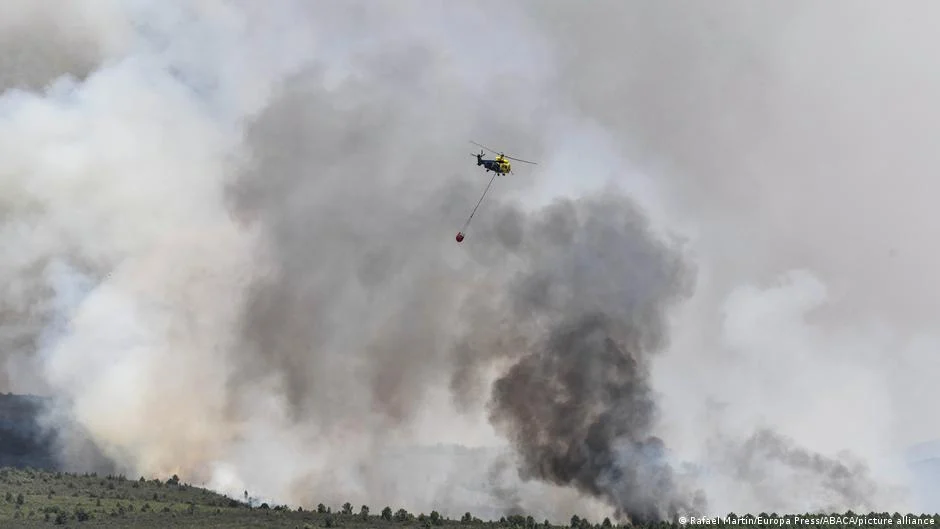
Firefighters across Spain intensified their battle on Sunday against a rapidly escalating wildfire north of the capital, Madrid, as the nation grapples with a devastating summer wildfire season that has already claimed lives and scorched tens of thousands of hectares. The most immediate threat emanates from the Guadalajara province, where a colossal blaze, ignited on Thursday, has consumed over 13,000 hectares of crucial natural habitat and forced the evacuation of hundreds of residents. This latest inferno casts a grim shadow over a country still reeling from one of its deadliest wildfires in modern times, which earlier this month killed 13 people and destroyed 7,000 hectares in the southern Almeria province.
The current situation highlights a deepening crisis in Spain, a nation particularly vulnerable to the increasing frequency and intensity of extreme weather events driven by climate change. As firefighters, supported by a significant aerial fleet, tirelessly work to contain the Guadalajara blaze, authorities have confirmed the arrest of a suspect in connection with its ignition, pointing to the persistent threat of arson in exacerbating these environmental catastrophes. The dual challenge of combating raging fires and investigating human-caused ignitions underscores the multifaceted pressures facing Spain’s emergency services and natural environment.
The Guadalajara Blaze: A Rapidly Evolving Crisis
The wildfire in central Spain’s Guadalajara province originated on Thursday, quickly overwhelming initial containment efforts due to a combination of high temperatures, strong winds, and parched vegetation. The affected region encompasses a significant portion of the Sierra Norte Natural Park, a biodiverse and ecologically sensitive area renowned for its rugged, forest-covered mountains and deep river valleys. This park is a critical habitat for numerous endangered species, including majestic Iberian imperial eagles, black vultures, and elusive Iberian wolves, whose survival is now directly threatened by the advancing flames.
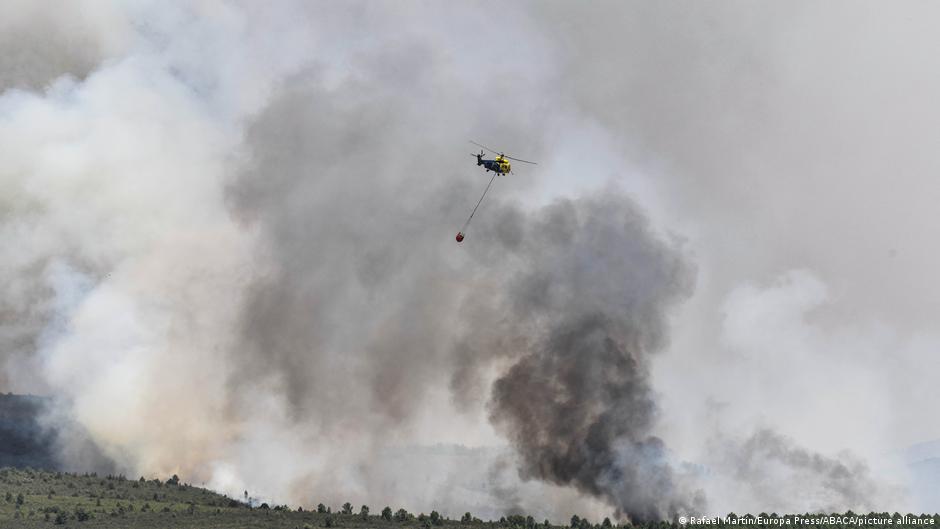
By Sunday, reports from El Pais newspaper indicated that the fire had already ravaged more than 13,000 hectares of land, equivalent to approximately 32,000 acres, an area larger than many major cities. Public broadcaster RTVE further detailed the fire’s relentless progression, noting that the flames had advanced an additional 14 kilometers (9 miles) overnight, demonstrating the immense challenge faced by ground crews. The sheer scale and speed of the fire’s spread necessitated a robust response, with over 500 firefighters and emergency personnel deployed to the front lines. These ground teams are working in concert with a formidable aerial fleet comprising 25 firefighting aircraft, including water-bombing planes and helicopters, which are crucial for attacking hot spots and creating firebreaks in inaccessible terrain.
The head of the Castilla-La Mancha regional government, Emiliano Garcia-Page, utilized social media to pay tribute to the tireless efforts of these emergency workers. In a post on X, he commended their dedication, stating that they had "managed to save many lives" through their strategic evacuations and direct intervention to protect communities. These efforts included the mandatory evacuation of several hundred residents from towns and villages within the immediate path of the fire, a testament to the imminent danger posed by the inferno. Fortunately, as of the latest reports, no casualties have been reported in connection with the Guadalajara fire, a fact largely attributed to the swift and coordinated evacuation efforts.
Chronology of Destruction and Response
The current wildfire season in Spain has unfolded with alarming intensity, marked by several significant blazes that have stretched emergency resources and highlighted the country’s vulnerability.
Early July – The Almeria Tragedy: The month began with a catastrophic wildfire in the southern Andalucia region, specifically in Almeria province. Ignited by unknown causes, this blaze quickly escalated, resulting in the tragic deaths of 13 individuals, including several foreign nationals. The harrowing details of the Almeria fire, with victims found in burnt-out vehicles, underscored the extreme speed and ferocity of the flames, leaving little time for escape. This event served as a stark and deadly precursor to the challenges Spain would continue to face. The fire ultimately consumed approximately 7,000 hectares, leaving a scar on both the landscape and the national psyche.
Mid-July – Zaragoza Under Threat: Concurrently with the unfolding crisis in Guadalajara, another major wildfire erupted in the northeastern Zaragoza province on Wednesday. This blaze forced the evacuation of more than a thousand residents from affected communities. By Friday evening, the regional government issued a grim warning that the fire was "far from under control," indicating its significant scale and persistence. However, through concerted efforts, the head of the Aragon regional government, Jorge Azcon, announced on Saturday that there was "the first day we can breathe a sigh of relief," as the fire had been mostly contained, though not fully extinguished.
Thursday – Guadalajara Erupts, Suspect Arrested: The Guadalajara fire, the subject of current intense firefighting efforts, began on Thursday. Its rapid spread was immediate, threatening the Sierra Norte Natural Park. Crucially, on the same day, police announced the arrest of a man suspected of starting the fire, following a tip-off from neighbors. This development highlights the persistent issue of arson as a significant factor in Spanish wildfires, with investigations often pointing to human negligence or malicious intent as triggers for these environmental disasters.
Friday-Sunday – Escalation and Containment Efforts: Throughout Friday and Saturday, the Guadalajara fire continued its aggressive expansion, fueled by adverse weather conditions. The focus shifted to protecting both human lives and the critical ecological assets of the Sierra Norte Natural Park. By Sunday, the massive scale of destruction became evident, with over 13,000 hectares consumed and hundreds of personnel and aircraft engaged in a desperate bid to bring the inferno under control. The ongoing battle underscores the relentless nature of the challenge and the dedication of the emergency services.
Spain’s Vulnerability and Supporting Data
Spain’s geographic and climatic conditions make it particularly susceptible to wildfires, especially during its long, hot, and dry summers. The country experiences a Mediterranean climate characterized by prolonged periods of drought, which transform vast expanses of its forests and scrubland into highly flammable fuel. This year, the situation has been exacerbated by a severe drought that has gripped much of the country, coupled with unusually low humidity levels and a series of intense heatwaves, creating perfect conditions for wildfires to ignite and spread rapidly. The peak of the tourism season, typically from June to August, coincides with this high-risk period, adding layers of complexity to emergency response efforts and raising concerns about public safety and economic impact.
The cumulative destruction across Spain this year is alarming. According to the European Forest Fire Information System (EFFIS), wildfires have already destroyed more than 80,000 hectares across the country since the beginning of the year. This figure represents nearly double the area burned during the same period last year, signaling a significant escalation in the severity of the wildfire season. EFFIS, a monitoring system that supports fire management services in European countries, tracks daily fire occurrences and burned areas, providing crucial data that informs national and international response strategies. The data from EFFIS underscores a worrying trend, indicating that Spain is facing an unprecedented level of fire activity in recent memory.
The ecological value of the areas under threat cannot be overstated. The Sierra Norte Natural Park in Guadalajara, for instance, is not just a scenic landscape but a vital ecosystem. It is part of the Natura 2000 network, a cornerstone of the EU’s biodiversity policy, designated for its importance in protecting habitats and species. Beyond eagles and wolves, the park is home to diverse flora and fauna, including various species of reptiles, amphibians, and invertebrates, many of which are endemic or have protected status. The destruction of these habitats has long-term implications for biodiversity conservation, potentially leading to local extinctions and significant disruptions to ecological balance.
Official Responses and Measures
The Spanish government, alongside regional authorities, has mobilized extensive resources to combat the wildfire crisis. The deployment of over 500 firefighters and emergency personnel, supported by 25 aerial units, reflects a national-level coordinated response involving various agencies. These typically include the national Ministry for the Ecological Transition and Demographic Challenge, regional environmental and interior ministries, and specialized units such as the Military Emergency Unit (UME), which is frequently deployed in large-scale natural disasters to provide logistical and operational support.
The regional government of Castilla-La Mancha, under Emiliano Garcia-Page, has been at the forefront of coordinating the response in Guadalajara. His public acknowledgment of the emergency workers’ life-saving efforts highlights the human element of the crisis and the critical role played by first responders. Similarly, the Aragon regional government’s updates on the Zaragoza fire demonstrate the continuous assessment and communication required during such emergencies. These official communications serve to inform the public, reassure affected communities, and maintain transparency regarding the ongoing efforts.
The arrest of a suspect for suspected arson in Guadalajara province is a significant development. Arson is a persistent and devastating cause of wildfires in Spain, with a substantial percentage of fires attributed to human activity, whether intentional or accidental. The legal consequences for arson are severe, often involving substantial prison sentences and hefty fines, reflecting the gravity of the crime and its profound impact on human lives, property, and the environment. Police investigations, often aided by public tip-offs and forensic analysis, are crucial in bringing perpetrators to justice and potentially deterring future incidents. The Spanish Civil Guard, responsible for rural security, plays a key role in these investigations.
Broader Impact and Implications
The relentless wildfire season carries profound implications for Spain, extending far beyond the immediate flames.
Environmental Impact: The destruction of over 80,000 hectares of land has devastating long-term environmental consequences. Burned landscapes are highly susceptible to soil erosion, especially during subsequent heavy rainfall, leading to desertification and sedimentation in rivers and reservoirs. Air quality deteriorates significantly due to smoke and ash, affecting public health over wide areas. The loss of vast tracts of forest means the destruction of carbon sinks, contributing to climate change, and severely impacting biodiversity. The recovery of ecosystems like the Sierra Norte Natural Park can take decades, if not centuries, with some species facing permanent displacement or extinction.
Economic Impact: The economic toll of these wildfires is substantial. Direct costs include the immense expenditure on firefighting operations, personnel, and equipment. Indirect costs are far-reaching:
- Agriculture and Forestry: Losses for farmers and foresters can be catastrophic, destroying crops, livestock, and timber resources.
- Tourism: Wildfires, particularly during the peak summer season, damage Spain’s vital tourism industry. Smoke, evacuations, and the perception of danger can deter visitors, leading to booking cancellations and reduced revenue for hotels, restaurants, and local businesses in affected regions. The visual impact of scorched landscapes can also diminish a region’s appeal for years.
- Infrastructure: Damage to roads, power lines, and other essential infrastructure necessitates costly repairs and disrupts services.
- Reconstruction: The cost of rebuilding homes and communities is enormous, placing a significant burden on public funds and private insurers.
Social Impact: The human toll, even without direct casualties, is considerable. Hundreds of evacuated residents face displacement, loss of homes, and psychological trauma. The memories of fleeing flames, the uncertainty of return, and the sight of destroyed landscapes can have lasting mental health impacts on communities. The Almeria fire, with its tragic fatalities and the desperate circumstances of the victims, has left a profound mark on the national consciousness, highlighting the vulnerability of even experienced residents to the rapid and unpredictable nature of modern wildfires.
Policy and Climate Change Implications: The recurring and intensifying wildfire crises in Spain underscore the urgent need for enhanced prevention, mitigation, and adaptation strategies. Scientists unequivocally link the increasing frequency, intensity, and duration of heatwaves, droughts, and wildfires to human-caused climate change. The Mediterranean region, in particular, is identified as a climate change hotspot, experiencing more extreme weather patterns. This necessitates:
- Proactive Forest Management: Implementing controlled burns, creating wider firebreaks, and managing forest density to reduce fuel loads.
- Early Warning Systems: Investing in advanced satellite monitoring and ground sensors for faster detection.
- Public Awareness and Education: Campaigns to reduce human-caused ignitions, especially during high-risk periods.
- International Cooperation: Sharing best practices and resources with other fire-prone nations.
- Climate Change Adaptation: Developing long-term strategies to build resilience against the unavoidable impacts of a warming planet, including urban planning that considers fire risk and water resource management.
The current wildfire season in Spain is a stark reminder of the escalating environmental challenges facing the country and the world. As emergency services continue their arduous fight, the broader implications of these events—from ecological devastation to economic disruption and human tragedy—demand a comprehensive and sustained response that integrates immediate crisis management with long-term climate action and prevention strategies. The battle against the flames is ongoing, but the longer war against the causes and consequences of these destructive infernos is only just beginning.
