
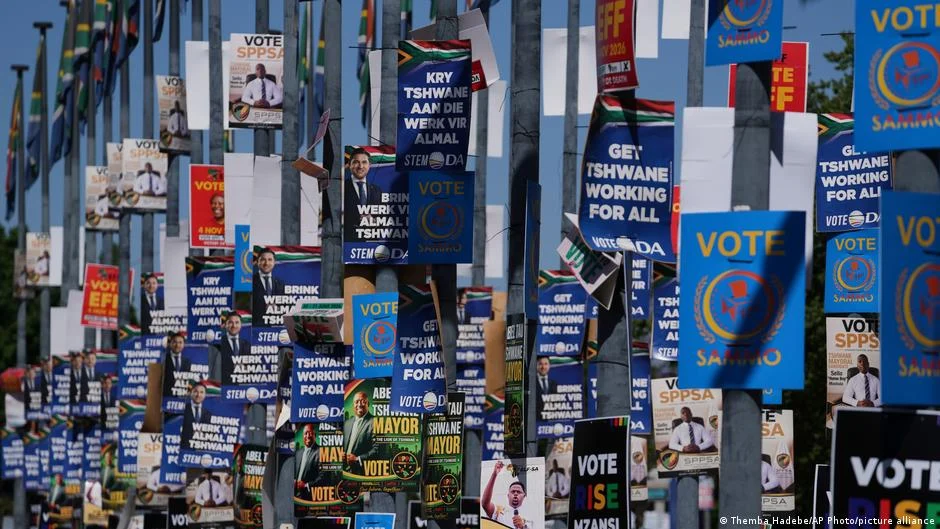
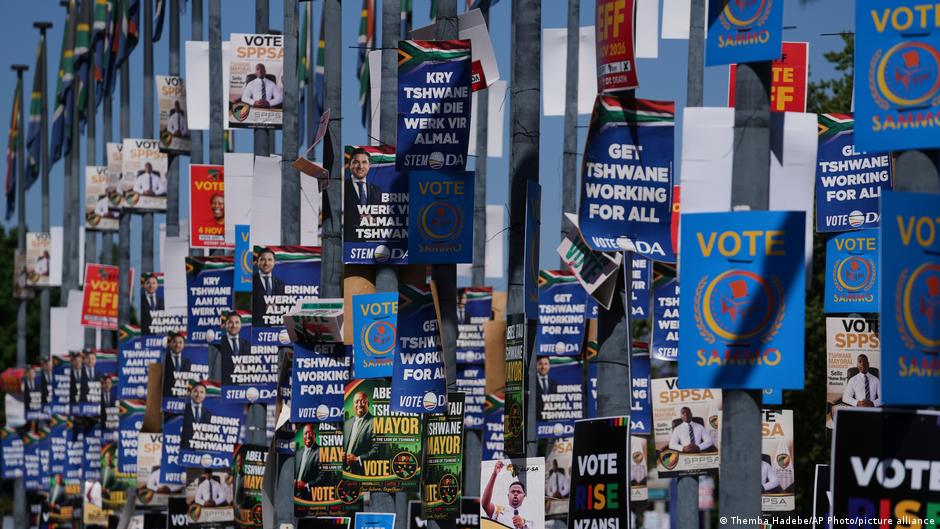
As South Africa approaches a critical municipal election, the atmosphere in townships like Tembisa, located on the periphery of Johannesburg, is defined by a palpable sense of abandonment. For residents like Vatiswa Zoya, the ballot box no longer serves as a beacon of hope but as a reminder of unfulfilled promises. "We’ve decided not to vote. At all," Zoya stated just days before the polls, echoing the sentiments of many who feel that systemic political failure has left them behind. Conversely, for younger voters like 22-year-old Lindokuhle Mbandazayo, the election represents a desperate opportunity for accountability. Mbandazayo, who navigates sewage-filled streets and recurring power outages daily, views the ballot as a potential tool to force local councilors to address the decaying infrastructure that defines her community.
This divide between apathy and urgent civic duty captures the central tension of these municipal elections. As voters head to the polls to determine the leadership of the nation’s most important metropolitan hubs, the ruling African National Congress (ANC) faces an unprecedented challenge to its historical dominance. The outcome of these local contests is expected to provide a definitive verdict on the party’s long-term viability in national governance.
The Chronology of Decline: A Shifting Political Landscape
The trajectory of the ANC’s electoral fortunes has been marked by a consistent downward trend over the past decade. Historically, the party enjoyed overwhelming support, holding an outright majority in the vast majority of South Africa’s municipal councils. In 2016, the ANC secured 53.91% of the national vote, maintaining control over 161 of the 213 councils. However, the 2021 municipal elections served as a watershed moment when the party’s support plummeted to 45.59%, resulting in a majority in only 122 councils.
Current projections from market research firm Ipsos suggest that the ANC’s support could drop to as low as 30% in the current cycle. This decline has necessitated the rise of complex, often fragile coalition governments. These coalitions, while democratic in nature, have frequently led to administrative instability, as competing parties struggle to reach consensus on essential service delivery, further alienating the electorate.
The Infrastructure Crisis: Water and Power as Primary Drivers
While political rhetoric often focuses on national policy, the primary motivation for voters in this election is the degradation of basic services. The most pressing of these is the nationwide water crisis. According to Ferrial Adam, executive director of the water rights advocacy group WaterCAN, the state of the nation’s water infrastructure is dire. "Almost 70% of our wastewater treatment works are in a critical state and spewing sewage into rivers and streams across the country," Adam noted.
The crisis is not limited to rural areas; metropolitan centers like Johannesburg and Tshwane are currently grappling with chronic water shortages and infrastructure failures. In Tshwane, a recent failure in water treatment facilities led to a public health emergency, leaving over 400 residents ill. The irony of residents needing to monitor whether their taps will run on election day underscores the severity of the situation. Analysts like Sanusha Naidu of the Institute for Global Dialogue argue that political parties have failed to offer substantive solutions to this crisis. Instead, candidates have relied on "transactional" promises that fail to address the underlying budgetary mismanagement and lack of technical maintenance that have brought the nation’s infrastructure to the brink of collapse.
Migration as a Campaign Flashpoint
Beyond service delivery, the issue of migration has emerged as a volatile campaign topic. In recent months, South Africa has experienced a surge in anti-migrant protests, particularly in urban centers where competition for scarce resources—such as housing and employment—has intensified. Political entities such as Action SA, the MK Party, and the Patriotic Alliance have aggressively leveraged this sentiment.
By positioning themselves as defenders of national borders and proponents of stricter immigration enforcement, these parties are attempting to capture the votes of disillusioned citizens. Aldu Cornelissen of the digital analysis firm Murmur Intelligence suggests that while the political benefit for these parties might be incremental—projected between 6% and 8%—in a fractured political environment where every seat counts, this shift in focus is significant. This rhetoric, however, has also contributed to a broader climate of social tension, complicating the electoral environment.
The Battle Against Disinformation
The integrity of the democratic process is being challenged by a surge in misinformation and the proliferation of AI-generated content. The Independent Electoral Commission (IEC) has been forced to investigate over 700 complaints related to disinformation. One of the most prevalent and damaging claims involves the baseless assertion that the ANC is mobilizing asylum seekers to vote in the municipal elections. Under South African law, only citizens may vote; asylum seekers, refugees, and permanent residents are strictly prohibited from participating.
William Bird, director of the media monitoring agency Moxii Africa, characterizes this as part of a global trend. "What we see with disinformation is that it always picks up on whatever the hot-button news issues are," Bird explained. While there is no evidence to support claims of electoral rigging—with the IEC remaining one of the most respected electoral management bodies globally—the strategic use of fear-mongering and social media polarization continues to threaten the stability of the public discourse.
Implications for the Future of Governance
The significance of these elections extends far beyond the local level. Because South Africa utilizes a proportional representation (PR) system for half of its council seats, every vote contributes to the total tally that determines party representation. This makes voter turnout the most critical variable in the upcoming election. Low turnout, which has plagued recent municipal elections—dropping from 57.95% in 2016 to 45.87% in 2021—could inadvertently empower smaller, fringe parties or entrench the gridlock of existing coalitions.
The implications of this election cycle are twofold. First, it serves as a barometer for the ANC’s ability to modernize its platform to appeal to Gen Z and Millennial voters, who are increasingly demanding radical transparency and competence. Second, it will determine the stability of local governance for the next five years. Should the trend of fragmentation continue, municipalities may find themselves in a perpetual state of "coalition paralysis," where the focus shifts from service delivery to internal power struggles.
As the nation waits for the final results, the message from the electorate is clear: the patience of the South African public is wearing thin. Whether the result leads to a revitalized political system or further instability remains to be seen. However, the focus of the new councils must immediately turn to the restoration of essential services—water, electricity, and sanitation—if they are to regain the trust of citizens like Lindokuhle Mbandazayo, who are still waiting for the promise of democracy to manifest in their daily lives.
In conclusion, these municipal elections act as a microcosm of the broader challenges facing South Africa. The convergence of infrastructure failure, economic stagnation, demographic shifts, and the weaponization of social media creates a volatile environment. The path forward for the country’s local government depends not only on which party secures the most votes but on their willingness to move past transactional promises and engage in the substantive, long-term work of repairing the essential foundations of a functioning society. The 136,760 candidates currently vying for positions have a significant task ahead: to prove that local government can still be a force for positive change in a nation that feels increasingly pushed to its limits.
