
The dust has barely settled on the 2026 midterm elections, yet Washington is already consumed by high-stakes internal maneuvering as both parties grapple with the realities of a shifting political mandate. While the electoral map has been finalized, the real power struggle is now unfolding behind closed doors in the halls of the Capitol. As incoming members prepare for the January 3 swearing-in, leadership posts in both the House and Senate are being contested, and the legislative agenda remains a volatile mix of progressive ambition and institutional friction.
The Leadership Crucible
In the House of Representatives, the Republican caucus finds itself at a crossroads. Speaker Mike Johnson, R-La., has signaled he will not seek the position of minority leader, a move that has effectively opened the door for a new generation of leadership candidates. The scramble for the top Republican spot includes prominent figures such as Majority Leader Steve Scalise and Representative Jim Jordan. The challenge for these candidates is twofold: they must secure enough support within a fractured conference while navigating a delicate relationship with President Donald Trump.
For many rank-and-file Republicans, the question is whether the party should remain tethered to the President’s influence or pivot toward a new strategic identity. This tension is further complicated by the challenge facing House Minority Whip Tom Emmer, who is vying to retain his post against a primary challenge from Representative August Pfluger. The internal friction underscores a broader debate within the GOP about how to effectively function as a minority bloc while simultaneously maintaining a coherent opposition strategy.
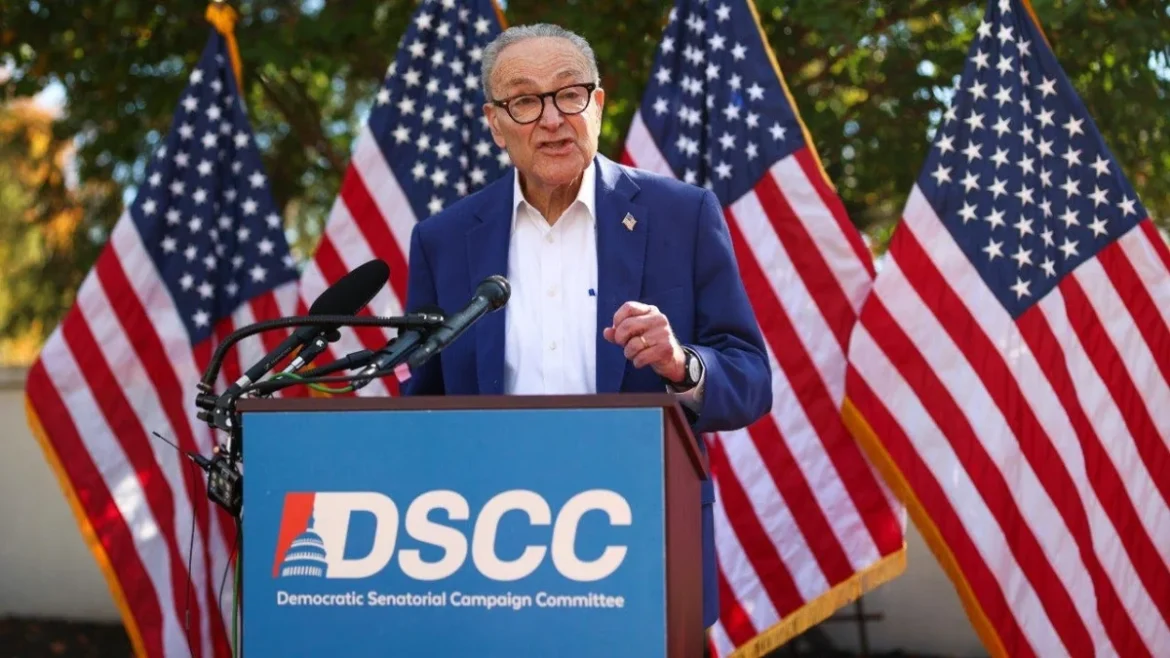
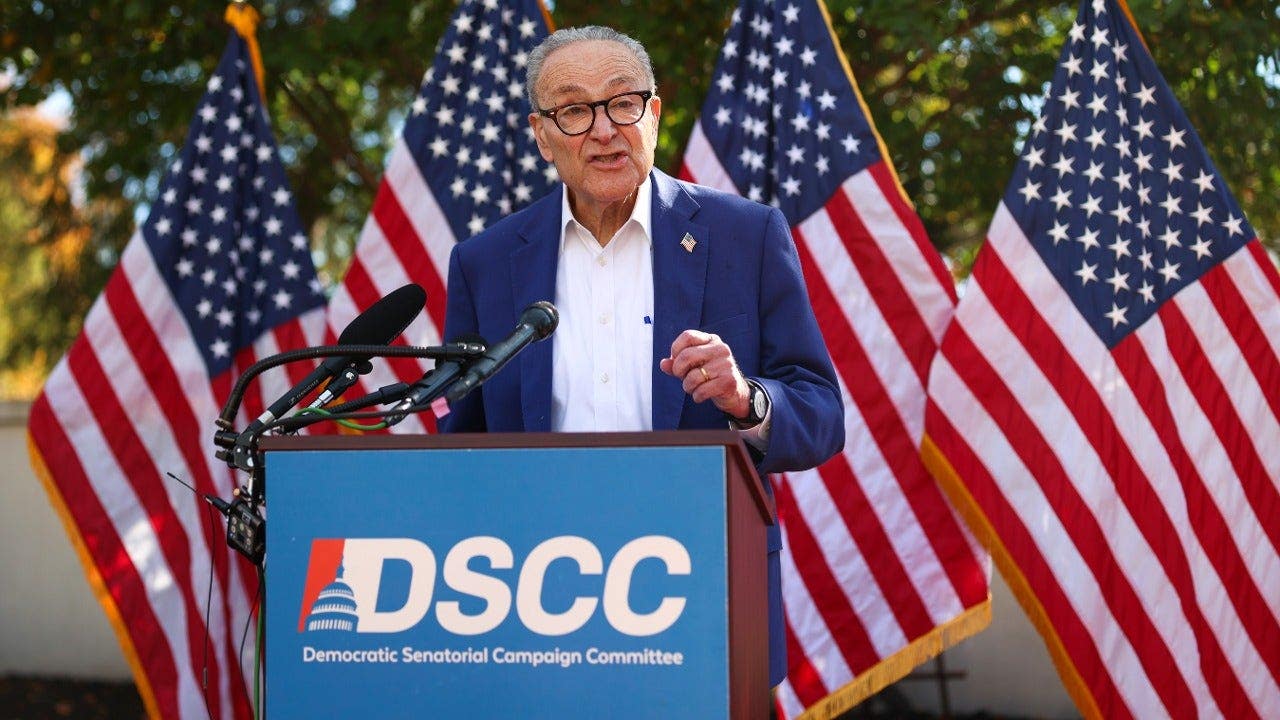
Across the Capitol, the Senate dynamic is similarly complex. Senate Majority Leader John Thune, R-S.D., occupies a seat of power that has seen its share of scrutiny. While President Trump and Senator Thune have historically experienced a fraught relationship, there has been no formal push from the White House for his removal. However, the Senate Democratic caucus is facing its own internal pressures. Despite the party’s significant gains in the midterms, a contingent of incoming progressive senators has openly questioned the leadership of Senate Minority Leader Chuck Schumer, D-N.Y.
Progressive Dissent and Internal Dynamics
The dissent within the Democratic ranks is not merely performative; it represents a fundamental ideological rift. Incoming senators such as Abdul El-Sayed of Michigan and Adam Hamilton of Kansas have publicly expressed their hesitation to support Senator Schumer’s continued leadership. Senator-elect El-Sayed, in particular, has consistently emphasized a platform focused on systemic reform, including the removal of money from politics and the push for a Medicare-for-All healthcare model.
These newcomers are part of a broader wave of progressives who argue that the party requires a generational shift to meet the demands of the electorate. During various interviews, these members have suggested that their support for leadership is conditional, tied to a legislative commitment to bold, transformative policies. Yet, Senator Schumer remains confident in his standing. With a secure base of support among the veteran members of the caucus, he requires only a simple majority in a secret ballot to retain his position.
The House Democratic caucus faces a different kind of pressure from its left flank. At least five members associated with the Democratic Socialists of America have signaled they may withhold their support for House Minority Leader Hakeem Jeffries unless they receive firm commitments regarding their legislative priorities. While the math remains in Jeffries’ favor—given that Democrats are expected to hold more than 260 seats—the presence of these conditions highlights the leverage that small, ideologically cohesive factions can exert in a narrow majority or a contentious minority environment.
The Legislative Agenda: A Contrast to 1994
The current political atmosphere is distinct from the landmark 1994 midterm elections, when then-Speaker Newt Gingrich introduced the "Contract with America." Unlike that era’s unified, top-down legislative pledge, the current Democratic agenda is being formulated through a patchwork of regional priorities and progressive mandates.
Primary among these goals is the effort to roll back fiscal measures enacted during the previous administration. Incoming lawmakers like Senator-elect Juliana Stratton of Illinois have prioritized the reversal of recent budget cuts, characterizing them as detrimental to the social safety net. Furthermore, the expiration of Obamacare subsidies serves as a critical flashpoint. The debate over these subsidies was a central driver of the 43-day government shutdown last year, and it remains a non-negotiable issue for many Democrats.

Beyond healthcare, there is a mounting concern regarding the rapid expansion of artificial intelligence and its impact on the American workforce. Representative Greg Casar, chair of the Progressive Caucus, has described the resistance to large-scale data centers as an early tremor of a broader political earthquake. Democrats are expected to prioritize legislation that addresses the displacement of labor due to automation, marking a significant shift in the party’s focus toward tech-labor policy.
The Tariff Debate and Executive Relations
One of the most contentious issues expected to dominate the early months of the new Congress is the future of the tariff regime established by the Trump administration. While Republicans have historically supported these measures as a tool of economic protectionism, there is a growing acknowledgment among some lawmakers that the tariffs have had unintended consequences on consumer costs.
Representative Greg Stanton, D-Ariz., and other critics argue that the current tariff policy is self-defeating and requires urgent legislative reform. Democrats are framing this as a key test for the Republican caucus, betting that the electoral results have shifted the balance of power and made it more difficult for the GOP to remain in lockstep with the President’s trade agenda.
However, the path to legislative success remains steep. President Trump has indicated a willingness to engage in bipartisan efforts where interests align, but he maintains a readiness to use his veto power to protect his signature policies. This sets the stage for a high-stakes game of political arithmetic.
Statistical Realities and Future Implications
The mathematical reality of the upcoming Congress is striking. With Democrats projected to control upwards of 260 seats in the House and holding a comfortable majority in the Senate, the potential for legislative maneuvering is significant. However, overriding a presidential veto remains a high bar.

In the House, an override requires 290 votes; in the Senate, it requires 67. If Democrats hover around the 260-seat mark in the House, they would need to peel off a substantial number of Republicans to successfully override a veto. In the Senate, the departure of moderate Republicans—including former Majority Leader Mitch McConnell, as well as Senators John Cornyn, Bill Cassidy, and Thom Tillis—could potentially make the math more favorable for the Democrats, provided they can maintain total caucus unity.
The months ahead will be defined by how effectively these parties can balance their internal ideological demands with the necessity of governing. The "revolt" mentioned by some progressive members against established leadership is more than just a struggle for titles; it is a signal that the Democratic Party is in a period of transition. Simultaneously, the Republican struggle to define its post-Trump identity—or lack thereof—will dictate its effectiveness as a check on the legislative branch.
Timeline of the Transition
- November 2026: Midterm elections conclude with significant gains for the Democratic party, setting the stage for a change in legislative priorities.
- Late November/Early December 2026: Internal party caucuses meet to determine leadership for the upcoming Congress.
- January 3, 2027: The new Congress convenes, with the Speaker of the House election serving as the first major test of party unity.
- Q1 2027: Expected legislative battles over Obamacare subsidies, government funding, and the continuation or repeal of trade tariffs.
As the political landscape continues to evolve, the ability of these leaders to bridge the gap between their base’s demands and the reality of the legislative process will be the defining story of the next two years. Whether the result is gridlock or a new era of policy reform remains to be seen, but the urgency in the capital suggests that the battles of 2026 have only just begun.
