
A high-stakes legal confrontation is currently brewing before the U.S. Supreme Court, centering on whether noncitizens with extensive criminal records are constitutionally entitled to bond hearings during the course of lengthy deportation proceedings. The Trump administration has petitioned the high court to intervene in the case of Genalo v. D.C., arguing that current judicial precedents in the Second Circuit significantly hinder the federal government’s ability to maintain custody over individuals who may pose a substantial threat to public safety. This legal dispute highlights a widening rift between judicial interpretations of due process and the executive branch’s mandate to enforce immigration law, particularly regarding the detention of individuals convicted of aggravated felonies.
At the heart of the matter is a Second Circuit Court of Appeals precedent that requires the government to grant a bond hearing once mandatory immigration detention becomes what courts deem "unreasonably prolonged." During such hearings, the government bears the heavy burden of proving by "clear and convincing evidence" that the detainee constitutes either a flight risk or a danger to the community. The administration contends that this standard effectively ties the hands of Immigration and Customs Enforcement (ICE) and creates a perverse incentive for detainees to prolong their legal proceedings in the hopes of securing release.
The Case of D.C.: A Chronology of Criminal History
The individual at the center of the administration’s petition, referred to in court documents as D.C., is a 62-year-old Dominican national whose history with the American justice system spans nearly three decades. His record illustrates the complexities inherent in the nation’s immigration enforcement framework.
The timeline of D.C.’s interactions with the legal system began in 1997, when he was charged with multiple drug-related offenses, including the possession and sale of controlled substances. Following a failure to appear for his trial, he was convicted in absentia and sentenced to three to nine years in prison. Notably, this sentence remained unserved for years until he was finally taken into custody in 2024.

His criminal history continued to evolve in 2007, when he was charged with possession of a forged instrument after providing false identification to law enforcement—a charge that also resulted in a failure to appear in court. By 2016, his record expanded to include domestic violence-related charges, including second-degree strangulation and child endangerment. He eventually entered guilty pleas for criminal obstruction of breathing, criminal contempt, and the earlier forgery charge.
Following his arrest on the 1998 warrant in April 2024 and the subsequent completion of his state sentence in September 2025, D.C. was transferred to federal immigration custody. It is this detention that has prompted the current legal challenge, as he seeks a bond hearing under the Second Circuit’s established rules.
Legal Precedent and the Search for a Judicial Vehicle
The administration’s petition to the Supreme Court represents a strategic effort to overturn the Second Circuit’s "prolonged detention" rule on a national scale. This is not the first time the government has sought to address this issue; the administration previously pursued similar cases that ultimately became moot.
One such case involved Carol Williams Black, a noncitizen convicted of child sexual abuse who was released from federal custody after receiving a final order of removal and departing the United States. Another case involved G.M., a lawful permanent resident who was detained for 21 months pending removal proceedings following a conviction for assault. That case was dismissed by the Supreme Court in September 2025 after New York Governor Kathy Hochul granted the individual a full and unconditional pardon, effectively nullifying the basis for his deportation and detention.
By focusing on D.C., the administration is attempting to secure a definitive ruling through a process known as "certiorari before judgment," an extraordinary legal procedure that allows the Supreme Court to bypass the appellate court’s final ruling to decide the constitutional questions at hand immediately.

Analysis: Implications for Public Safety and Federal Resources
Legal experts and policy analysts suggest that the outcome of this case could have profound implications for the national immigration landscape. Chad Mizelle, chair of litigation at the America First Policy Institute and a former acting associate attorney general, emphasizes that the policy debate is not merely about procedural nuance but about the protection of the American public.
"We are talking about criminal aliens," Mizelle noted in a recent interview. "Those are individuals who have been accused of or convicted of an aggravated felony—murder, child rape, or grievous harm. The fundamental question is whether the government should be empowered to keep these individuals off the streets while their cases move through the courts."
The primary concern among proponents of the government’s position is the "clear and convincing" evidentiary standard. Michael Morley, a professor at Florida State University College of Law, warns that if the Supreme Court affirms the Second Circuit’s position, it will create a national standard that makes the detention of high-risk noncitizens significantly more difficult.
"It will be harder for the government to be able to detain this particular population," Morley explained. "There will be instances where the government cannot meet that high evidentiary threshold, leading to the release of individuals who may pose a danger to the community while their removal proceedings move at a glacial pace through the adjudicative process."
The Burden of Proof and Judicial Oversight
The conflict underscores a fundamental disagreement over the scope of the judiciary’s role in executive immigration enforcement. Under existing statutes, Congress has historically mandated the detention of noncitizens who have committed specific crimes to ensure they appear for removal hearings and to prevent further harm to the public. However, federal courts have increasingly intervened, citing the Fifth Amendment’s Due Process Clause to ensure that detention without a hearing does not become indefinite.
Carrie Severino, president of the Judicial Crisis Network, argues that such judicial interventions impose unnecessary hurdles on federal law enforcement. "This is not an issue that only affects D.C. or the specific facts of this case," Severino said. "It is an issue that will affect criminal aliens across the country. If the government is forced to provide bond hearings in every instance of prolonged detention, the sheer volume of cases will strain resources and lead to the release of individuals who are likely to abscond once they realize their removal is imminent."
Statistical Context: The Challenge of Immigration Adjudication
The backlog in U.S. immigration courts has reached unprecedented levels, currently exceeding 3 million pending cases nationwide. This administrative crisis is a critical factor in the current legal conflict. When removal proceedings take years to conclude, the definition of "prolonged" detention becomes a point of contention.
Data from the Transactional Records Access Clearinghouse (TRAC) at Syracuse University indicates that a significant percentage of noncitizens who are released on bond or through other measures fail to appear for their final removal hearings. For those with criminal records, the risk of recidivism or the potential for flight creates a complex balancing act for the Department of Homeland Security (DHS) and the Department of Justice (DOJ).
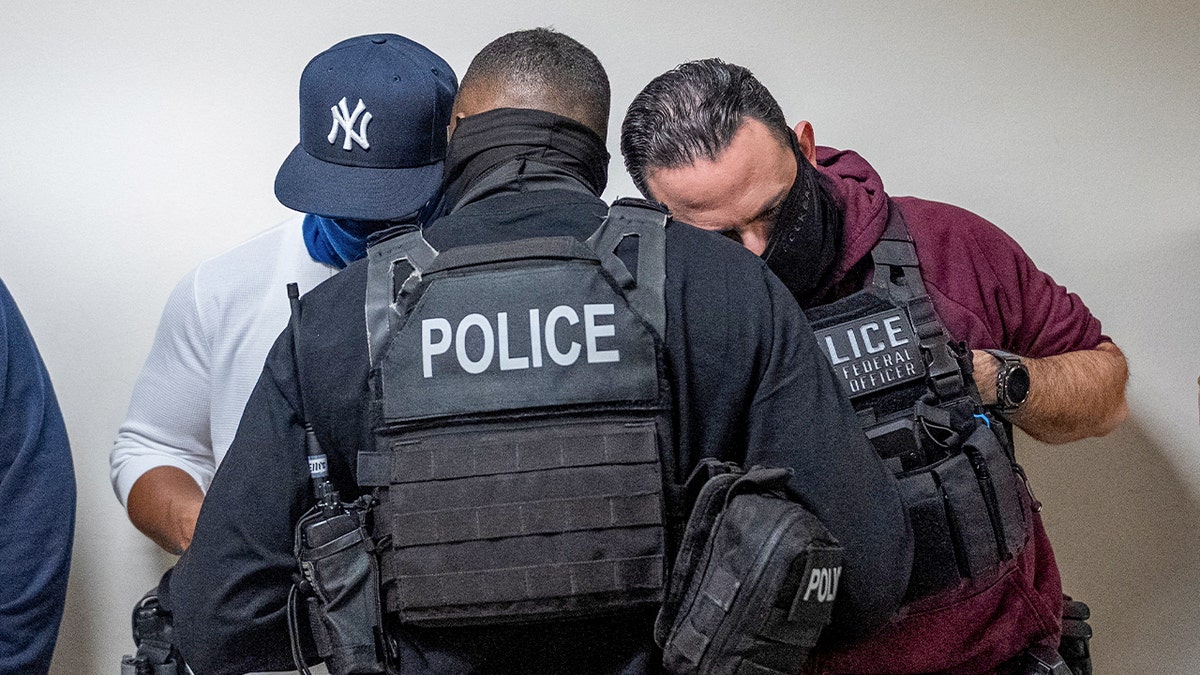
Furthermore, the practice of conducting targeted arrests at courthouses—a tactic often utilized by ICE to take custody of individuals—has faced intense scrutiny from immigrant rights advocates who argue that such actions discourage participation in the judicial process and undermine the integrity of the courts. The administration, however, maintains that these arrests are a necessary tool to ensure that individuals who have already been flagged for removal are not allowed to vanish into the interior of the country.
Looking Ahead: The Supreme Court’s Potential Role
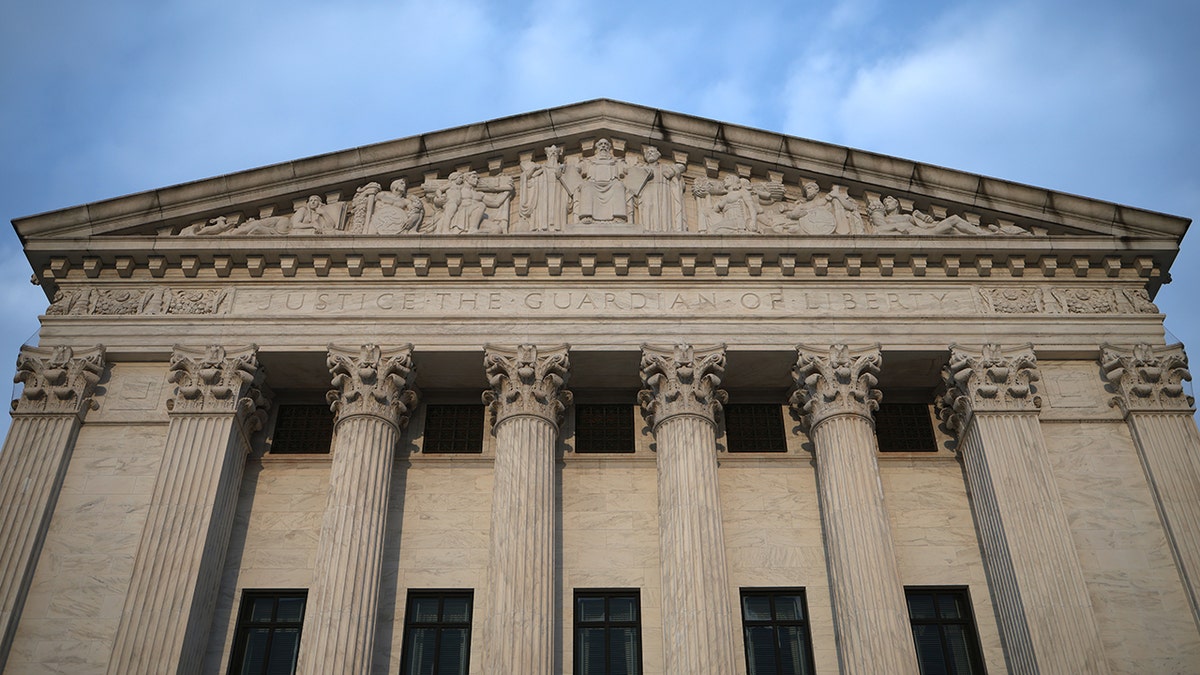
The Supreme Court has not yet confirmed whether it will grant the petition to hear the case of Genalo v. D.C. However, the legal community is watching closely, as a decision in this matter could serve as a landmark ruling for immigration enforcement policy.
If the Court decides to take up the case, it will likely examine whether the current mandatory detention statutes implicitly allow for exceptions based on the length of time an individual has been in custody. A ruling in favor of the administration would likely streamline the deportation process for criminal noncitizens, while a ruling in favor of the current Second Circuit precedent would solidify the requirement for bond hearings, effectively narrowing the government’s discretion in detention matters.
As the judiciary prepares to weigh in, the tension between safeguarding individual rights and maintaining public safety remains a central theme. The outcome will inevitably influence how the federal government manages the detention of those who have allegedly violated the nation’s laws, setting a precedent that will likely govern immigration proceedings for years to come. For now, the legal battle remains in a state of suspended animation, waiting for the high court to determine the next chapter in this ongoing struggle over the limits of detention in the American immigration system.