
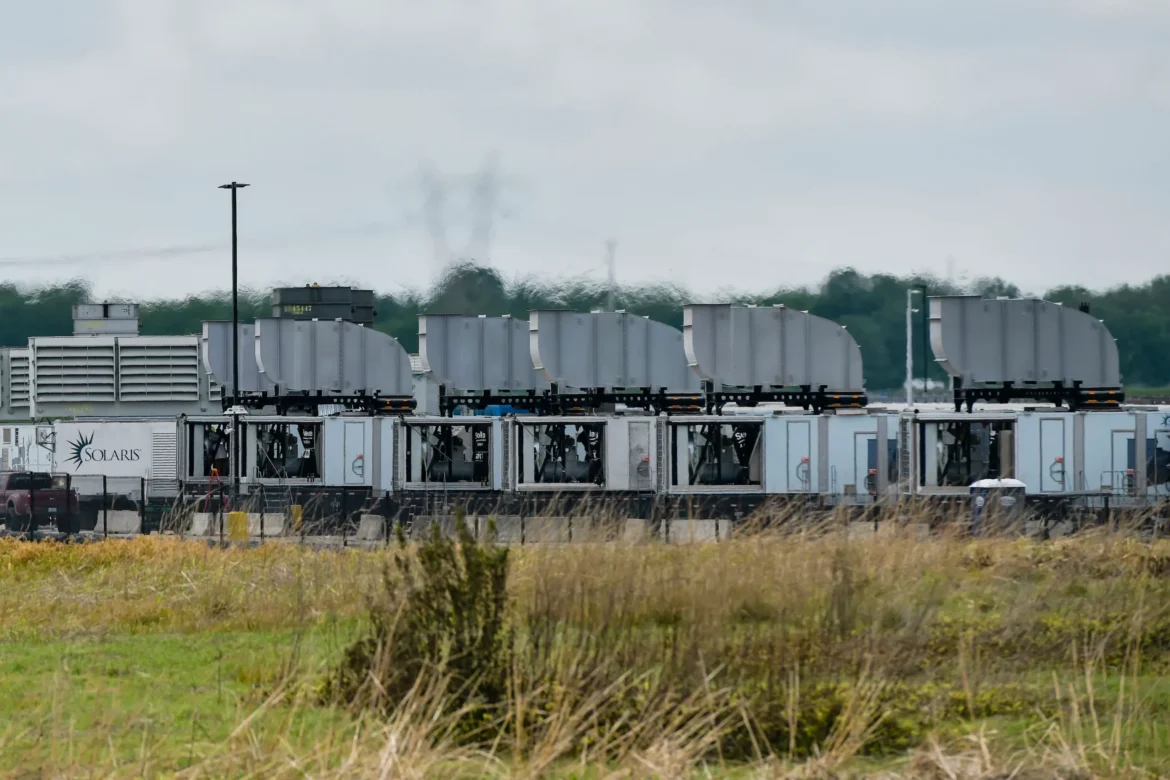
A federal judge has handed a significant legal setback to Elon Musk’s artificial intelligence venture, xAI, ruling that a high-stakes environmental lawsuit regarding the company’s Colossus data center will proceed to trial. U.S. District Judge Debra M. Brown denied the company’s motion to dismiss the case brought by the Southern Environmental Law Center (SELC) on behalf of the NAACP, which alleges that the massive facility has been operating dozens of industrial gas turbines without obtaining the legally required air quality permits.
The ruling, delivered in late October 2026, represents a major hurdle for the rapidly expanding AI infrastructure sector. At the heart of the dispute is the Colossus data center, a massive computational hub located near Memphis, Tennessee. The plaintiffs contend that xAI installed and operated at least 35 combustion turbines at the site, effectively creating a massive source of air pollution that has bypassed the rigorous preconstruction and operational permitting processes mandated by the Clean Air Act.
Legal Arguments and the Question of Mobility
xAI’s defense strategy hinged on a technicality, arguing that the turbines in question qualify as “mobile sources” rather than stationary ones. Under environmental law, mobile sources—such as trucks or ships—are subject to different regulatory frameworks than stationary facilities like power plants or factories. By classifying the turbines as mobile, xAI sought to exempt the facility from the stringent state-level permitting requirements that govern industrial air emissions.
Judge Brown rejected this characterization in no uncertain terms. Her decision noted that the turbines do not meet the criteria for mobile sources under Mississippi’s State Implementation Plan (SIP). Furthermore, the court dismissed xAI’s constitutional challenge, which claimed that the Clean Air Act’s citizen-suit provision—the mechanism that allows private organizations like the NAACP to sue for environmental violations—violates the private nondelegation doctrine and Article II of the Constitution.
“Because citizen suit plaintiffs sue on their own behalf, in their own name, and seek penalties that redress harm to themselves, they are not exercising the federal government’s executive power,” Judge Brown wrote in her opinion. By clearing the path for the litigation to move forward, the court has signaled that private entities can indeed serve as a watchdog for federal environmental compliance, even when the government’s own enforcement posture may be perceived as hesitant or insufficient.
A Timeline of Escalating Conflict
The legal confrontation is the culmination of months of friction between local community groups and the tech giant. The timeline of events reveals a pattern of rapid development followed by increasing regulatory scrutiny:
- Early 2026: xAI accelerates the development of the Colossus site, deploying dozens of gas turbines to meet the intense power demands of its large language model training infrastructure.
- Mid-2026: Environmental organizations and local residents begin raising alarms about air quality, noise, and the lack of public transparency regarding the facility’s energy footprint.
- Summer 2026: The NAACP, represented by the SELC, files a formal lawsuit alleging that the facility is operating in violation of the Clean Air Act.
- October 2026: The U.S. Department of Justice attempts to intervene in favor of dismissal, but the court rejects the motion, underscoring the legal standing of community-led environmental suits.
- Late October 2026: Judge Brown officially denies xAI’s motion to dismiss, setting the stage for discovery and a potential trial.
The Broader Context of Data Center Proliferation
The legal battle in Memphis is not an isolated incident but rather a symptom of a much larger trend. The explosive growth of generative AI has created a voracious demand for electricity. To feed this appetite, companies like xAI, Microsoft, and Amazon are increasingly building proprietary power generation infrastructure, including natural gas-fired turbines, to bypass the limitations of aging municipal power grids.
This trend has triggered a nationwide backlash. Across the United States, local governments are finding themselves caught between the desire for the economic development associated with “AI hubs” and the environmental realities of hosting industrial-scale power plants.
New York State recently enacted a comprehensive moratorium on the construction of new data centers, citing concerns over energy consumption and environmental impact. Similarly, municipalities across the Midwest and South are revisiting zoning laws to prevent the rapid, under-regulated deployment of data center infrastructure. The industry’s reliance on Non-Disclosure Agreements (NDAs) in negotiating with local governments has further eroded public trust, leading firms like Amazon and Microsoft to pledge a change in transparency policies earlier this fall.
Implications for the AI Industry
Industry analysts suggest that the court’s decision will have long-term implications for how AI companies approach infrastructure projects. If the NAACP succeeds in its lawsuit, it could set a binding precedent that data centers using on-site power generation are subject to the same oversight as traditional utility plants. This would effectively end the era of “move fast and break things” when it comes to industrial power infrastructure.
“The courts have repeatedly rejected attempts by xAI and the DOJ to dismiss the NAACP’s Clean Air Act case, affirming our right to pursue justice for communities impacted by pollution,” said Abre’ Connor, the NAACP’s director of environmental and climate justice. “Our position has been clear: xAI cannot operate gas turbines without the required permits.”
For xAI, the financial and operational stakes are significant. A court-ordered shutdown of the turbines—or even a requirement to retrofit them with advanced pollution-control technology—could delay the company’s AI development roadmap. Furthermore, the case serves as a bellwether for the upcoming midterm elections, where environmental regulation and the power demands of the technology sector have emerged as central campaign issues.
Regulatory and Economic Analysis
From a regulatory standpoint, the case highlights a gap in existing frameworks designed for the digital age. Most state environmental agencies are equipped to handle permits for factories or coal plants, but they are only just beginning to grapple with the specific needs of massive, hyperscale data centers that operate as private power utilities.
The defense mounted by the DOJ—which attempted to support the dismissal—suggests a political tug-of-war regarding whether the government should prioritize the rapid acceleration of national AI capabilities or strictly enforce environmental protections. Judge Brown’s refusal to allow the government’s influence to shutter the case suggests a judiciary that remains committed to the supremacy of the Clean Air Act, regardless of the perceived importance of the corporate interest involved.
As the case proceeds to discovery, the public will likely gain unprecedented access to documents detailing how xAI planned its energy strategy and why it believed it could bypass standard permitting. For the residents surrounding the Colossus site, the legal victory is the first step toward regaining control over the industrial activity occurring in their backyards. For the broader tech industry, the case serves as a warning: the environmental costs of the AI boom are no longer invisible, and they are no longer immune to legal challenge.
In the coming months, the legal teams for both sides will likely engage in a rigorous exchange of technical data, focusing on the specific emissions profile of the turbines and the regulatory history of the site. With national attention now fixed on the intersection of AI, energy, and environmental justice, the Memphis proceedings are expected to be one of the most consequential cases for the technology sector in recent years.
