
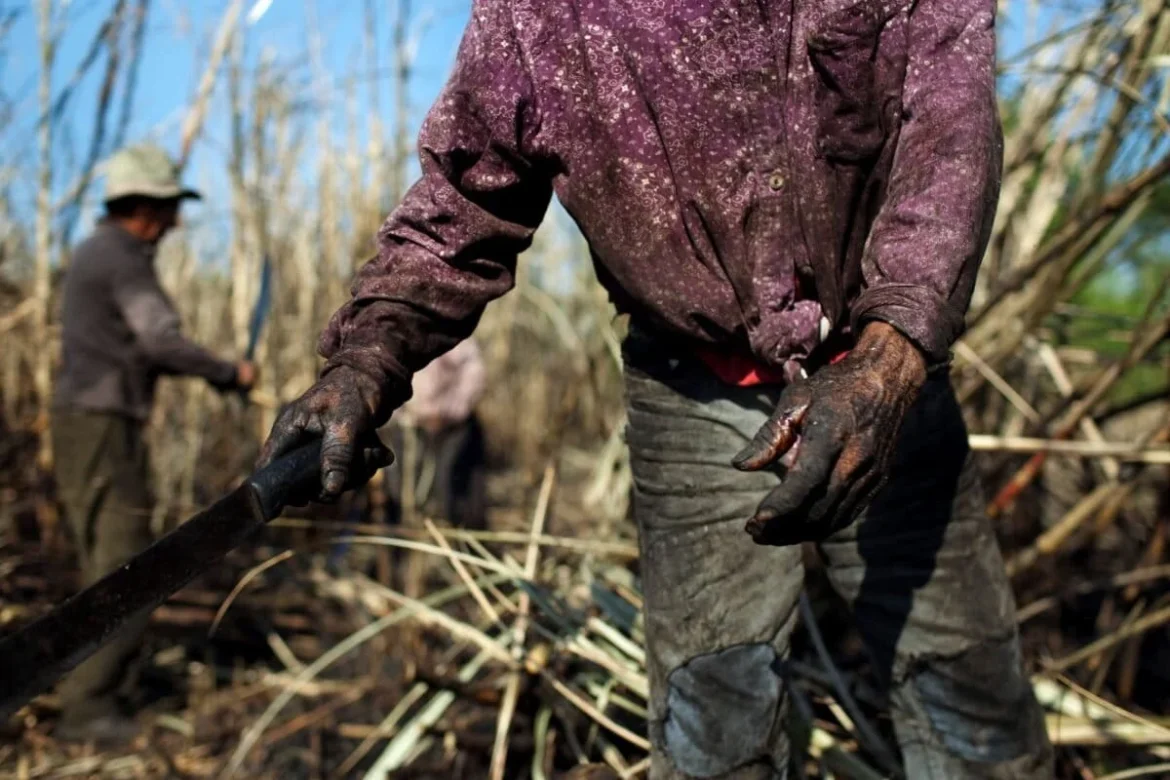
The Inter-American Commission on Human Rights (IACHR) has formally referred a landmark case to the Inter-American Court of Human Rights, marking a significant escalation in the struggle for land rights for 14 Maya Q’eqchi’ communities in Guatemala’s Alta Verapaz region. This legal action, initiated on September 17 and publicly announced on October 28, seeks to hold the Guatemalan state accountable for the systematic forced eviction of Indigenous populations to facilitate the expansion of industrial-scale sugarcane plantations. The case represents a critical test for international human rights law, highlighting the tension between corporate agricultural interests and the ancestral land rights of Indigenous peoples who have occupied these territories for centuries.
A History of Dispossession and Conflict
The conflict stems from a systemic failure by the Guatemalan state to provide legal security of tenure to the Maya Q’eqchi’ people. While these communities have maintained a presence in the Alta Verapaz region for generations, their lack of formal land titles became a point of vulnerability starting around 2005. During this period, private agricultural companies began aggressive land acquisition strategies, purchasing territory that had been under traditional Indigenous stewardship.
The absence of clear land documentation created a legal vacuum that the state failed to mediate in good faith. Instead of protecting the rights of the long-term inhabitants, the government facilitated the consolidation of land for commercial interests. By 2011, the situation reached a breaking point. Following years of localized protests and resistance by the communities, a regional court authorized the mass eviction of the 14 communities. The state justified these actions under the guise of maintaining order and promoting economic development, arguing at the time that the illegal occupation of the land posed a threat to the country’s governability.
Chronology of Escalation
The trajectory of the conflict is marked by a series of events that the IACHR now characterizes as severe human rights violations:
- 2005: Private agricultural firms begin systematic land acquisition in Alta Verapaz, targeting areas traditionally occupied by the Maya Q’eqchi’.
- 2011: A court ruling authorizes the eviction of 14 Indigenous communities, setting the stage for state-led removal operations.
- May 2013: A particularly violent eviction occurs at the Río Polochic farm in Panzós, resulting in 95 families being displaced and five individuals suffering gunshot wounds during the confrontation.
- 2013–2015: Large-scale conversion of ancestral lands into monoculture sugarcane plantations commences, leading to the destruction of traditional subsistence crops, including maize, rice, and beans.
- September 17, 2024: The IACHR submits the formal referral to the Inter-American Court of Human Rights, seeking reparations and state accountability.
The Human and Environmental Cost of Monoculture
The IACHR’s submission to the Court underscores that the displacement was not merely a matter of property rights, but a direct attack on the food sovereignty and cultural survival of the Maya Q’eqchi’. The transition from subsistence farming to industrial sugarcane cultivation has caused extensive environmental degradation. The loss of traditional milpa—the complex agricultural system that produces corn, beans, and squash—has fundamentally undermined the nutritional status of the displaced families.
According to the Commission, the state’s failure to conduct rigorous environmental impact studies before greenlighting these massive agricultural projects allowed for the destruction of vital ecosystems. Furthermore, the lack of prior consultation, a requirement under the International Labour Organization’s Convention 169—which Guatemala has ratified—renders the land seizure legally and ethically suspect. The state failed to recognize the historical occupation of the land, choosing instead to prioritize the immediate economic output of the sugar industry over the health and human rights of its citizens.

Violations of Due Process and Excessive Force
The IACHR’s filing highlights a pattern of "disproportionate use of force" during the evictions. The 2013 incident in Panzós serves as a primary example of the state’s reliance on law enforcement to resolve land disputes rather than administrative or judicial mediation. The use of firearms against civilians, including women and children, during these operations constitutes a gross violation of international standards regarding the management of public order.
Beyond the physical violence, the Commission points to a broader systemic failure: the denial of the right to food. By dismantling the communities’ ability to cultivate their own crops, the state directly contributed to a public health crisis characterized by food insecurity and the loss of traditional medicinal resources. The IACHR contends that the state’s duty to ensure the "right to adequate nutrition" was completely abandoned in favor of private commercial gain.
Legal Implications and Demands for Reparation
The case now rests with the Inter-American Court of Human Rights, which possesses the authority to issue binding rulings on member states. If the Court rules against Guatemala, the state will be legally obligated to comply with a series of remedial measures. The IACHR has requested that the Court order:
- Restitution: A guaranteed "safe return" for the 14 communities to their ancestral lands.
- Infrastructure and Security: The state must provide access to clean drinking water, adequate housing, and food security infrastructure to support the returning populations.
- Land Tenure Formalization: A mandatory requirement for the state to formally demarcate the ancestral territory and grant collective land titles, ensuring the communities are protected from future encroachment.
- Legal Reform: The development of a comprehensive legal framework that acknowledges and protects ancestral rights within the Guatemalan judicial system to prevent similar conflicts from emerging elsewhere in the country.
Broader Impact and Regional Context
This case is part of a larger trend of land conflicts across Latin America, where Indigenous groups are increasingly challenging the state’s prioritization of extractivist and agro-industrial projects. The result of this litigation will likely set a significant precedent for how the Inter-American system handles land disputes involving multinational corporations and the state.
Observers note that the Guatemalan government’s previous rhetoric regarding the "illegality" of the communities’ presence is now being challenged by the legal reality of the American Convention on Human Rights. The court’s potential ruling could force a re-evaluation of how property rights are granted in Guatemala, potentially empowering other communities facing similar threats from palm oil, mining, and sugarcane interests.
For the Maya Q’eqchi’, the road to justice has been long, spanning nearly two decades of displacement and economic hardship. While the Inter-American Court has yet to set a date for proceedings, the referral itself acts as a formal recognition of the grievances that have been ignored at the domestic level. The success of this case would not only provide a measure of justice for the 14 communities in Alta Verapaz but would also serve as a stark warning to states that the rights of Indigenous peoples cannot be sacrificed for the sake of industrial expansion.
Conclusion
The referral by the IACHR brings the plight of the Maya Q’eqchi’ to the highest level of international scrutiny. As the Inter-American Court prepares to deliberate, the eyes of the international community remain focused on Guatemala’s response. Whether the state will continue to defend the actions of the past or commit to a process of truth, reconciliation, and reparations remains to be seen. What is clear, however, is that the era of unchallenged land dispossession in the name of development is facing a rigorous and necessary legal reckoning. The outcome of this case will undoubtedly shape the landscape of Indigenous land rights in the region for years to come.
