The proposal, which emerged during the Republican National Committee’s recent midterm convention, has ignited a fierce debate regarding the boundaries of fiscal policy and the long-term sustainability of the United States’ financial health. As the nation grapples with a national debt that has officially surpassed the $40 trillion threshold, the suggestion of a massive direct-cash infusion into the economy has prompted immediate reactions from financial experts, market analysts, and political observers.
The Genesis of the Dividend Proposal
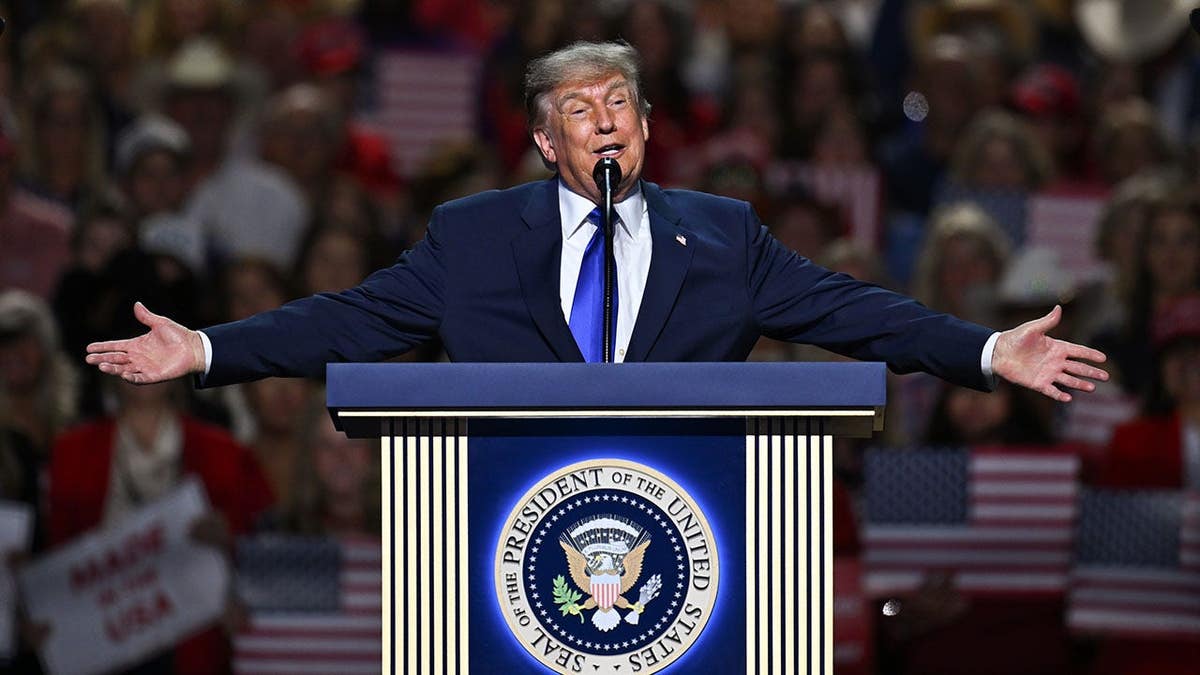
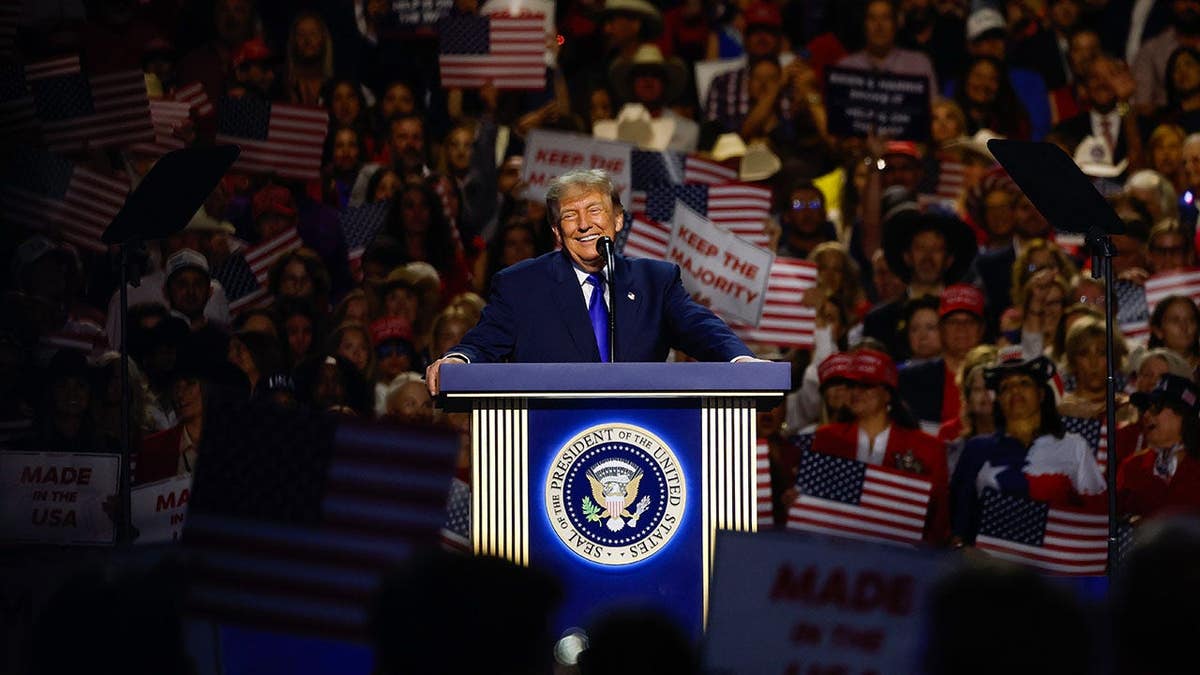
The concept of a "national dividend" was unveiled by former President Donald Trump during a keynote address at the RNC convention. According to the proposal, the federal government would distribute $5,000 to every U.S. adult, contingent upon the electoral success of the Republican Party in the upcoming midterms.
Vice President JD Vance, defending the plan on Fox News, clarified that the funding mechanism for such a payout would rely heavily on tariff revenue collected by the administration. The administration maintains that by prioritizing domestic manufacturing and imposing aggressive trade barriers, the government can accumulate the necessary capital to return a portion of that revenue to the middle class. However, the disconnect between projected tariff revenue and the actual cost of the program remains a central point of contention for fiscal policy analysts.
Financial Viability and Mathematical Discrepancies
To distribute $5,000 to approximately 245 million U.S. adults, the Treasury would require roughly $1.25 trillion. Erica York, a senior economist at the Tax Foundation’s Center for Federal Tax Policy, noted that current annual tariff revenues hover around $125 billion—a figure that represents only one-tenth of the total funding required to fulfill the promise.
"If you are attempting to fund a $1.25 trillion expenditure with a revenue stream that yields $125 billion annually, you are facing a massive structural shortfall," York explained. "The remaining $1.1 trillion would necessarily have to be financed through the issuance of new government debt."
If such a measure were implemented, the federal deficit—currently standing at approximately $1.8 trillion—would surge to an estimated $3 trillion. This expansion would occur at a time when the federal government is already struggling with the interest payments on existing debt, which have recently overtaken defense and Medicare spending in the federal budget.
Economic Implications: The Inflationary Spiral
The primary concern among macroeconomic experts is the potential for a repeat of the inflationary cycle observed during the COVID-19 pandemic. The federal stimulus packages, while intended to support consumer demand during economic lockdowns, are widely cited by economists as a contributing factor to the 40-year high in consumer prices recorded in June 2022.
A cash injection of $5,000 per adult would likely trigger an immediate, significant surge in consumer spending. In an economy where inflation is already running at 3.3% annually—well above the Federal Reserve’s 2% target—the introduction of such liquidity could overwhelm supply chains and further drive up the cost of essential goods.
Research from the Federal Reserve Bank of St. Louis indicates that fiscal policy interventions during the pandemic-era lockdowns were instrumental in creating a demand-supply imbalance. Economists warn that repeating a similar policy while the economy is not in a recessionary state would be counterproductive, potentially forcing the Federal Reserve to maintain higher interest rates for longer, which would further squeeze borrowing costs for American households.
Reaction from Financial Markets and Fiscal Hawks
The announcement has sent ripples of concern through financial markets. Investors and bondholders are increasingly sensitive to the federal government’s fiscal trajectory. With the national debt exceeding $40 trillion, the introduction of a program that would significantly widen the deficit is seen by many as a threat to the stability of the U.S. Treasury market.
"The bond market is already nervous about the current level of national debt," noted Heather Long, chief economist at the Navy Federal Credit Union. "If the government signals a willingness to ignore fiscal constraints, investors will demand higher yields to compensate for the increased risk. This would lead to higher borrowing costs for mortgages, auto loans, and business investments."
Maya MacGuineas, president of the Committee for a Responsible Federal Budget, categorized the plan as "fiscally dangerous." In a formal statement, the organization emphasized that the current economic environment requires fiscal discipline rather than expansionary measures that would worsen the inflationary outlook. "It is difficult to justify borrowing over a trillion dollars to distribute cash when our debt-to-GDP ratio is at historic highs," she added.
The Administration’s Defense
Despite the criticism from the broader economic community, the Trump administration remains steadfast. White House spokesperson Davis Ingle defended the proposal by framing it within the context of the administration’s broader economic agenda, which includes the reduction of prescription drug prices, the negotiation of trade agreements, and the stimulation of domestic manufacturing.
"The naysayers have consistently doubted President Trump," Ingle stated. "Whether it was the creation of the Trump Accounts, the move to end taxes on tips, or the successful reshoring of manufacturing, the administration has a track record of proving that conventional wisdom can be wrong."
Regarding the implementation of the plan, President Trump suggested in a recent interview with CBS News Texas that he does not believe the proposal would require explicit congressional approval, though legal and constitutional scholars note that the power of the purse rests squarely with the Legislative Branch under Article I of the U.S. Constitution.
Broader Policy Context: Addressing the Cost of Living
The $5,000 dividend is part of a larger, multifaceted strategy to address the cost-of-living crisis, which polling consistently identifies as the top concern for voters ahead of the November elections. Alongside the dividend, the administration has proposed eliminating credit card swipe fees, a move they claim could save the average American family approximately $1,200 annually.
While the dividend garners the most headlines due to its immediate nature, other proposals in the Republican platform, such as energy independence initiatives and tax code reforms, are designed to address the systemic causes of inflation. However, the contradiction between proposed deficit-expanding cash transfers and the stated goal of lowering inflation remains the central point of friction for analysts.
Chronology of the Debate
- Mid-2026: National debt reaches the $40 trillion milestone, prompting renewed debate over federal spending.
- September 2026 (Wednesday): President Trump proposes the $5,000 dividend check during the RNC midterm convention.
- September 2026 (Thursday): Vice President JD Vance clarifies the funding mechanism on Fox News, citing tariff revenue.
- September 2026 (Thursday): Economists from the Tax Foundation and the Committee for a Responsible Federal Budget release analysis warning of a $3 trillion deficit impact.
- September 2026 (Friday): CPI data release is anticipated to show inflation at 3.3%, intensifying the discourse on the potential impact of further fiscal stimulus.
Conclusion
The proposal for a $5,000 dividend stands as a polarizing element of the current political cycle. While supporters view it as a direct and effective way to provide immediate relief to families burdened by high prices, critics argue that the long-term consequences—specifically regarding inflation and the national debt—would cause far more damage to the average consumer than the benefit of the initial check. As the midterm elections approach, the debate over this policy will likely serve as a focal point for discussions on the future of U.S. fiscal governance and the role of the government in managing household economic welfare. The ultimate feasibility of the plan will depend not only on electoral outcomes but also on the ability of the administration to reconcile such a massive expenditure with the harsh realities of the current federal budget.