The pursuit of crystal-clear audio during phone calls has become paramount in our increasingly connected world. While nearly all wireless earbuds boast integrated microphones, their performance in replicating natural voice quality, especially in noisy environments, varies dramatically. This comprehensive guide delves into the top contenders for earbuds that excel not only in delivering exceptional sound for music but also in ensuring your voice is heard clearly on calls, free from the muffling effect of a distant microphone. Through rigorous testing in diverse acoustic settings, from quiet rooms to bustling city streets, this report identifies devices that effectively isolate vocals from ambient distractions, including wind and traffic.
The Evolving Landscape of Earbud Communication
The integration of microphones into wireless earbuds, initially a secondary feature to music playback, has evolved into a primary consideration for many consumers. The market, once dominated by a few key players, is now a vibrant ecosystem with manufacturers continuously innovating to improve microphone technology, noise cancellation, and overall audio fidelity. This surge in competition means users now have a wider array of options, but it also necessitates a deeper understanding of what constitutes truly superior call quality. Factors such as microphone placement, digital signal processing (DSP) algorithms, and active noise cancellation (ANC) capabilities play a crucial role in determining how well an earbud can transmit your voice.
Rigorous Testing Methodology: Beyond the Music
To compile this list, a meticulous testing process was undertaken, focusing on the critical aspect of voice transmission. Each earbud was subjected to voice recording in two distinct scenarios: a controlled, quiet environment and a dynamic, noisy urban setting simulating a busy street. This dual approach was crucial to identify devices that maintain clarity under duress. The recordings were then analyzed to assess the intelligibility of the voice, the degree of background noise reduction, and the overall naturalness of the vocal reproduction. While recording calls directly can introduce variables like cellular network stability, recording individual voice samples provides a more consistent and objective measure of microphone performance in isolation. Beyond call quality, other vital functionalities were evaluated, including the speed and reliability of device pairing, the effectiveness of active noise cancellation for ambient sound reduction during calls, battery life for extended conversations, and the intuitiveness of onboard controls. Ultimately, a balance was sought between exceptional call quality and the enjoyable playback of music, acknowledging that most users employ their earbuds for a multitude of audio experiences.
Key Design Elements Influencing Call Performance
A recurring observation during testing was the performance differential between earbuds with a stemmed design, such as Apple’s AirPods, and those with a more compact, pod-shaped form factor. Stemmed designs generally exhibited superior microphone performance for calls. This is largely attributable to the physical placement of the microphone closer to the wearer’s mouth, a fundamental advantage in capturing clearer audio signals and minimizing ambient interference. While not an absolute rule, this design characteristic emerged as a significant indicator of potential call quality.

Top Earbud Picks for Superior Call Quality
Anker Soundcore Liberty 5 Pro: The Undisputed Champion for Noise Isolation
Quick Summary: The Anker Soundcore Liberty 5 Pro earbuds set a new benchmark for call quality, demonstrating unparalleled ability to isolate voice from even the most challenging ambient noise.
Pros: Exceptional noise cancellation for calls, top-tier voice clarity, innovative touchscreen charging case.
Cons: Music audio quality, while good, is slightly surpassed by some competitors; the earbud shape can be perceived as somewhat bulky.
Anker’s Soundcore Liberty 5 Pro earbuds have emerged as the standout performer in call quality, particularly in environments that typically challenge audio devices. During rigorous testing on a busy street, these earbuds demonstrated a remarkable capacity to reduce background noise to a mere whisper. Even on a blustery day, the impact of wind and traffic was significantly mitigated, allowing the recorded voice to remain remarkably clear. While a subtle degradation in vocal naturalness was noted in such extreme conditions, the effectiveness in suppressing external distractions was unprecedented among the tested models. In quieter settings, the voice reproduction was naturally clear, but it is in the presence of significant background noise that the Liberty 5 Pro truly distinguishes itself, making it the clear leader for call quality across a broad spectrum of tested earbuds.
Beyond their impressive microphone array, the Liberty 5 Pro offers unique features, including a responsive touchscreen on the charging case that allows for quick adjustments to noise-canceling settings. Although the earbud’s physical profile is somewhat substantial, they maintain a comfortable fit and do not protrude excessively. The audio quality for music is robust and enjoyable across various genres, though audiophiles might find slightly more nuanced detail and crispness in select competing models. However, for the primary objective of clear and intelligible phone conversations, the Liberty 5 Pro is an exceptional choice.
Nothing Ear: Design Innovation Meets Reliable Communication
Quick Summary: Nothing’s Ear earbuds offer a distinctive aesthetic coupled with robust features, including customizable controls, effective ANC, and dependable microphones for calls, serving as a compelling alternative to AirPods for Android users.

Pros: Striking and unique design, strong alternative to AirPods for Android users, intuitive pinch controls.
Cons: The charging case is somewhat large; a wider variety of color options would be beneficial.
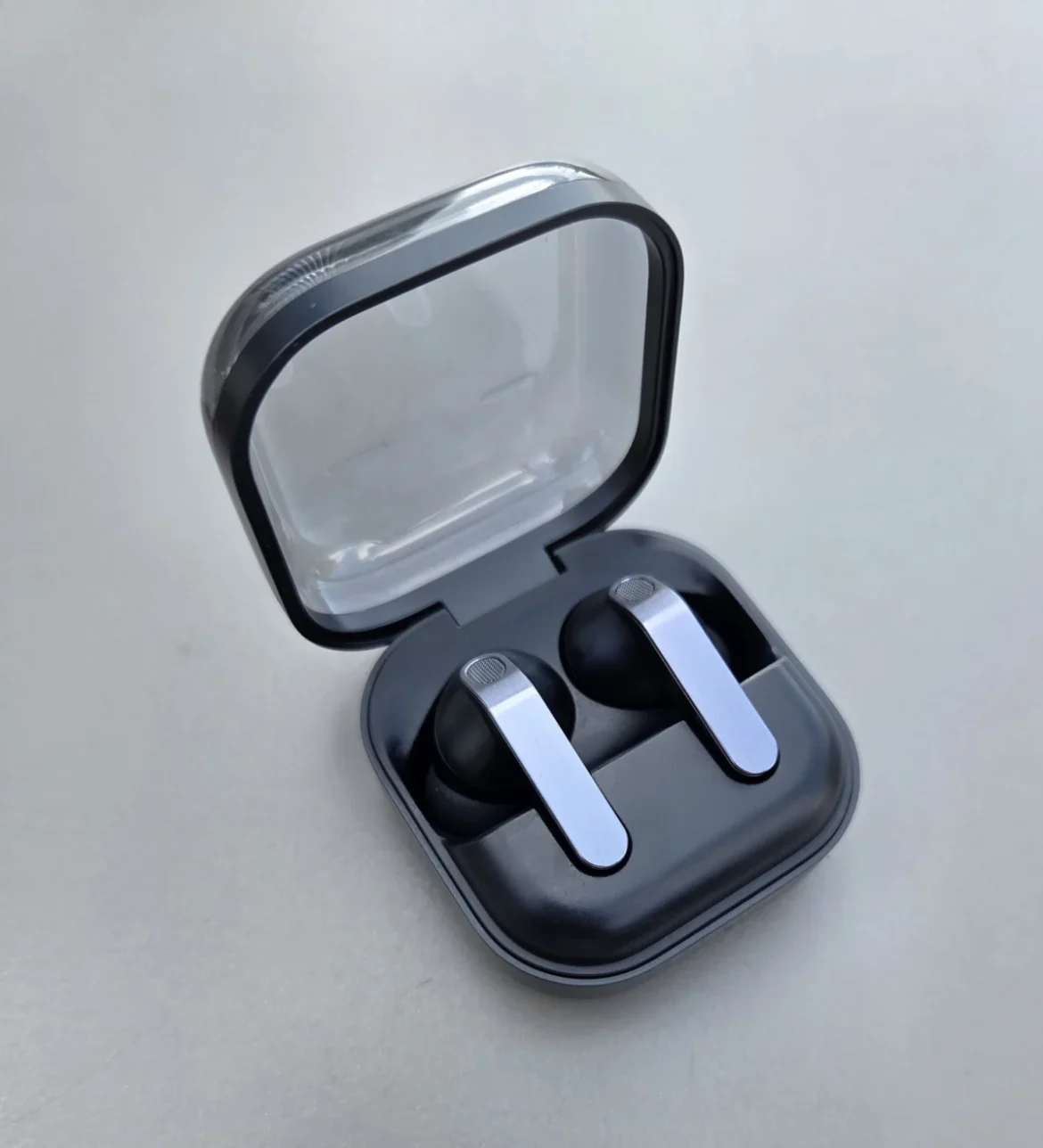
Nothing has carved a niche in the consumer electronics market with its transparent designs and unconventional features, presenting a refreshing contrast to the often-uniform aesthetic of other brands. The sound quality of their earbuds, including the Nothing Ear, lives up to the visual appeal. While not entirely revolutionary, the Ear and its more budget-friendly sibling, the Ear (a), share a similar stemmed design and intuitive pinch controls reminiscent of Apple’s AirPods. In comparative call quality tests, the more premium Ear model consistently outperformed the Ear (a), highlighting the nuances in their respective microphone implementations.
The Ear model performed admirably in call quality assessments, effectively minimizing background noise while preserving vocal clarity. Although Nothing has introduced newer iterations, including one with a microphone integrated into the charging case, the core Ear model remains a strong contender, with its additional features not significantly justifying a higher price point for many users. The active noise cancellation is commendably effective, and the ability to customize EQ settings and controls enhances the user experience. Furthermore, features like Google Fast Pair and multipoint connectivity, allowing simultaneous connection to two devices, facilitate seamless transitions between phone calls and laptop audio, adding to their practicality for professionals.
Apple AirPods Pro 3: The Seamless iOS Ecosystem Choice
Quick Summary: For users entrenched in the Apple ecosystem, the AirPods Pro 3 continue to offer a reliable and feature-rich experience, boasting excellent noise cancellation and a suite of convenient functionalities for calls.
Pros: Outstanding active noise cancellation, innovative features like an integrated heart-rate sensor for workouts.
Cons: Less optimized for non-iOS devices, consistently available only in white.

It is no surprise that Apple’s AirPods Pro 3 emerge as the premier choice for iOS device users, offering effortless pairing and superior call quality. The latest iteration of the AirPods Pro delivers exceptional active noise cancellation, a crucial asset for maintaining clear conversations in noisy environments. The Adaptive ANC technology intelligently adjusts to the user’s surroundings, while the voice isolation feature effectively filters out disruptive background sounds.
The user interface is intuitively designed, with simple pinch gestures to answer or decline calls. Apple has notably improved the battery life of the earbuds themselves, extending it from six to eight hours, a significant advantage for prolonged conversations. While the battery life of the charging case has seen a slight decrease, the extended endurance of the earbuds is arguably more critical for daily usage. Beyond their core communication and audio capabilities, the AirPods Pro 3 incorporate unique features such as a heart-rate sensor for fitness tracking and immersive audio experiences with spatial audio and head tracking. Additionally, they can function as a hearing aid for individuals with mild to moderate hearing loss, underscoring their versatility.
Samsung Galaxy Buds4 Pro: Android’s Integrated Powerhouse
Quick Summary: For Samsung device owners, the Galaxy Buds4 Pro offer an integration experience akin to what iPhone users expect from AirPods, often with superior audio fidelity for music.
Pros: Comfortable and secure fit, remarkably clear call quality, exceptional audio performance for music playback.
Cons: Active noise cancellation, while competent, is not industry-leading; some background noise can be detected during calls in very loud settings.
Samsung’s latest flagship earbuds, the Galaxy Buds4 Pro, represent a compelling audio solution, even as the company draws inspiration from Apple’s design philosophy with a stemmed form factor and similar pinch controls. Like the AirPods, the Pro model incorporates in-ear tips for a secure seal, differentiating it from the more basic hard plastic tips found on Samsung’s budget offerings.

In terms of call quality, the voice transmission from the Galaxy Buds4 Pro is natural and clear, often sounding as if recorded directly via a high-quality microphone rather than through earbuds. However, performance does degrade in significantly noisy environments. While the earbuds effectively capture and clarify the wearer’s voice, they also tend to pick up a considerable amount of ambient street noise in such scenarios. Samsung’s active noise cancellation, while good, does not quite match the efficacy of competitors like Apple’s AirPods. However, the Galaxy Buds4 Pro often edge out the competition in sound quality, delivering deep, impactful bass without compromising the mid and high frequencies. For users with a Samsung smartphone, these earbuds are an excellent companion, though an awareness of potential background noise in loud settings is warranted.
Sony WF-1000XM6: Premium Sound and Capable Communication
Quick Summary: Sony’s WF-1000XM6 earbuds excel in active noise cancellation, microphone performance, and overall audio fidelity, making them a top-tier option for discerning users.
Pros: Superb audio quality and noise cancellation, a wealth of advanced features.
Cons: The firm foam eartips may require an adjustment period for some users to achieve an optimal fit.
Sony’s WF-1000XM6 earbuds are consistently recognized among the best-sounding on the market, offering exceptional noise-canceling capabilities. These earbuds feature a pod-shaped design, eschewing the stemmed aesthetic. Their adaptive noise cancellation intelligently adjusts to the surrounding environment, providing an immersive listening experience.
In terms of call quality, the WF-1000XM6 delivers some of the clearest and most natural-sounding voice reproduction among the tested earbuds. Sony attributes this to a combination of dual beamforming microphones designed to focus on vocals, a bone conduction sensor to detect speech, and advanced AI processing for noise reduction. While these earbuds perform best in quiet conditions, their performance on a noisy, windy street remained solid. The voice was discernible, though a slight robotic sibilance and some background noise bleed-through were noted. The primary ergonomic consideration with the WF-1000XM6 is the stiffness of the foam eartips, which may present a challenge for some users in achieving a perfectly secure fit. Nevertheless, for those seeking dependable noise-canceling earbuds that deliver both outstanding sound and reliable call quality, the Sony WF-1000XM6 is a highly recommended choice.

Technics EAH-AZ100: Uncompromised Audio and Clear Calls
Quick Summary: The Technics EAH-AZ100 earbuds stand out for their exceptional comfort, superior audio quality, and impressive voice calling performance, positioning them as a premium option in the market.
Pros: Comfortable, low-profile fit, exceptional audio reproduction, compact charging case.
Cons: Active noise cancellation performance is only adequate; the price point is considerable.
The Technics EAH-AZ100 earbuds not only rank among the best-sounding on the market but also offer remarkable comfort and effective active noise cancellation. They are a rare example of non-stemmed earbuds that deliver outstanding microphone quality. Equipped with a monaural and MEMS microphone system, complemented by Technics’ proprietary Voice Focus AI technology, these earbuds are engineered to minimize background noise during conversations.
During testing in simulated environments, the EAH-AZ100 demonstrated excellent performance. While a slight decrease in voice quality was observed in noisy conditions, the earbuds effectively suppressed ambient sound to near imperceptibility in recordings. In quiet settings, the voice sounded clear, natural, and free from artificial distortion. For consumers seeking a premium earbud experience that also excels in voice communication, the Technics EAH-AZ100 is a strong contender, though its premium pricing may be a factor for some potential buyers. The combination of a comfortable, discreet fit and high-fidelity audio makes them a versatile choice for both professional and personal use.