
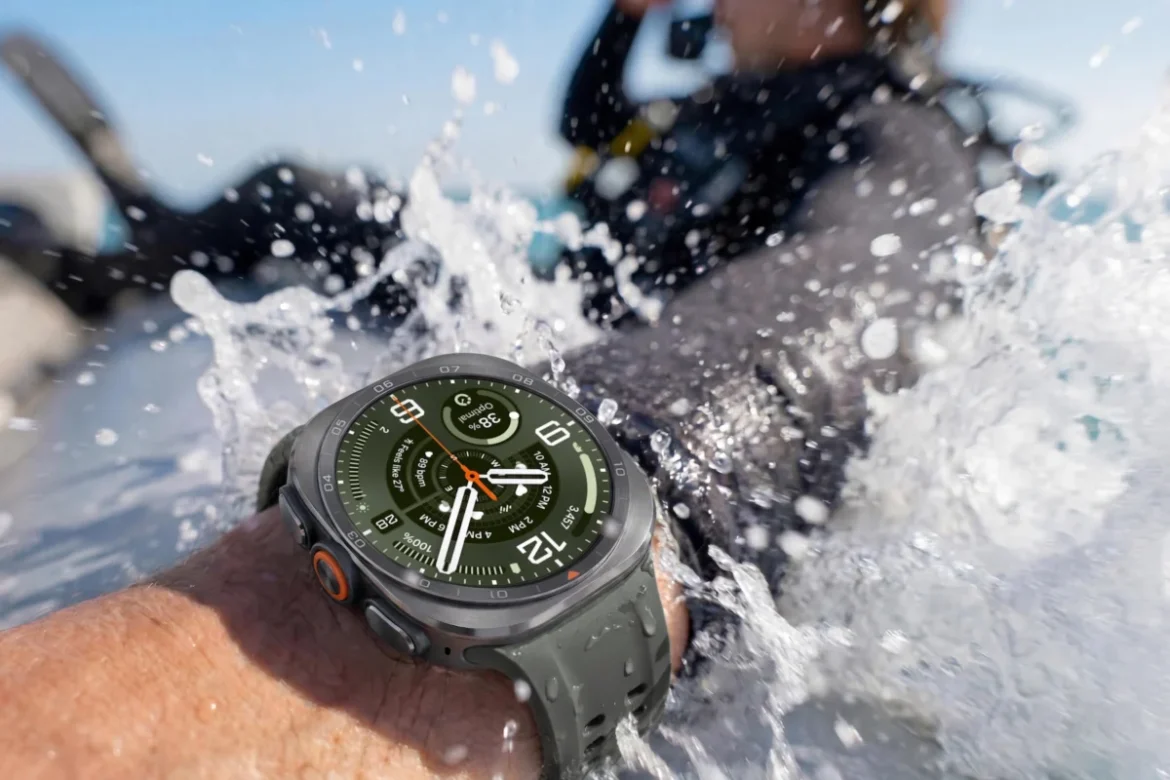
For years, consumers shopping for a high-end wearable have faced a distinct bifurcation in the smartwatch marketplace. On one side, lifestyle-oriented devices—led by heavyweights like the Apple Watch and Samsung’s own Galaxy Watch series—have dominated daily tracking. These traditional smartwatches prioritize seamless smartphone integration, advanced cellular connectivity, stylish form factors, and general wellness applications such as daily step tracking, heart rate monitoring, and smartphone notifications. On the other side of the spectrum, dedicated outdoor and fitness watches, most notably championed by brands like Garmin and Polar, have catered to endurance athletes, mountaineers, and hardcore adventurers. These specialized instruments trade away sleek aesthetics and deep messaging ecosystems for robust physical durability, weeks of battery life, offline topographical mapping, and granular, sport-specific metrics.
Bridging this long-standing divide has become the ultimate holy grail for consumer technology manufacturers. With the official market release of the Samsung Galaxy Watch Ultra2, the South Korean tech conglomerate has introduced a device specifically engineered to dismantle the barrier between daily luxury and extreme outdoor utility. Launched globally in August, the Galaxy Watch Ultra2 arrives as Samsung’s most ambitious wearable to date, combining high-grade materials, groundbreaking display technology, extended battery longevity, and professional-grade athletic telemetry into a single unified package.
Evolution of the Ultra Lineage: A Chronological Overview of Samsung’s Wearable Ambitions
To understand the significance of the Galaxy Watch Ultra2, one must examine the trajectory of Samsung’s wearable division over the past half-decade. Historically, Samsung’s Galaxy Watch lineup focused heavily on circular designs, rotating bezels, and the Tizen operating system before pivoting to Wear OS in partnership with Google. While models like the Galaxy Watch4, Watch5, and Watch6 successfully captured the mainstream consumer market, they routinely lagged behind dedicated sports watches in extreme durability and stamina.
The turning point arrived when consumer demand shifted toward rugged, adventure-ready hardware popularized by extreme sports watches. Recognizing this gap, Samsung introduced its initial "Ultra" concept to compete directly with specialized endurance gear. Building upon the foundational lessons learned from those early rugged iterations, the Galaxy Watch Ultra2 represents a refined, mature second-generation product. Every structural component, software algorithm, and hardware specification has been rigorously recalibrated to withstand environments that would traditionally destroy a standard lifestyle smartwatch.
Architectural Reinforcement and Materials Science
At first glance, the Galaxy Watch Ultra2 immediately commands attention through its overhauled physical construction. Eschewing the more fragile aluminum and standard stainless-steel chassis common in lifestyle watches, Samsung has crafted the Ultra2 using aerospace-grade titanium. This material choice delivers a paradoxical benefit: it simultaneously enhances structural rigidity while significantly reducing the overall weight of the device. This ensures that the watch remains comfortable during extended multi-hour endurance sessions, preventing the wrist fatigue often associated with heavier, bulky chronographs.
To protect the internal components and the vibrant display from harsh impacts, scratches, and pressure extremes, Samsung integrated a synthetic sapphire crystal glass lens. Sapphire crystal is second only to diamond in terms of surface hardness, making the Galaxy Watch Ultra2 virtually impervious to the scuffs and abrasions frequently encountered during rock climbing, trail running, and obstacle course racing. Furthermore, the device’s structural housing meets rigorous military-grade durability standards (MIL-STD-810H), ensuring operational capability in sub-zero alpine temperatures and sweltering desert climates alike.
Pushing Display Boundaries: The 5,000-Nit AMOLED Breakthrough
One of the most remarkable engineering feats of the Galaxy Watch Ultra2 lies in its display technology. Outdoor visibility has historically been a significant pain point for smartwatch users navigating bright, direct sunlight. Traditional displays often wash out, forcing users to shade their screens with a hand to read incoming notifications or map coordinates.
Samsung has decisively solved this issue by outfitting the Galaxy Watch Ultra2 with an advanced AMOLED screen capable of reaching a staggering peak brightness of 5,000 nits. To contextualize this achievement, industry competitors such as flagship Apple Watch models and high-end Garmin Fenix iterations typically top out at approximately 3,000 nits of peak brightness. The extra 2,000 nits afforded by Samsung’s new panel ensures absolute legibility, even when users are scaling high-altitude glaciers under unforgiving midday sunlight or navigating deep-sea environments where ambient light diminishes rapidly.
Overcoming the Stamina Hurdle: Battery Enhancements
Perhaps the most frequent criticism leveled against modern lifestyle smartwatches is their inadequate battery longevity. While dedicated sports watches can often run for weeks on a single charge, mainstream smartwatches typically require daily replenishment, rendering them impractical for multi-day backcountry expeditions.

Recognizing that an adventure watch is entirely useless if its battery dies miles away from civilization, Samsung engineered a substantial power upgrade for the Ultra2. The internal battery capacity has been increased significantly from the 590 mAh cell found in its predecessor to a robust 800 mAh power unit. This hardware enlargement, paired with more efficient processor architecture and aggressive software power-management algorithms, allows the Galaxy Watch Ultra2 to maintain a continuous charge for up to four full days under normal operational conditions. For travelers, campers, and endurance athletes, this leap in battery longevity eliminates the constant anxiety of carrying proprietary charging pucks and external battery banks on short trips.
Specialized Outdoor and Professional Athletic Capabilities
Beyond its physical durability and display supremacy, the Galaxy Watch Ultra2 separates itself from standard smartwatches through a suite of specialized, activity-specific software applications. Samsung has looked beyond basic step counts and standard running metrics to incorporate tools tailored for niche, high-intensity disciplines.
For aquatic enthusiasts and scuba divers, the Ultra2 includes an EN13319-certification—an internationally recognized standard for diving accessories. In a move that signals serious intent in the watersports market, Samsung partnered with Mares, a globally renowned leader in diving equipment and technology, to integrate a fully functional dive computer directly into the wrist-worn interface. This built-in system provides divers with real-time underwater depth tracking, dive duration, safety stop reminders, and extensive physiological telemetry while submerged.
For land-based adventurers, the device features enhanced multi-band GPS tracking designed to maintain pinpoint positional accuracy even in dense urban canyons, thick forest canopies, or steep mountain passes where satellite signals typically degrade or reflect falsely.
Comprehensive Health Monitoring and Advanced Analytics
While the Galaxy Watch Ultra2 excels in rugged outdoor environments, it does not abandon the sophisticated everyday health monitoring ecosystem that made Samsung a household name. The device serves as a 24/7 biometric sentinel, utilizing an upgraded array of optical and electrical sensors to gather deep health insights.
Among the standout health additions is a comprehensive "heart score" metric that aggregates various cardiovascular data points to provide users with an overarching evaluation of their daily cardiovascular readiness and stress recovery. Furthermore, the watch features highly accurate stress-level reporting and advanced sleep tracking analytics, including specialized detection capabilities for sleep apnea—a potentially serious medical condition often going undiagnosed in otherwise healthy individuals. By pairing these clinical-grade health insights with everyday smartphone notifications, calendar reminders, and contactless payment capabilities, Samsung ensures that the watch transitions effortlessly from the backcountry trail to the corporate boardroom.
Market Implications and Competitive Analysis
The release of the Galaxy Watch Ultra2 arrives at a critical juncture in the consumer technology sector. For years, manufacturers operated under the assumption that consumers were willing to own multiple devices for different aspects of their lives—a sleek watch for the office and a rugged Garmin or Suunto for the weekend marathon.
By successfully packing extreme-weather durability, a 5,000-nit display, a dedicated dive computer, and four-day battery life into a chassis sophisticated enough for formal attire, Samsung is challenging that paradigm. Industry analysts suggest that this all-in-one approach could pressure competing tech giants to rethink their hardware strategies, forcing a convergence where lifestyle features and extreme durability are no longer mutually exclusive.
Availability, Pricing, and Consumer Incentives
The Samsung Galaxy Watch Ultra2 is currently available for purchase through official retail channels, led by Samsung’s direct-to-consumer digital storefront. To incentivize early adoption and ease the transition for consumers upgrading from older hardware architectures, Samsung has rolled out aggressive promotional offerings. Buyers can leverage trade-in programs offering up to $250 in credits for eligible older smartwatches. Additionally, Samsung has introduced bundle incentives, providing a 10% discount on compatible Galaxy Buds wireless earbuds for customers purchasing the ecosystem together.
As the boundaries between lifestyle technology and professional athletic equipment continue to blur, the Galaxy Watch Ultra2 stands as a testament to the rapid pace of wearable innovation, offering consumers a versatile instrument designed to handle virtually any adventure life presents.
