
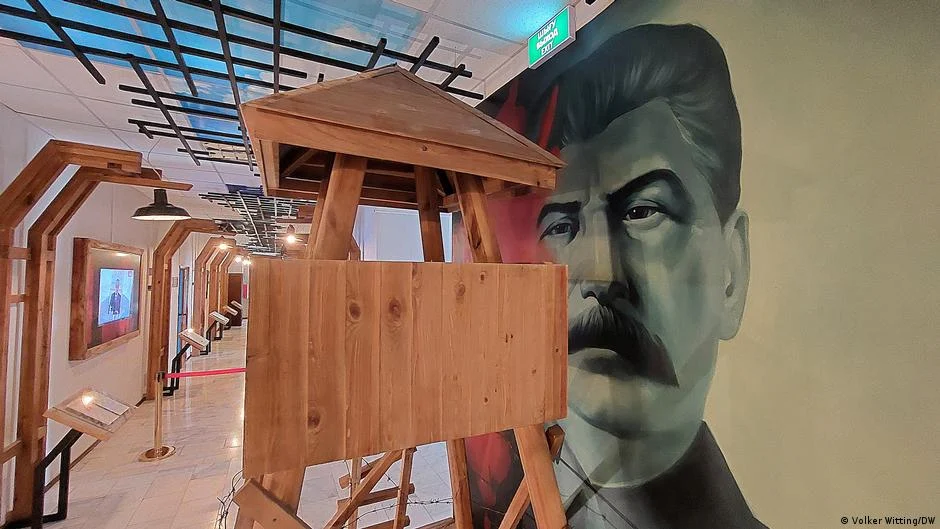
Yunna Kinereish, a 22-year-old public relations student in Astana, occupies a unique space at the intersection of history and identity. As a member of the 223,000-strong Kazakh German community, she represents a generation tasked with bridging the gap between a traumatic ancestral past and a rapidly modernizing Central Asian future. For Kinereish, identifying as a Kazakh German is not merely a label of heritage; it is a conscious effort to preserve the collective memory of a people whose history was forcibly uprooted and scattered across the desolate expanses of the Kazakh steppe.
The Historical Trajectory: From the Black Sea to the Gulag
The presence of Germans in Kazakhstan is not the result of voluntary migration, but rather the consequence of centuries of shifting geopolitical tides. Beginning in the 18th century, the Russian Empire, under Catherine the Great and her successors, actively incentivized German farmers and craftsmen to settle in the fertile lands of the Volga and the Black Sea regions of Ukraine. These communities thrived, maintaining their language, faith, and cultural customs for generations.
However, the onset of World War II fundamentally altered this trajectory. Following the Nazi invasion of the Soviet Union in 1941, the Stalinist regime implemented a policy of collective punishment against ethnic Germans residing within Soviet borders. Fearing that these populations might act as a "fifth column" for the Third Reich, the Soviet state mandated the mass deportation of over one million ethnic Germans.
The logistics of this displacement were catastrophic. Families were given mere hours to pack their belongings before being loaded into cattle cars destined for the harsh climates of Siberia and Kazakhstan. It is estimated that at least 200,000 deportees perished during the transit or in the immediate aftermath due to extreme starvation, exposure to sub-zero temperatures, and the brutal conditions of forced labor.
The Great Terror and the ALZhIR System
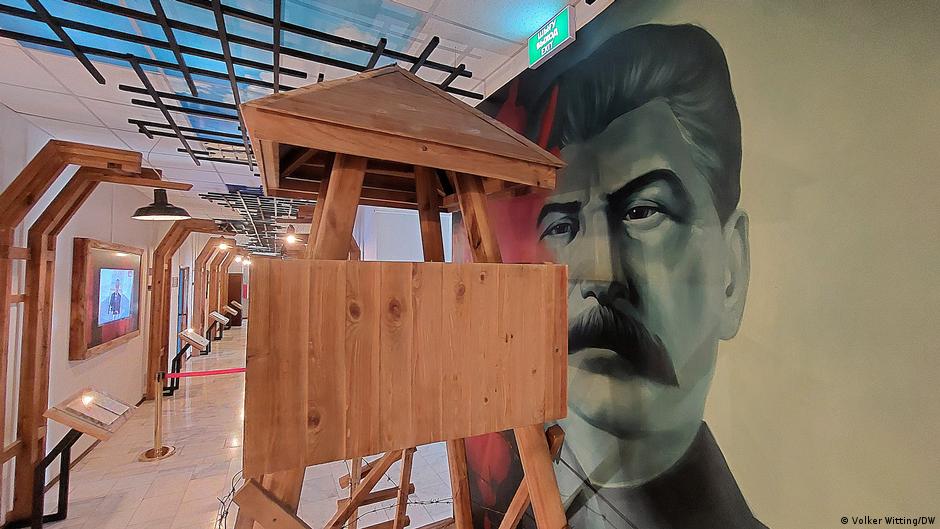
The trauma of the deportation was preceded by the political purges of the 1930s, known as the Great Terror. During this period, the Soviet Union established an extensive network of forced labor camps, with some of the most notorious facilities located in Kazakhstan. Among these was the Akmolinsk Camp for Wives of Traitors to the Motherland (ALZhIR).
ALZhIR was unique within the Gulag system. It was designed specifically to house the female relatives of individuals convicted of political crimes—men deemed "enemies of the people." Throughout its operation, approximately 18,000 women were processed through its gates. Among them were 167 ethnic German women, whose stories reflect the broader tragedy of a population targeted not for their actions, but for their associations and ethnicity.
The physical reality of these camps was defined by the extremes of the Kazakh climate. Temperatures in the region oscillate between 40 degrees Celsius in the summer and -40 degrees Celsius in the winter. Prisoners were expected to maintain high productivity levels in agriculture and embroidery workshops despite minimal rations and primitive shelter. One documented victim, Gertrud Platais, a print worker from Lower Silesia, serves as a representative figure for this era. Arrested in 1938 following the conviction of her husband, she endured nearly two decades of state-imposed deprivation, first at ALZhIR and later in the massive Karaganda Corrective Labor Camp (Karlag), before finally being rehabilitated in 1956.
Karlag: The Economic Engine of Repression
Karlag, which operated from 1931 to 1959, was the crown jewel of the Soviet camp system in Kazakhstan. Spanning an area roughly 22 times the size of New York City, it was not merely a site of confinement but a massive agricultural and industrial complex. The camp system was integrated into the Soviet economy, utilizing forced labor to build infrastructure, mine resources, and farm the vast steppe.
Data from the era indicates that between 1940 and 1950 alone, approximately 10,000 prisoners died within the Karlag complex. The true death toll, however, remains difficult to quantify, as the Soviet administration often failed to maintain precise records of the individuals who succumbed to disease, exhaustion, and state-sanctioned violence.

Contemporary Challenges in Remembrance
Today, the physical remnants of these camps serve as quiet, often overlooked monuments to a brutal era. The ALZhIR museum, located near Astana, features the "Arch of Grief," a steel structure that frames the entry into a history that many in modern Kazakhstan are hesitant to engage with.
Academic researchers, such as anthropologist Katherine M. Erdman of Nazarbayev University, have spent the last decade attempting to map the geography of these camps. Using drone technology and ground-level fieldwork, researchers have found that the very landscape of modern Kazakhstan—its factories, brickworks, and urban foundations—is inextricably linked to the forced labor of the Gulag era.
However, this academic pursuit often meets with resistance. "In many regions, the landscape has been shaped by forced labor," Erdman notes. "Often we’re just met with apathy, or flat-out rejection." This resistance is largely driven by a national desire to move toward a future of economic growth and international integration, leaving the "inglorious" chapters of the past behind. While state-funded institutions like the House of Friendship in Astana, supported by the German government, offer spaces for language learning and historical discourse, there is a notable lack of widespread public engagement.
The Role of Youth: Staging History
For young Kazakh Germans like Yunna Kinereish, the challenge is to make the abstract numbers of the past personal. Through the Wiedergeburt (Revival) Association, she and her peers utilize theater and film to reanimate the stories of their ancestors.
Kinereish’s recent project—a film documenting the lives of German women incarcerated in ALZhIR—is an attempt to provide a human face to the statistics. "It’s not easy for me, because it all touches my heart very deeply," Kinereish explains. "But when I’m on stage, I have to be strong."

This generational effort to "keep history alive" faces significant hurdles. Museums like the one at the former Karlag administration site have been criticized by historians for their "staged" approach, which utilizes melodramatic music and reenactments that some argue detract from the authenticity of the tragedy. Furthermore, the lack of state funding for deep historical research and the prevailing cultural apathy among many young citizens suggest that the memory of the Gulag is at risk of fading as the last survivors pass away.
Implications and Conclusion
The ongoing efforts to document the history of the Kazakh Germans and the Soviet camp system represent a critical tension in Central Asia: the struggle between the national imperative to project a forward-looking, modern state and the moral obligation to address historical trauma.
The implications of this neglect are significant. If the history of the camps is allowed to dissolve into apathy, the lessons regarding the fragility of human rights and the dangers of collective scapegoating are lost. For the Kazakh German community, the preservation of this history is a matter of existential importance. As Kinereish aptly puts it, "It’s important to me that we don’t forget our roots, and that what our forefathers experienced and suffered is passed on."
As Kazakhstan continues its rapid urbanization and economic expansion, the stories of the steppe—the voices of the 18,000 women in ALZhIR and the million prisoners in Karlag—remain a haunting reminder of the cost of total state power. Whether these stories will become a permanent part of the national curriculum or fade into the silent, vast geography of the steppe remains the defining challenge for the next generation of historians and activists in the region.
