
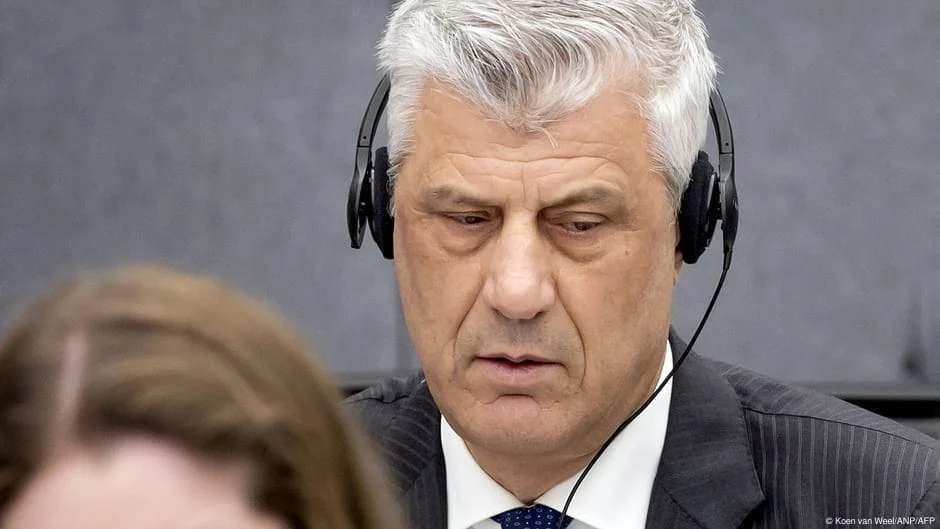
A court in The Hague has delivered a fresh blow to the political legacy of former Kosovo President Hashim Thaci, sentencing him to an additional 17 months in prison for obstructing justice and attempting to influence witnesses during his high-profile war crimes trial. This latest ruling by the Kosovo Specialist Chambers (KSC) compounds the legal crisis surrounding the former Kosovo Liberation Army (KLA) leader, who was already handed a 25-year prison sentence on September 16 for his role in war crimes and crimes against humanity committed during the 1998-1999 Kosovo War.
The conviction follows an indictment from the Specialist Prosecutor’s Office, which alleged that Thaci systematically bypassed detention facility protocols. Prosecutors presented evidence that Thaci provided visitors with sensitive, confidential information regarding protected witnesses, offering specific instructions on how to coerce or influence their testimony to derail the proceedings. The court’s decision also extended to three other high-profile figures: former Kosovo Intelligence Agency head Bashkim Smakaj, former Justice Minister Hajredin Kuci, and associate Fadil Fazliu, all of whom were found guilty of involvement in the obstruction scheme.
A Legacy Under Scrutiny: The Kosovo Specialist Chambers
The Kosovo Specialist Chambers, established in 2015, occupies a unique and controversial space in international law. Created by the Kosovo parliament under heavy diplomatic pressure from the European Union and the United States, the court is legally part of the Kosovo judiciary but sits in The Hague to ensure witness protection and judicial security. Its mandate is narrow but profound: to adjudicate serious allegations of crimes committed by KLA members between 1998 and 2000, a period defined by the struggle for independence from Serbian rule.
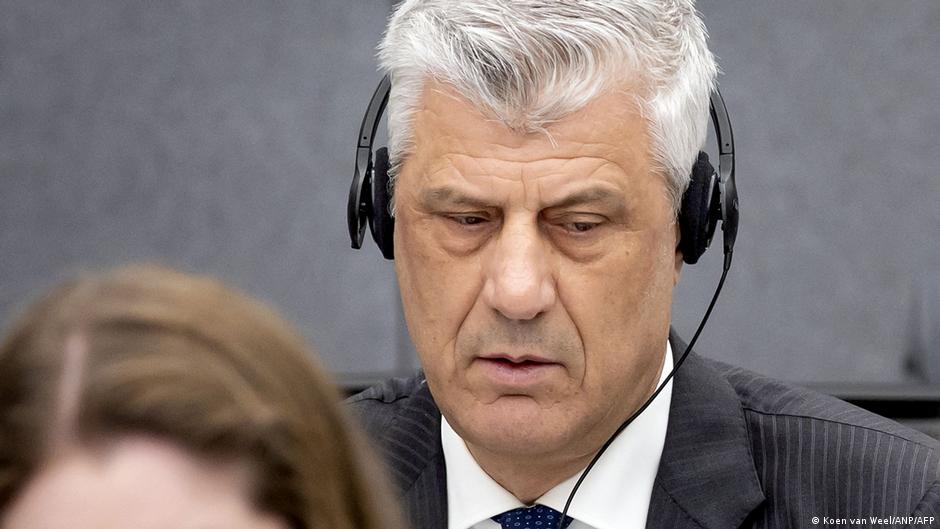
The court’s operations have long been a flashpoint in domestic Kosovar politics. For many in Kosovo, the KLA represents the vanguard of liberation, and the prosecution of its former commanders is viewed by supporters as an attempt to criminalize the entire struggle for sovereignty. Conversely, international observers and the court itself maintain that accountability is a prerequisite for long-term regional stability and the normalization of relations with Serbia.
Chronology of Legal Proceedings
The path to these convictions has been arduous, marked by years of investigations and diplomatic maneuvering:
- 2015: The Kosovo Assembly passes an amendment to the constitution establishing the Specialist Chambers.
- November 2020: Hashim Thaci resigns as President of Kosovo following the confirmation of his indictment by the Specialist Prosecutor’s Office.
- April 2023: The trial against Thaci and three other co-accused (Kadri Veseli, Rexhep Selimi, and Jakup Krasniqi) officially begins in The Hague.
- September 16, 2026: The KSC delivers a landmark verdict, sentencing Thaci to 25 years in prison for war crimes and crimes against humanity.
- December 2026: The court issues a supplementary sentence of 17 months for the obstruction of justice, finalizing the latest chapter in the proceedings.
Official Responses and Government Strategy
The government of Kosovo has responded to the sentencing with a mix of procedural defiance and calls for systemic reform. In a formal statement released Tuesday, the government emphasized that while it respects the necessity of the rule of law, the legitimacy of the judicial process hinges on transparency and fairness.
"Justice must not only be done, but must also be fair, transparent, and credible," the government’s statement read. Prime Minister Albin Kurti, who has been vocal in his critique of the court’s methodology, confirmed that the state has established a specialized working group to draft an appeal strategy. Chaired by Foreign Minister Glauk Konjufca, this group is tasked with challenging the initial war crimes verdict. Kurti maintains that the first-instance judgment is "legally and morally unjust," signaling that the government intends to pursue every possible avenue for a reversal at the appeals level.

Legislative Proposals and Diplomatic Implications
Beyond the courtroom, the Kosovo parliament is currently evaluating a draft law that would fundamentally alter the operating parameters of the Specialist Chambers. The proposed amendments are ambitious: they seek to limit the maximum prison sentence to 15 years, permit convicted individuals to serve their time within Kosovo rather than abroad, and introduce a mechanism for presidential pardons.
These proposals have sparked intense debate among legal scholars and political analysts. Ehat Miftaraj, executive director of the Kosovo Law Institute (IKD), argues that the frustration in Pristina is palpable. "The way the judicial process has unfolded has created the impression that judges, prosecutors, and certain international actors have treated not only the accused but also Kosovo itself with distrust, prejudice, and an often condescending approach," Miftaraj noted.
However, international observers warn that attempting to curtail the court’s power mid-trial could trigger a diplomatic crisis. Political analyst Artan Muhaxheri warns that any legislative change perceived as interference could jeopardize Kosovo’s international standing. "From an international perspective, at first glance, this initiative could even be interpreted as an attempt to interfere in the judicial process," Muhaxheri told reporters. He emphasized that any changes must be argued through rigorous legal frameworks that align with Kosovo’s existing international obligations to the European Union.
The Broader Impact on Kosovo Society
The conviction of Thaci—a man who served as a guerrilla leader, prime minister, and president—strikes at the heart of Kosovo’s national identity. The trials have forced a painful, slow-motion reckoning with the history of the Kosovo War. As the country grapples with the fallout, the divide between the judicial pursuit of individual accountability and the collective perception of the war as a just struggle continues to widen.

For the international community, the KSC remains a test of whether a post-conflict society can reconcile its past through a hybrid judicial system. The court is tasked with balancing the rights of the victims—many of whom are still waiting for justice—with the political sensitivities of a nation that views its independence as a hard-won victory.
Conclusion: A Precarious Future
As Hashim Thaci faces a combined prison term of over 26 years, the political landscape in Kosovo remains in flux. The government’s move to amend the court’s governing laws represents a high-stakes gamble; it seeks to address the perception of judicial overreach while risking further alienation from Western partners who invested heavily in the creation of the Specialist Chambers.
The coming months will be critical. As the appeals process begins, the focus will shift from the battlefield of 1999 to the courtroom in The Hague. The ultimate challenge for Kosovo will be to demonstrate that it can uphold the rule of law while protecting the integrity of its history, a task that has proven to be as complex as the war itself. Whether these legal battles will lead to a deeper sense of closure or further entrench the divisions of the past remains the defining question for the region’s stability in the years to come.
