
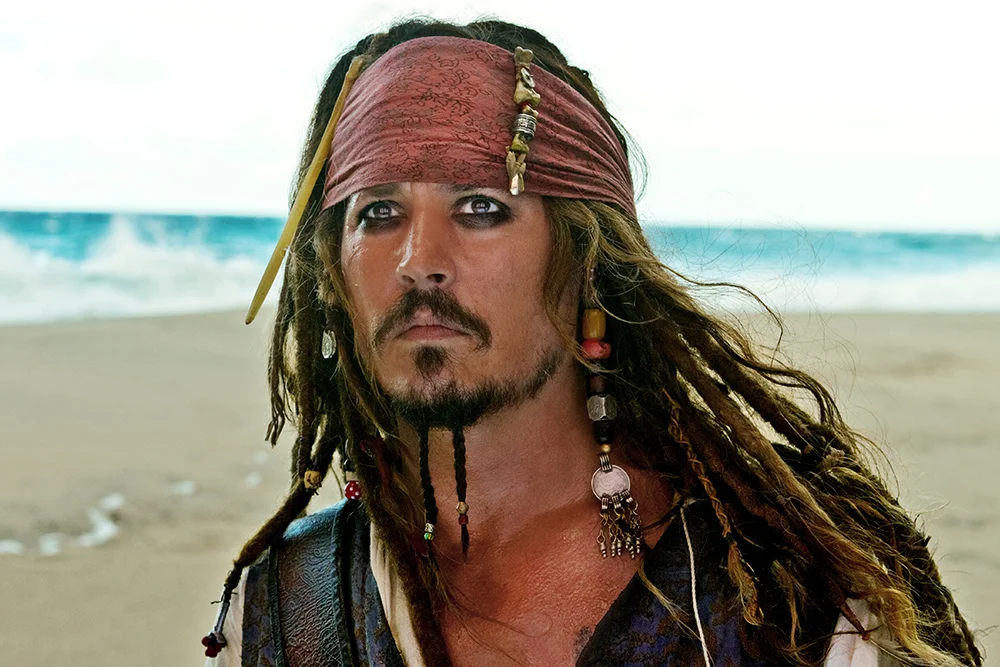
The prospect of Johnny Depp reprising his iconic role as Captain Jack Sparrow in the long-gestating sixth installment of the Pirates of the Caribbean franchise has transitioned from industry speculation to a focal point of ongoing dialogue between the actor and his long-time collaborator, producer Jerry Bruckheimer. While Depp has stopped short of confirming a formal return to the high-seas saga, his recent comments suggest that his participation remains a distinct possibility, provided the creative direction of the project aligns with his standards for the character’s legacy.
During a press tour for his latest project, Ebenezer, Depp emphasized that his potential involvement is predicated entirely on the strength of the screenplay and his enduring professional loyalty to Bruckheimer. "If things are exactly where they need to be with regard to how they are going to top off the Pirates franchise, the only involvement I really want to have, truly, is just to send them off on a better note," Depp stated. He further underscored the nature of their partnership, noting, "I will go to work with Jerry Bruckheimer tomorrow for anything. Doesn’t matter. If it’s Jerry, I trust him. We have a deep friendship."
The Evolution of the Pirates Franchise
The Pirates of the Caribbean series stands as one of the most commercially successful film franchises in cinematic history. Since the debut of The Curse of the Black Pearl in 2003, the five-film saga has generated a staggering $4.5 billion at the global box office. Depp’s portrayal of the eccentric, rum-loving pirate Jack Sparrow is widely credited as the heartbeat of the series. His performance—a unique synthesis of Keith Richards’ rock-and-roll swagger and cartoonish slapstick—not only earned him an Academy Award nomination but also redefined the archetype of the blockbuster anti-hero.
The financial dominance of the franchise was cemented throughout the 2000s and early 2010s. Dead Man’s Chest (2006) and On Stranger Tides (2011) both surpassed the $1 billion milestone globally, a rare feat for a single franchise during that era. However, the critical and commercial reception of the fifth installment, Dead Men Tell No Tales (2017), prompted a period of introspection within Disney regarding the future direction of the intellectual property.
A Chronology of Development
The path to a sixth installment has been fraught with structural shifts and strategic pivots. The following timeline outlines the development trajectory of the franchise:
- 2003–2017: Johnny Depp headlines five films, establishing the series as a primary pillar of Disney’s live-action studio portfolio.
- Summer 2020: Reports emerge that Disney is exploring two distinct paths: a reboot starring Margot Robbie and a separate entry that would serve as the sixth installment of the original narrative.
- November 2022: Margot Robbie confirms in an interview with Vanity Fair that Disney has opted not to move forward with her female-led iteration of the pirate universe.
- Summer 2024: Jerry Bruckheimer reveals that screenwriter Jeff Nathanson, who penned the 2017 entry, has completed a script for the sixth film. Bruckheimer notes that the third act of the script is "amazing," while work continues on refining the preceding segments.
- Summer 2025: Bruckheimer confirms to Entertainment Weekly that he has engaged in direct discussions with Depp regarding a return, stating that the project’s viability rests on the quality of the written material.
Creative Hurdles and the "Right Screenplay"
The primary obstacle facing the production team is the necessity of crafting a narrative that justifies a return to the franchise while potentially pivoting away from the character-heavy focus of the original quintet. Jerry Bruckheimer has remained consistently transparent about the development process, acknowledging that the script is the final arbiter of Depp’s involvement.
"If he likes the way the part is written, I think he would do it," Bruckheimer noted in 2025. "It’s all about what’s on the page, as we all know. We are still working on a screenplay. We want to make it. We just got to get the right screenplay. We haven’t quite gotten there yet, but we’re close."
Bruckheimer’s stance reflects a broader sentiment within the studio: while the franchise is a reboot-ready entity, the unique imprint left by Depp’s performance creates a high barrier for entry. As Bruckheimer stated previously, "He’s an amazing artist and he’s a unique look. He created Captain Jack. That was not on the page, that was him doing a little Pepé Le Pew and Keith Richards."
Contextualizing the Hollywood Comeback
The narrative surrounding Depp’s potential return cannot be disentangled from the legal and professional challenges he faced between 2018 and 2022. Following a 2020 libel trial in the United Kingdom—which resulted in a ruling that characterized the description of him as a "wife beater" as "substantially true"—Depp was asked by Warner Bros. to step down from the Fantastic Beasts franchise. He was subsequently replaced by Mads Mikkelsen in the role of Gellert Grindelwald.
A subsequent defamation trial in the United States in 2022, initiated by Depp against his ex-wife Amber Heard, concluded with a jury finding that Heard had defamed him in a 2018 Washington Post op-ed. While the jury also found that Depp had defamed Heard through his legal representatives, the verdict was widely interpreted as a significant victory for the actor in the court of public opinion and a critical step in his path toward a Hollywood resurgence.
Since that time, Depp has been methodically rebuilding his studio presence. Beyond his current press tour for the holiday film Ebenezer, he has secured a role in the upcoming Lionsgate thriller Day Drinker (2028), signaling a shift back toward high-profile studio projects.
Strategic Implications for Disney
For Disney, the decision to involve Depp in a sixth Pirates film involves a complex cost-benefit analysis. On one hand, the character of Jack Sparrow remains one of the most recognizable and lucrative figures in modern pop culture, capable of driving massive international ticket sales. On the other, the studio must balance the legacy of the franchise with its current brand identity.
Industry analysts suggest that a return for Depp would serve as an anchor for a franchise that has struggled to define its future without its central star. By focusing on a "reboot" structure while leaving the door ajar for the original protagonist, Disney is effectively hedging its bets. If the script by Jeff Nathanson succeeds in capturing the tone that made the original films successful, a reconciliation between the studio and the actor could represent a significant win for all parties involved.
Conclusion
The status of Pirates of the Caribbean 6 remains in a state of productive flux. While the logistical components—a completed script, a seasoned producer, and a willing star—are beginning to coalesce, the final decision remains subject to the refinement of the screenplay. For Johnny Depp, the motivation appears to be less about a return to the limelight and more about a desire to provide a fitting conclusion to a character who defined a major chapter of his career. As the development process continues, the industry remains attentive to whether the high seas will indeed welcome back Captain Jack Sparrow for one final voyage.
