
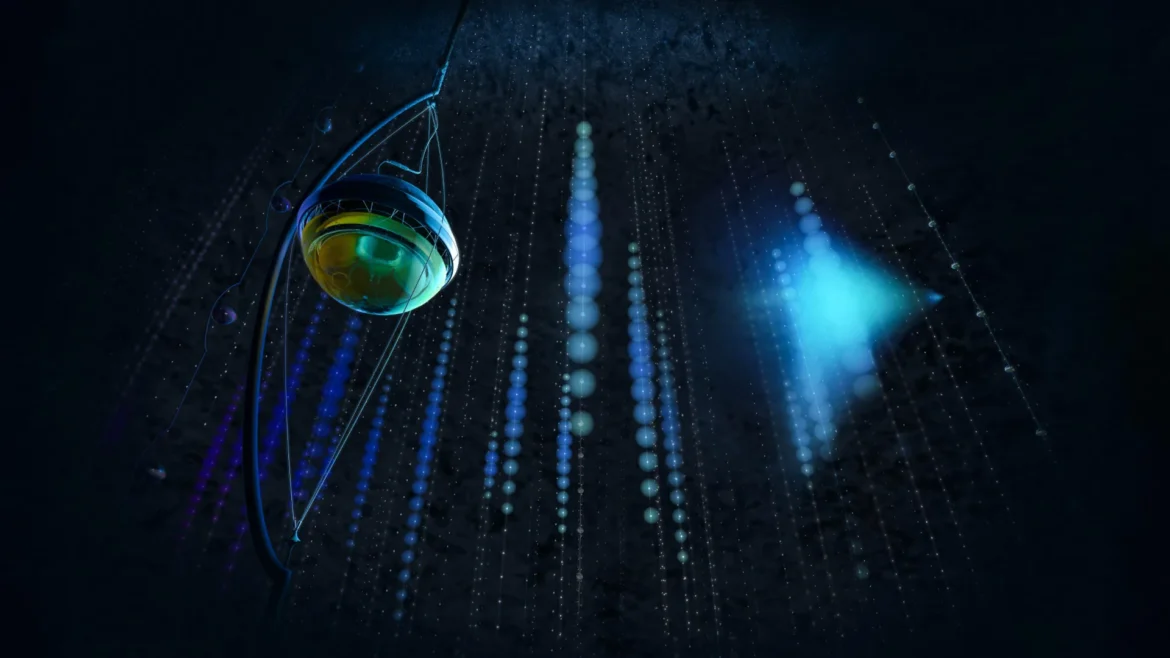
An enormous number of invisible particles are constantly traveling through Earth, passing through our bodies and continuing into space as though almost nothing stands in their way. Known as neutrinos, these subatomic entities represent one of the most significant frontiers in modern physics. Often referred to as "ghost particles" due to their near-total lack of interaction with ordinary matter, they have long remained the most elusive subjects in the scientific canon. However, the development of massive, deep-earth detectors has transformed these silent travelers into a new medium for astronomical observation, allowing scientists to peer into the hearts of collapsing stars and the violent processes of the early universe.
The current era of neutrino astronomy marks a culmination of decades of theoretical postulation and engineering ingenuity. This year, the scientific community celebrated a milestone in this field as physicist Francis Halzen was honored for his foundational contributions to the IceCube Neutrino Observatory. His work has effectively turned a cubic kilometer of Antarctic ice into a global telescope, providing the first clear evidence of high-energy neutrinos originating from deep space.
The Ghostly Nature of Elementary Particles
Neutrinos are fundamental particles—the building blocks of the universe that cannot be subdivided into smaller components. There are three known flavors of neutrinos: electron, muon, and tau. Unlike protons or electrons, neutrinos possess no electric charge, which allows them to bypass the electromagnetic forces that dictate the behavior of most matter. While they do possess mass, it is infinitesimal—roughly 10 million times lighter than an electron.
The sheer abundance of these particles is difficult to comprehend. Estimates suggest that the universe contains approximately 10^89 neutrinos. At any given moment, about 100 billion neutrinos pass through every square centimeter of human skin. Because they interact via the "weak interaction"—a force roughly 20 orders of magnitude weaker than electromagnetism—they are effectively immune to the shielding that blocks other forms of radiation. As University of California San Diego physicist George Fuller notes, neutrinos could travel through light-years of solid lead without striking a single atom, making them the ultimate cosmic stowaways.
A Chronology of Discovery: From Theory to Detection
The history of the neutrino is a testament to the persistence of the scientific method. The particle was first proposed in 1930 by Wolfgang Pauli, who sought to solve a discrepancy in the energy conservation observed during radioactive beta decay. Pauli’s hypothesis was so radical that he famously declared he had "done a terrible thing" by proposing a particle that might never be detected.
The experimental confirmation did not arrive until 1956, when Clyde Cowan and Frederick Reines executed "Project Poltergeist." By placing a detector near a nuclear reactor, they captured evidence of neutrino-proton interactions, proving that these ghosts were not merely mathematical artifacts. This success paved the way for a succession of Nobel Prize-winning discoveries. Over the following decades, researchers confirmed that neutrinos oscillate between their three flavors, a phenomenon that necessitated the conclusion that they must have mass—a finding that challenged the original Standard Model of particle physics.
Engineering the IceCube Observatory
By the 1990s, the focus shifted from simply detecting neutrinos to using them as a diagnostic tool for the cosmos. Francis Halzen proposed an ambitious project: using the ultra-pure, transparent ice of the South Pole as a natural particle detector. The result was the IceCube Neutrino Observatory, a massive array of over 5,000 digital optical modules buried at depths between 1,450 and 2,450 meters.
The observatory functions by monitoring the ice for "Cherenkov radiation"—a faint blue glow produced when a neutrino collides with an atom in the ice. This interaction creates a high-energy charged particle that travels faster than the speed of light through the medium of ice. By triangulating the timing and intensity of the resulting light flashes across the strings of sensors, researchers can determine the energy and the directional origin of the incoming particle.
The scale of this operation is immense. The detector covers a full cubic kilometer of volume, ensuring that despite the rarity of these interactions, the observatory captures enough events to conduct meaningful statistical analysis. Each year, IceCube identifies a few dozen extremely high-energy neutrinos, some of which possess energy levels 10 billion times greater than those emitted by our own Sun.
Broader Implications: The Early Universe and the Big Bang
The utility of neutrino detection extends far beyond the study of high-energy cosmic events. Researchers are currently leveraging the Simons Observatory in Chile’s Atacama Desert to complement the work done in Antarctica. While IceCube looks for high-energy "messengers" from active galactic nuclei or black holes, the Simons Observatory focuses on the Cosmic Microwave Background (CMB)—the residual thermal radiation from the Big Bang.
By studying the CMB, scientists can infer the presence and behavior of "relic neutrinos" created mere seconds after the universe began. This data acts as a temporal bridge, connecting the high-energy physics of the current era to the primordial conditions of the early cosmos. Brian Keating, the principal investigator at the Simons Observatory, emphasizes that these observations offer a window into the initial evolution of space-time.
The synergy between these observatories is changing the fundamental questions being asked in physics. Scientists are no longer merely looking for the neutrino; they are using the neutrino to look for the "why" behind the universe’s structure. Understanding the mass hierarchy of these particles and their role in the expansion of the universe remains a primary goal for the next generation of researchers.
Expert Analysis and Future Outlook
The impact of these discoveries cannot be overstated. According to George Fuller, the work spearheaded by Halzen has fundamentally altered the landscape of experimental particle physics. By creating a detection system that operates at a continental scale, the scientific community has gained the ability to "see" into regions of space that are completely opaque to traditional optical or radio telescopes.
The challenge moving forward remains one of sensitivity and data processing. As researchers continue to refine the sensors used in deep-ice and high-altitude observatories, the volume of data is expected to increase exponentially. This will require advancements in machine learning and computational modeling to filter out the "noise" of local radioactive events and isolate the faint signals of extragalactic origin.
Furthermore, the discovery of ultra-high-energy neutrinos carries significant implications for our understanding of cosmic accelerators. The processes that propel these particles to near-light speeds are among the most extreme in the universe—likely involving supermassive black holes or colliding neutron stars. Identifying the specific sources of these neutrinos is the next logical step in the field, promising to unlock new insights into the life cycles of galaxies and the energetic output of the most violent events in the cosmos.
As we continue to look deeper into the ice and the ancient light of the Big Bang, the "ghost particle" is slowly losing its mystery. Through the collaborative efforts of international research teams, the neutrino has transitioned from a theoretical inconvenience to a vital instrument of human discovery. Each detected particle serves as a data point in an emerging map of the invisible universe, confirming that even the most elusive objects can be brought into the light of human understanding.
