
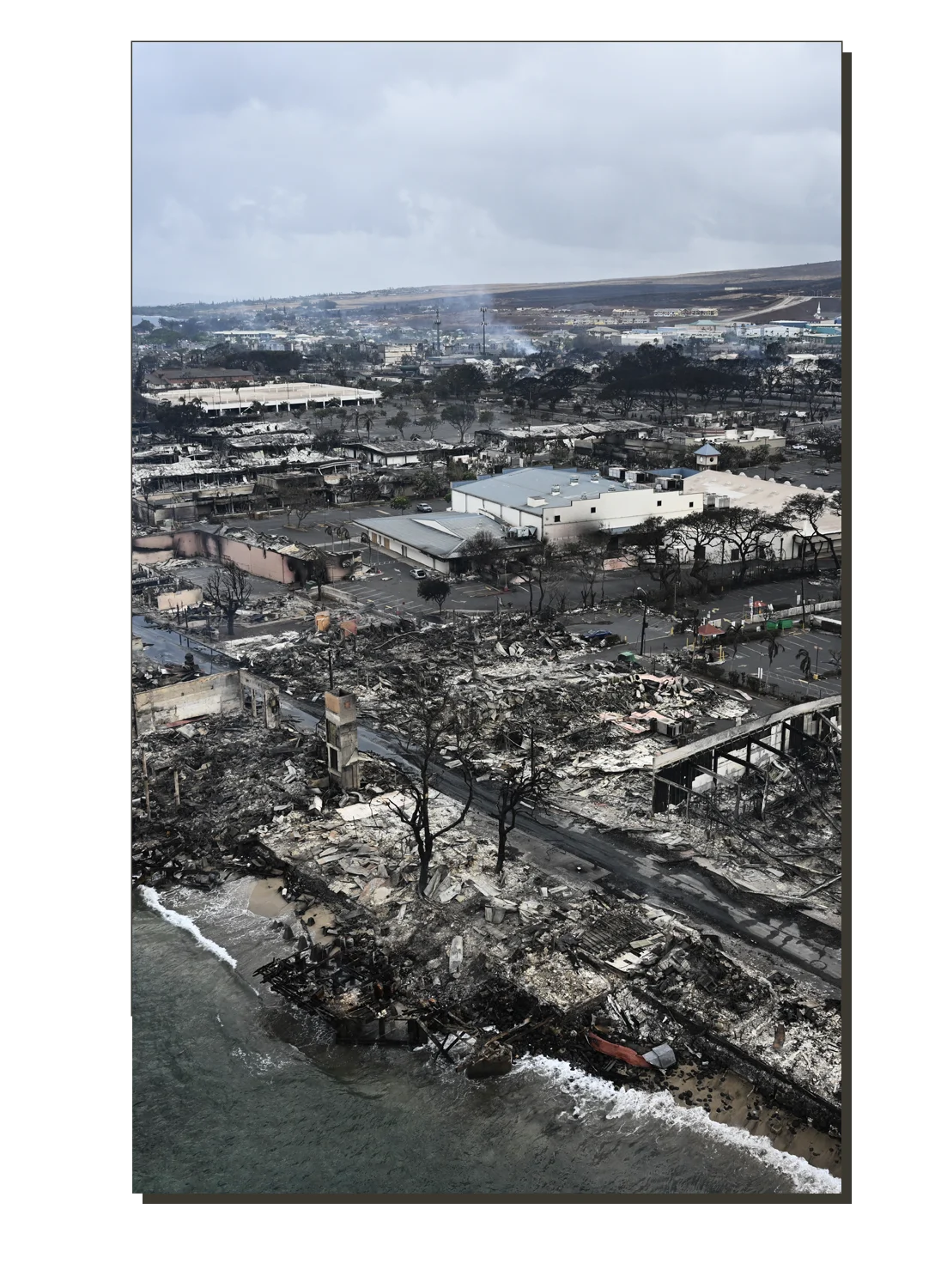
In the immediate aftermath of the 2023 Maui wildfires, which claimed over 100 lives and decimated the historic town of Lahaina, a secondary disaster began to unfold in the digital sphere. While the physical fires were sparked by a downed power line striking dry vegetation during high winds, a parallel, virtual firestorm erupted across social media platforms. Thousands of users, amplified by influencers and bot networks, propagated the theory that the catastrophe was the result of a "directed energy weapon" or government-sanctioned laser strike. This narrative, while entirely devoid of factual basis, illustrates a growing trend in emergency management: the rapid proliferation of misinformation is now actively impeding disaster recovery and eroding the public’s ability to respond to life-threatening events.
The phenomenon is not isolated to Maui. As climate change increases the frequency and intensity of extreme weather events—from supercharged hurricanes to devastating floods—the information landscape has become increasingly fragmented. With social media companies retreating from robust content moderation, politicians politicizing disaster responses, and generative artificial intelligence (AI) creating new, unpredictable avenues for data consumption, emergency managers are fighting an uphill battle. According to a recent report from the News Literacy Project, a majority of American teenagers who encounter social media conspiracy theories are inclined to believe them, suggesting that this crisis of trust is not merely a generational anomaly but a structural shift in how society processes reality during times of duress.
The Anatomy of a Modern Conspiracy
The Maui "directed energy weapon" myth serves as a textbook case study in how misinformation gains traction. The conspiracy relied on a "Frankenstein" method of curation, stitching together unrelated, innocuous images to manufacture evidence of a sinister plot.
The timeline of this specific misinformation campaign reveals a multi-year incubation period:
- January 2018: A resident in Canton, Ohio, photographs a flare event at a Marathon Petroleum refinery. The image, capturing a mechanical release, is posted to Facebook.
- May 2018: SpaceX launches a Falcon 9 rocket from Vandenberg Space Force Base in California. The dramatic visual is shared on Instagram.
- May 2023: A windstorm in Santiago, Chile, causes an electrical transformer to explode, with the event captured on video and uploaded to TikTok.
- August 2023: The Maui wildfires destroy Lahaina.
Within days of the Maui tragedy, these three distinct events—a refinery flare, a rocket launch, and a transformer explosion—were repurposed by social media accounts as "proof" of a coordinated attack on Hawaii. The content was viewed and shared millions of times. Even when some original posters, such as the Instagram account @for_our_rights_kauai, issued corrections, the misinformation had already been captured, re-packaged, and amplified by larger, more influential accounts, such as @cultivateelevate. The correction received a fraction of the engagement that the conspiracy theory enjoyed, demonstrating the fundamental asymmetry between the speed of viral falsehoods and the inertia of fact-checking.
The Erosion of Public Trust in Crisis Management
The consequences of this "information chaos" are measurable and severe. A 2017 study by the Inter-American Development Bank found that following the Mexico City earthquake, residents’ trust in government fell by 11 percent, a decline often exacerbated by the spread of false rumors regarding relief efforts. Similarly, a Department of Homeland Security (DHS) assessment revealed that an inaccurate map circulated on social media during a 2017 California flood triggered unnecessary mass evacuations, creating panic and clogging critical infrastructure needed for genuine emergency services.
The Federal Emergency Management Agency (FEMA) remains the primary target for these narratives. Deanne Criswell, who led the agency during the Biden administration, noted that allegations of "FEMA camps" and government land seizures have persisted for decades, acting as a "black arm of government" narrative that discourages vulnerable populations from seeking help. During the 2024 response to Hurricane Helene, this distrust turned lethal. Reports of threats against federal workers forced the temporary suspension of field operations, while senior officials were subjected to "swatting" attacks. These disruptions meant that critical resources were delayed, leaving those in the most desperate need of shelter and supplies to fend for themselves.
The political polarization of disaster response further complicates the situation. During the 2024 hurricane season, right-wing accounts, including high-profile influencers, falsely accused the federal government of withholding aid from specific regions for political retribution. Elon Musk, owner of the platform X, publicly claimed that FEMA was blocking private aid flights, an allegation that received nearly 30 million views. While Musk later retracted the claim, his correction received significantly less reach, leaving a lasting impression on millions of users that federal authorities were actively hindering relief.
The Rise of Generative AI in the Information Ecosystem
The integration of large language models (LLMs) into daily life has added a new layer of complexity. With roughly one-quarter of U.S. adults using AI chatbots daily, these tools are increasingly becoming the primary search engine for disaster information. While current models like ChatGPT and Gemini are programmed to debunk known conspiracy theories, they introduce new risks related to accuracy and hallucinations.
The primary concern among researchers like Anita Atwell Seate at the University of Maryland is not necessarily the objective accuracy of the AI, but the "trust-action gap." Even if an AI provides factual, life-saving information, if the user fundamentally mistrusts the source—or if the AI hallucinates outdated information—the consequences can be dire. As researchers begin longitudinal studies on AI usage in disaster zones, the focus is shifting toward how to ensure these tools act as reliable conduits for official information without falling victim to the same polarization that plagues human-led social media.
Strategic Implications and the Future of Disaster Communication
Experts argue that the only viable defense against this information landscape is the development of "organic trust" long before a disaster occurs. Relying on centralized government announcements during a crisis is no longer sufficient when a significant portion of the population is predisposed to view federal institutions with suspicion.
The most successful interventions have involved partnering with "trusted messengers"—local figures, community leaders, and healthcare providers who already possess credibility within their neighborhoods. In Maui, FEMA’s partnership with local Native Hawaiian employees was instrumental in dispelling rumors of land grabs, as these individuals were able to communicate directly with community members in a way that faceless federal agencies could not.
This approach, however, requires a fundamental shift in disaster preparedness. It moves away from the "top-down" broadcast model toward a decentralized, community-based strategy. As Justin Knighten, a former FEMA external affairs consultant, describes it, fighting disinformation in the 21st century is akin to "trench warfare." It requires constant effort to build and maintain relationships, ensuring that when the next storm or fire hits, there is a pre-existing infrastructure of credibility that can withstand the inevitable surge of online hysteria.
Ultimately, the goal is not to "solve" the problem of misinformation, which is deeply rooted in the current political and social climate, but to minimize its impact on public safety. When an individual in a disaster zone chooses a viral social media rumor over an evacuation order, the outcome is often irreversible. By integrating local trust networks into emergency planning and fostering greater media literacy, authorities may be able to reclaim enough of the information environment to ensure that the most vulnerable among us receive the support they need when the next crisis arrives. The task is immense, but the cost of inaction—measured in lives lost and communities fractured—is far higher.
