
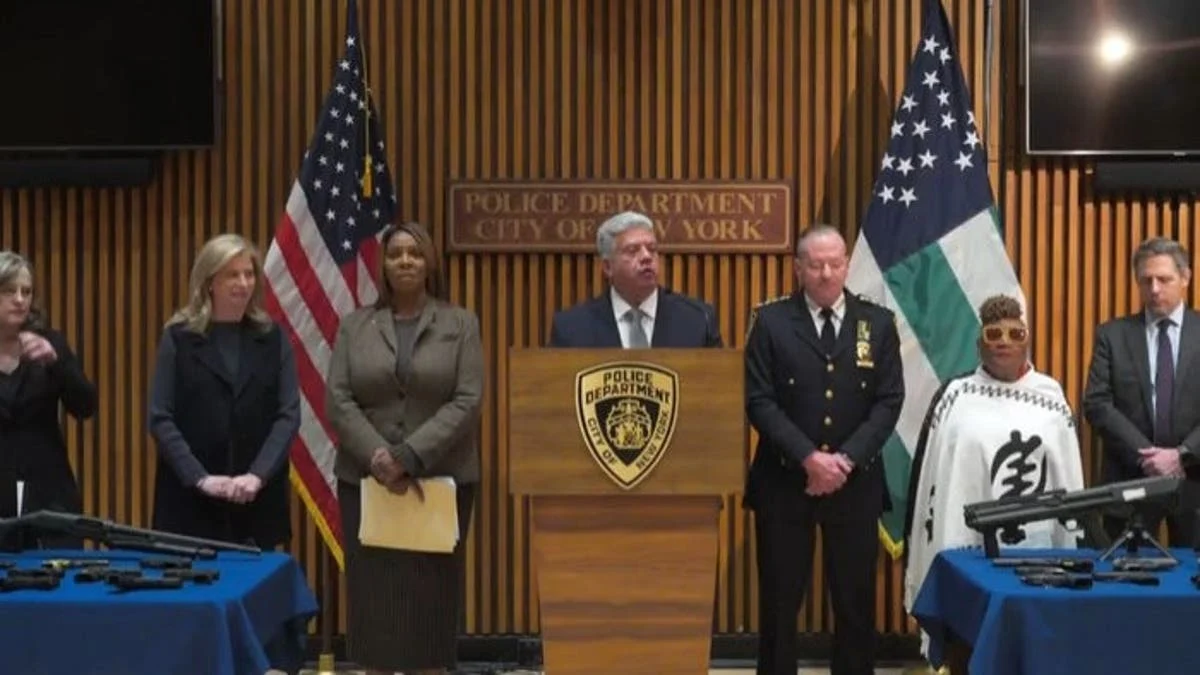
A routine Manhattan press conference featuring some of New York’s most prominent legal and law enforcement figures took an unexpected and tense turn on Thursday when officials were pressed about a sweeping congressional investigation. New York Attorney General Letitia James, Queens District Attorney Melinda Katz, and Brooklyn District Attorney Eric Gonzalez found themselves visibly caught off guard when reporters confronted them with explosive allegations contained in a newly released House Judiciary Committee report.
The 22-page congressional document accuses local prosecutors across New York City of systematically altering, reducing, or outright downgrading criminal charges against noncitizens to protect them from federal deportation. As the questioning turned to these severe accusations, the atmosphere in the room shifted immediately, culminating in visible discomfort, defensive gestures, and a swift pivot away from the topic by event moderators.
The explosive exchange highlights a profound and growing friction between federal lawmakers and local progressive prosecutors over immigration enforcement, sanctuary policies, and the intersection of municipal criminal justice reform and federal immigration law.
The Confrontation in Manhattan
The tense moment occurred during a joint press briefing in Manhattan, where Attorney General James and District Attorneys Katz and Gonzalez had gathered to discuss local public safety initiatives. Amid the question-and-answer session with the press corps, a reporter directly challenged the panel regarding the findings of the House Judiciary Committee report.
"Did any of you order prosecutors to downgrade gun charges to keep illegal immigrants in the U.S., per the Judiciary Committee report?" the reporter asked.
The question elicited immediate visible surprise from the dais. According to contemporaneous reports by the New York Post and other outlets, Queens District Attorney Melinda Katz threw her hands up in the air and shrugged in apparent disbelief or exasperation before offering a brief, dismissive remark.
"Our answer couldn’t help it," Katz muttered.
Before any of the officials could offer a substantive explanation or defense, a moderator or event handler immediately stepped in to redirect the room. The speaker urged reporters to stick to "any other on-topic questions," effectively cutting off further inquiry into the congressional allegations and abruptly moving the press conference along to other subjects.
The abrupt avoidance of the topic drew immediate criticism from legal observers and political opponents alike, who argued that elected public servants owe the public transparency regarding policies that directly impact public safety and federal law compliance.
Key Findings of the House Judiciary Committee Report
The congressional report that triggered the tense standoff is the culmination of months of investigative work by the House Judiciary Committee, led by Chairman Jim Jordan. The 22-page document outlines what investigators describe as a calculated, systemic effort by multiple New York City district attorney offices to subvert federal immigration enforcement mechanisms through internal charging guidelines and plea-bargaining strategies.
Among the most significant revelations in the report are specific policy directives and structural accommodations identified within various borough prosecutor offices:
- Immigration Specialists: The committee report highlights that the Queens District Attorney’s office employs a dedicated "Immigration Specialist." According to congressional investigators, this staff member’s role includes assisting in the negotiation of "immigration-safe" plea deals and working to reduce or modify past convictions to prevent deportation triggers.
- The Manhattan District Attorney Directive: The report cites a 2022 internal memorandum allegedly originating from Manhattan District Attorney Alvin Bragg’s office. The document reportedly instructed prosecutors to actively seek case dispositions that avoid immigration consequences for all misdemeanor charges and non-carceral felony cases.
- Training in the Bronx: Investigators found that the office of Bronx District Attorney Darcel Clark trains its legal staff in what is termed "Immigration-Conscious Plea Bargaining." This practice reportedly involves offering non-deportable offenses, deliberately avoiding aggravated felony charges, and utilizing hypothetical or legally anomalous charges—such as "attempted reckless assault"—which bypass traditional statutory intent requirements to secure a conviction without federal immigration repercussions.
- Omission of Critical Case Details: Perhaps most controversially, the report alleges that prosecutors were instructed to intentionally omit critical, aggravating details from official conviction records. Details involving the use of illegal firearms, domestic relationships between the accused and the victim, or the age of minor victims were allegedly scrubbed or minimized to prevent federal immigration authorities, such as Immigration and Customs Enforcement (ICE), from utilizing the records as legal grounds for removal under federal law.
Official Responses and Denials
In the wake of the press conference and the widespread dissemination of the congressional report, representatives for the targeted prosecutors pushed back against the committee’s characterizations, strongly denying that violent crimes or weapons offenses are treated with leniency.
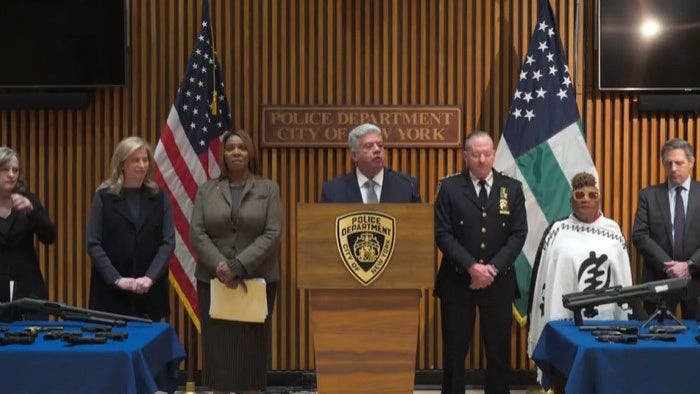
Shortly after the conclusion of the Thursday news conference, a spokesperson for Queens DA Melinda Katz reached out directly to the New York Post to issue a clarifying statement regarding how firearm offenses are handled by her office.
"We charge any defendant with an illegal firearm with the highest possible charge under the law," the spokesperson stated emphatically, flatly rejecting the notion that gun charges are systematically downgraded to protect noncitizen defendants from the legal consequences of their actions.
Similarly, representatives for other borough prosecutors have historically maintained that their charging decisions are guided exclusively by local public safety priorities, the individual merits of each case, the realities of courtroom litigation, and the efficient allocation of limited judicial resources. Proponents of these progressive prosecution models argue that minor offenses should not carry disproportionate lifelong consequences that could destabilize families and communities, particularly when rehabilitation is deemed a viable alternative to incarceration.
However, federal investigators and critics counter that local prosecutors have no legal authority or mandate to circumvent federal immigration statutes or to intentionally obscure the true nature of criminal convictions from federal authorities tasked with national security and border enforcement.
Broader Context and Escalating Federal Scrutiny
The release of the House Judiciary Committee report is part of a much broader, escalating national campaign by House Republicans and federal oversight bodies targeting progressive criminal justice policies in sanctuary jurisdictions across the United States.
Over the past two years, congressional committees have launched numerous inquiries, issued subpoenas, and opened investigations into local district attorneys and municipal governments accused of obstructing federal immigration enforcement. These actions often follow high-profile incidents involving violent crimes committed by undocumented immigrants who had previous run-ins with local law enforcement but avoided federal detainer requests or deportation proceedings due to local sanctuary laws.
For instance, concurrent investigations have focused on jurisdictions in states like Virginia and California, where local authorities have similarly faced intense scrutiny over policies that limit cooperation with federal immigration agencies. Just recently, the Department of Justice announced separate inquiries into specific jurisdictions where prosecutors were accused of shielding noncitizen defendants from the standard ramifications of criminal conduct.
The political polarization surrounding these issues is profound. Supporters of sanctuary policies and progressive prosecution argue that local law enforcement agencies should focus entirely on community policing and building trust with immigrant populations, asserting that community cooperation with local police plummets when residents fear that reporting a crime or interacting with the justice system will lead to deportation for themselves or their family members.
Conversely, opponents argue that such policies undermine the rule of law, create a patchwork of inconsistent legal enforcement across the nation, and pose a direct threat to public safety by allowing individuals who commit serious crimes—particularly those involving weapons—to remain in the community rather than facing federal removal proceedings.
Implications for New York’s Legal Landscape
As the fallout from the House Judiciary Committee report continues to unfold, the political and legal implications for New York’s top legal officials are significant. The public display of surprise and the immediate evasion of questions by Attorney General James and District Attorneys Katz and Gonzalez have provided fresh ammunition to political critics ahead of upcoming election cycles.
Legal experts note that while local prosecutors possess broad prosecutorial discretion—a foundational pillar of the American legal system that allows them to decide which charges to bring and how to plea bargain cases—using that discretion systematically to frustrate federal immigration law could invite further congressional subpoenas, potential legislative countermeasures, or intensified scrutiny from federal executive agencies.
Furthermore, the controversy underscores the ongoing tension between municipal autonomy and federal oversight. As immigration remains a dominant focal point in national politics, local leaders in sanctuary cities like New York find themselves increasingly caught in the crosshairs of a fierce ideological battle over the limits of local governance versus federal supremacy in matters of national border security and criminal justice administration.
With Fox News Digital and other media outlets continuing to seek formal comment from the remaining New York City district attorneys’ offices, the debate over charging transparency, prosecutorial discretion, and immigration enforcement shows no sign of abating.

